Mixed jobs need a line that can shift without drama
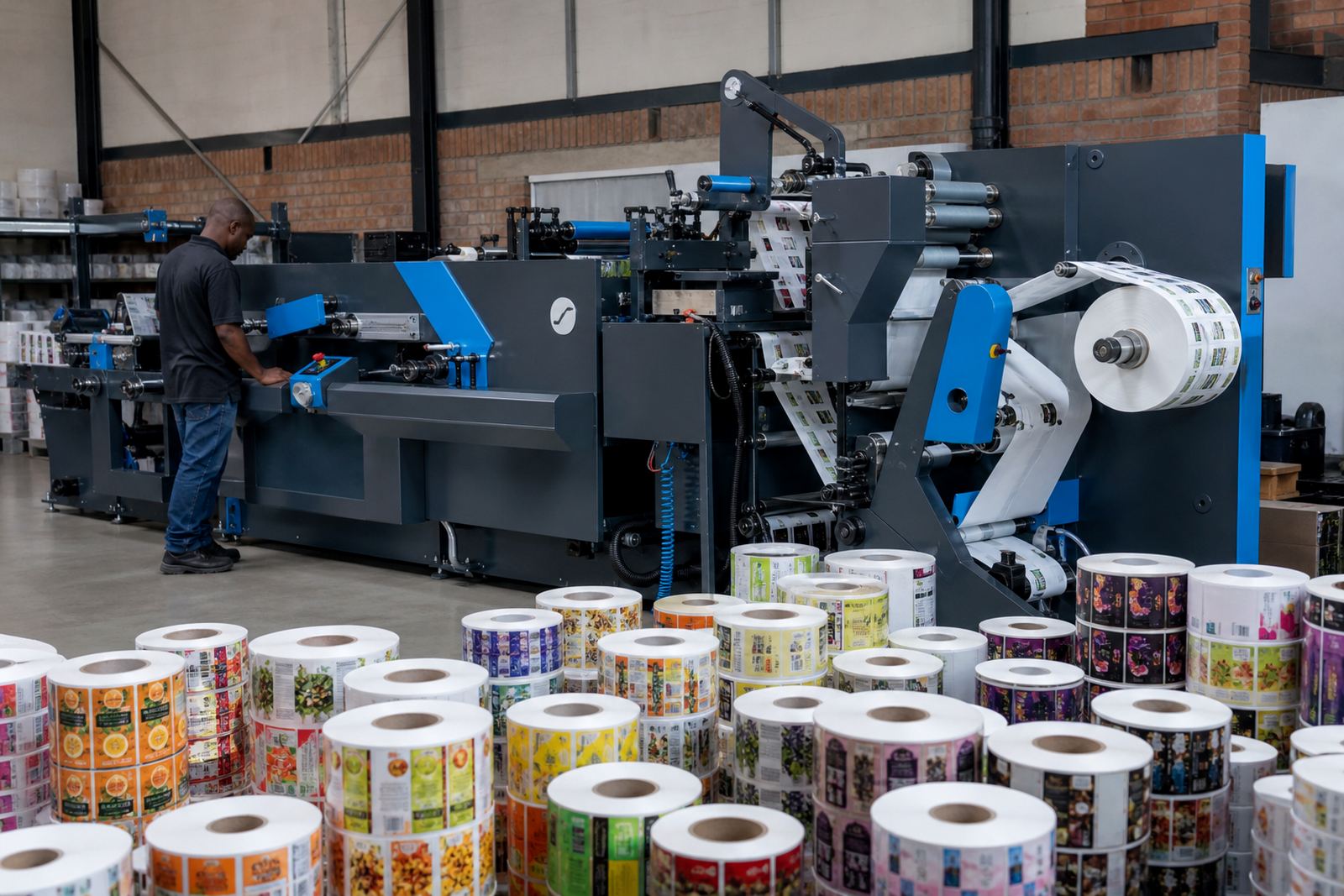
Contract finishing houses rarely see the same label twice in a week. One run may be wine labels on coated paper, the next a clear film job with varnish, and then a thicker packaging label that needs better web control through the die section. The line has to cope with different roll widths, core sizes and registration marks without wasting material at changeover.
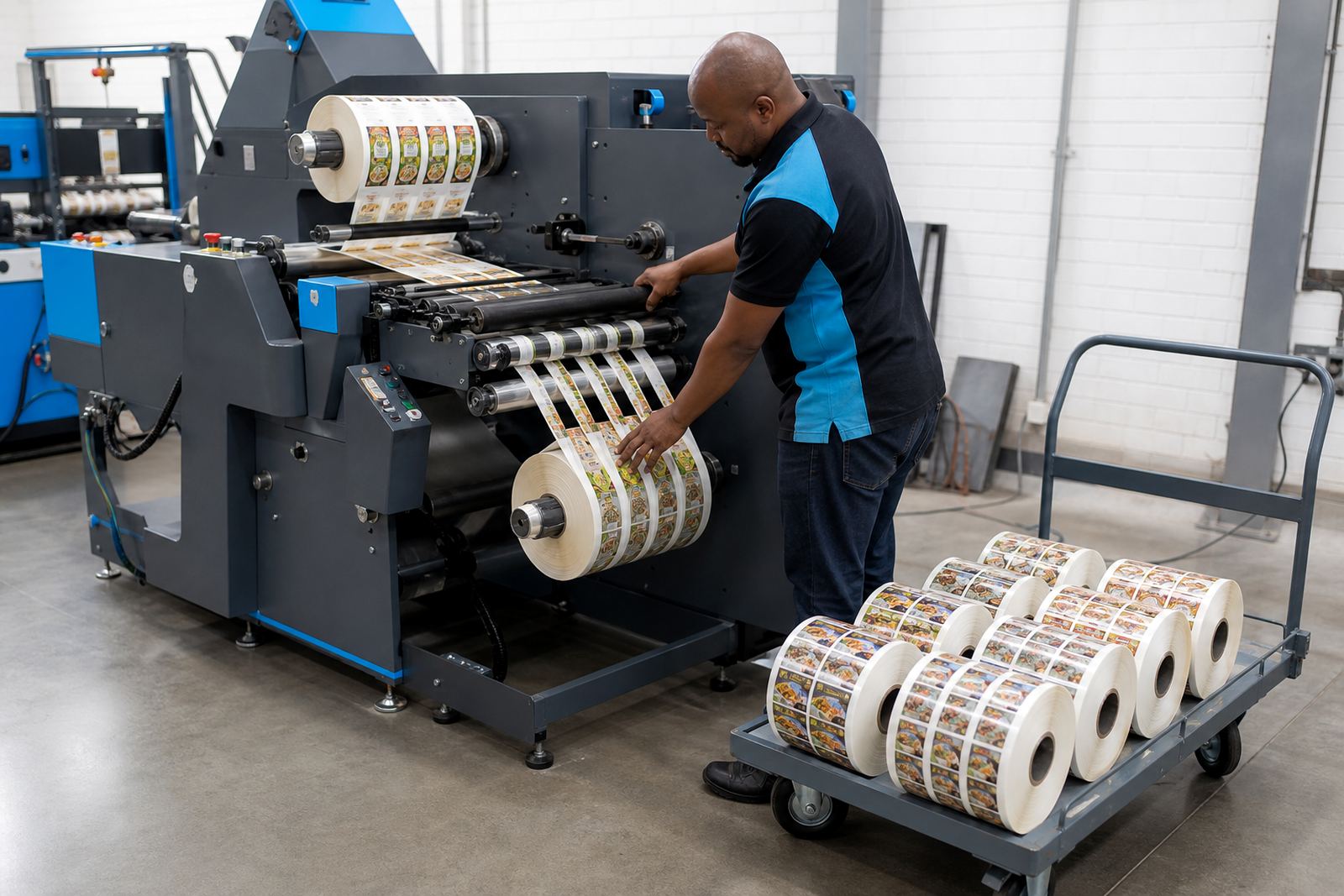
That is where a digital finishing line earns its keep. Unwind, lamination, die-cutting, matrix stripping, slitting and rewinding all need to work in the same pass or in a tight sequence. When the setup is sound, the press room does not spend half the shift correcting web drift, poor cut depth or a rewind that builds unevenly.
The machine set that suits contract finishing work
Most contract jobs benefit from a modular line rather than a single fixed routine. Laser finishing can suit very short runs and intricate shapes, while semi-rotary die-cutting is often a practical fit for repeat label work with flexible dies. Lamination and varnish stations add protection and finish options, and a clean stripping section keeps the matrix from tearing back into the web.
- Unwind with stable tension control for different roll weights
- Lamination for scuff resistance, moisture protection or visual finish
- Semi-rotary or laser die-cutting for repeat or variable label shapes
- Matrix stripping and slitting for tidy roll preparation
- Rewind control for narrow rolls, multiple lanes or single wide rolls
Registration calibration matters more than many teams expect. If the artwork is not tracking cleanly against the sensor marks, a line can be fully loaded and still produce uneven cuts or a scrap-heavy shift.
Layout choices that save time on the floor
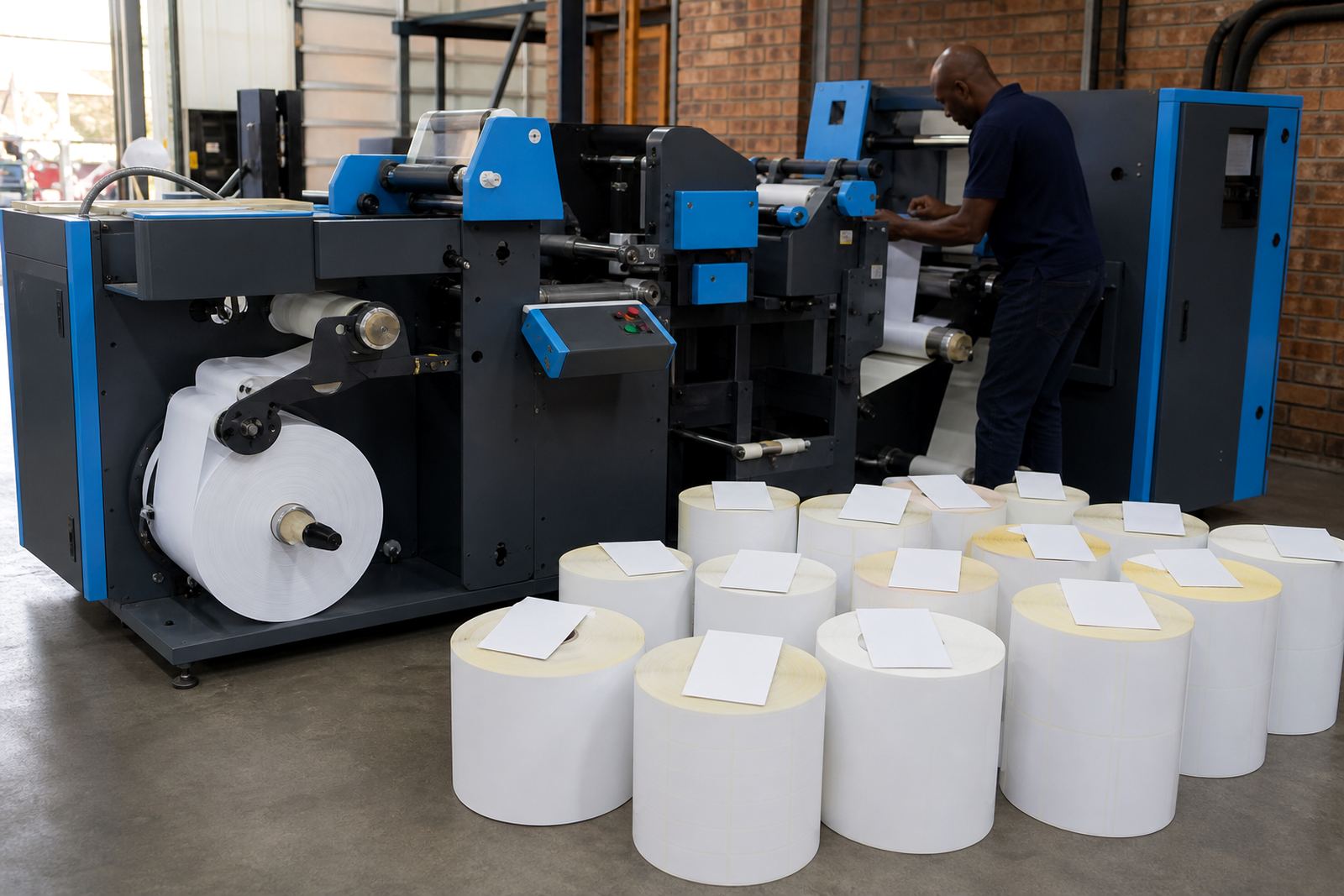
For contract work, the physical layout should make changeovers straightforward. Keep input rolls, tooling, take-up rolls and finished cartons close enough to avoid long carrying routes, but leave enough space for web threading and waste removal. In a Kya Sand or Midrand workshop, floor space is often tighter than the job list, so the line should be planned around the heaviest roll width and the longest rewind path you expect to use.
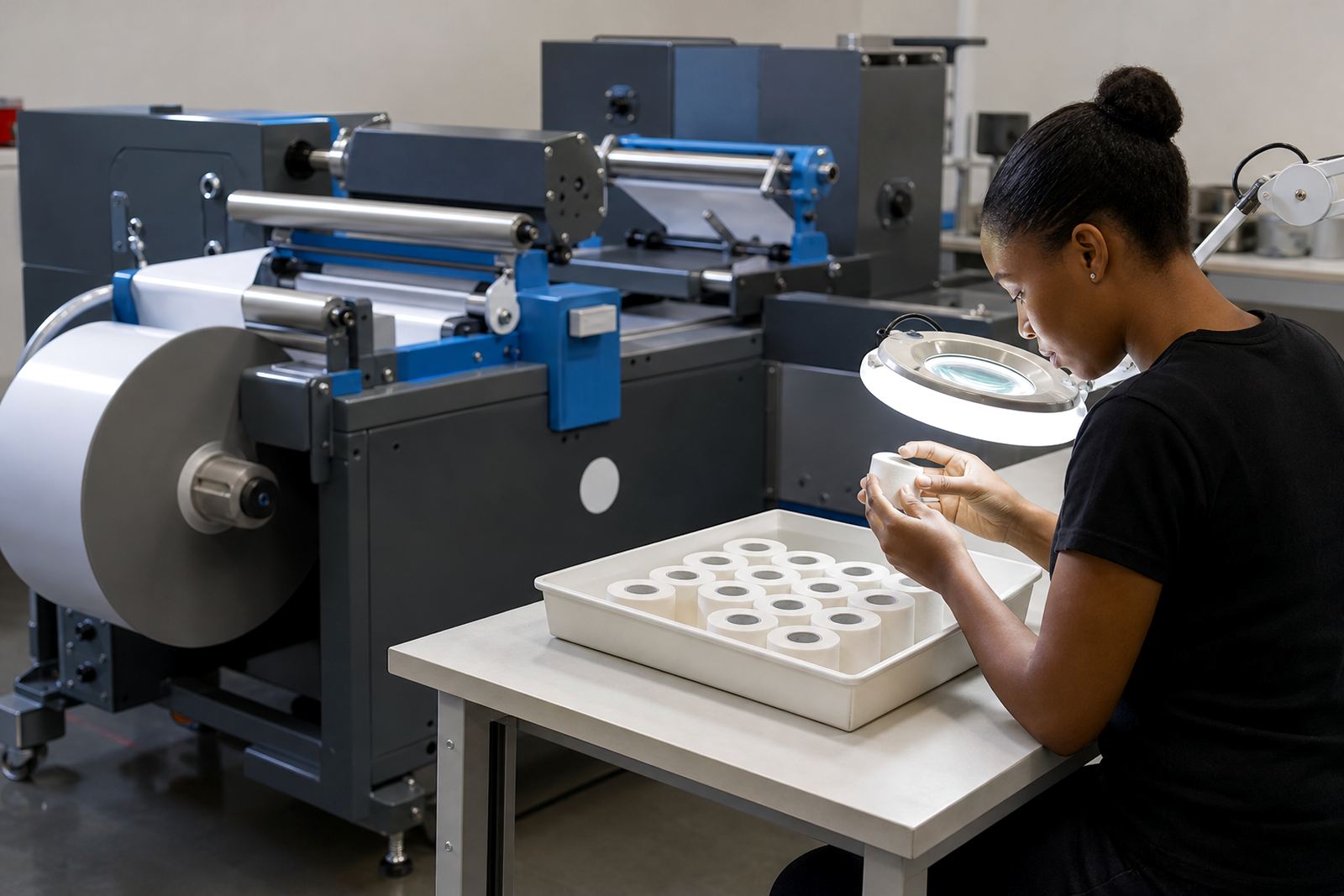
Good lighting over the inspection point helps operators catch slitting errors, edge curl and poor varnish laydown before the roll is packed. If the line also handles adhesive stocks that pick up dust, a cleaner staging area near the unwind section is worth the extra planning, especially where humidity from Durban or coastal storage can affect the web.
Set-up habits that keep a contract line busy
Small setup mistakes can eat into a contract job very quickly. An operator who guesses die depth, ignores web tension or feeds the wrong registration values may spend more time rescuing the job than running it. Training should cover the whole path, from roll loading through to rewind tension and final roll inspection.
- Match the web tension to the substrate, not to habit
- Check registration marks before the first full run
- Confirm slitting knives are aligned for the finished roll widths
- Strip matrix waste before it starts pulling the web off line
- Inspect rewind edges for telescoping or loose winding
When teams are trained on the exact machine setup they use every day, cut quality is steadier and material loss usually drops. That matters when jobs move between Johannesburg, Pretoria and Durban with different stock types and finish requirements.
Common mistakes that cost real money
Contract finishing jobs often fail in the same places. Too much tension on a thin film can stretch the web and throw off the cut. Too little tension on a wide roll can cause wandering edges and poor rewind build. A poorly chosen die or blade set can leave burrs, lifted edges or partial cuts that only show up once the customer starts handling the roll.
Another common mistake is leaving maintenance until the machine is already behaving badly. Worn rollers, dirty sensors and neglected guides will show up first on the difficult jobs, usually when the deadline is already tight. Preventive maintenance and a sensible parts stock are part of the work, not an extra.
Budget ranges that suit Rand figures
The budget for contract finishing equipment depends on how many processes must happen in line, whether the job needs laser, semi-rotary or flexible dies, and how much automation is required around stripping, slitting and rewinding. A compact entry setup for simpler label finishing can sit in the lower hundreds of thousands of Rand, while a more complete line with multiple stations, tighter registration control and higher throughput usually moves into a much higher band.
For established printrooms handling mixed substrates and repeat production, the total project cost should also include commissioning, operator training, line setup help and spare parts planning. Those items are easy to overlook when comparing machines, but they shape the real cost of the line over months of production.
Label-Cutter works with finishing installations, breakdown repairs, remote support, die setup help, registration calibration and production optimisation from Kya Sand, Randburg, with support across South Africa through Johannesburg, Pretoria, Durban, Cape Town and Gqeberha branches and service areas.