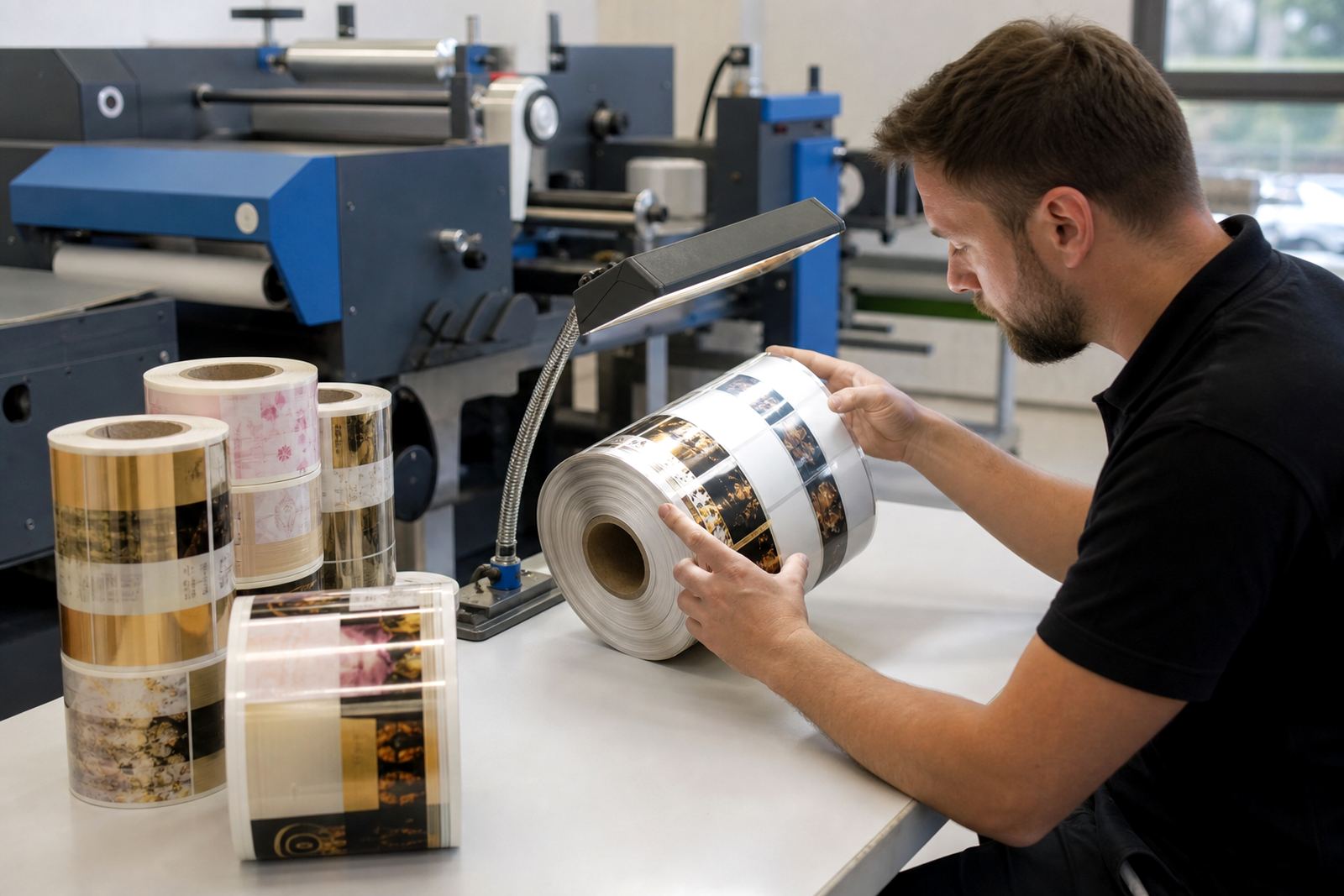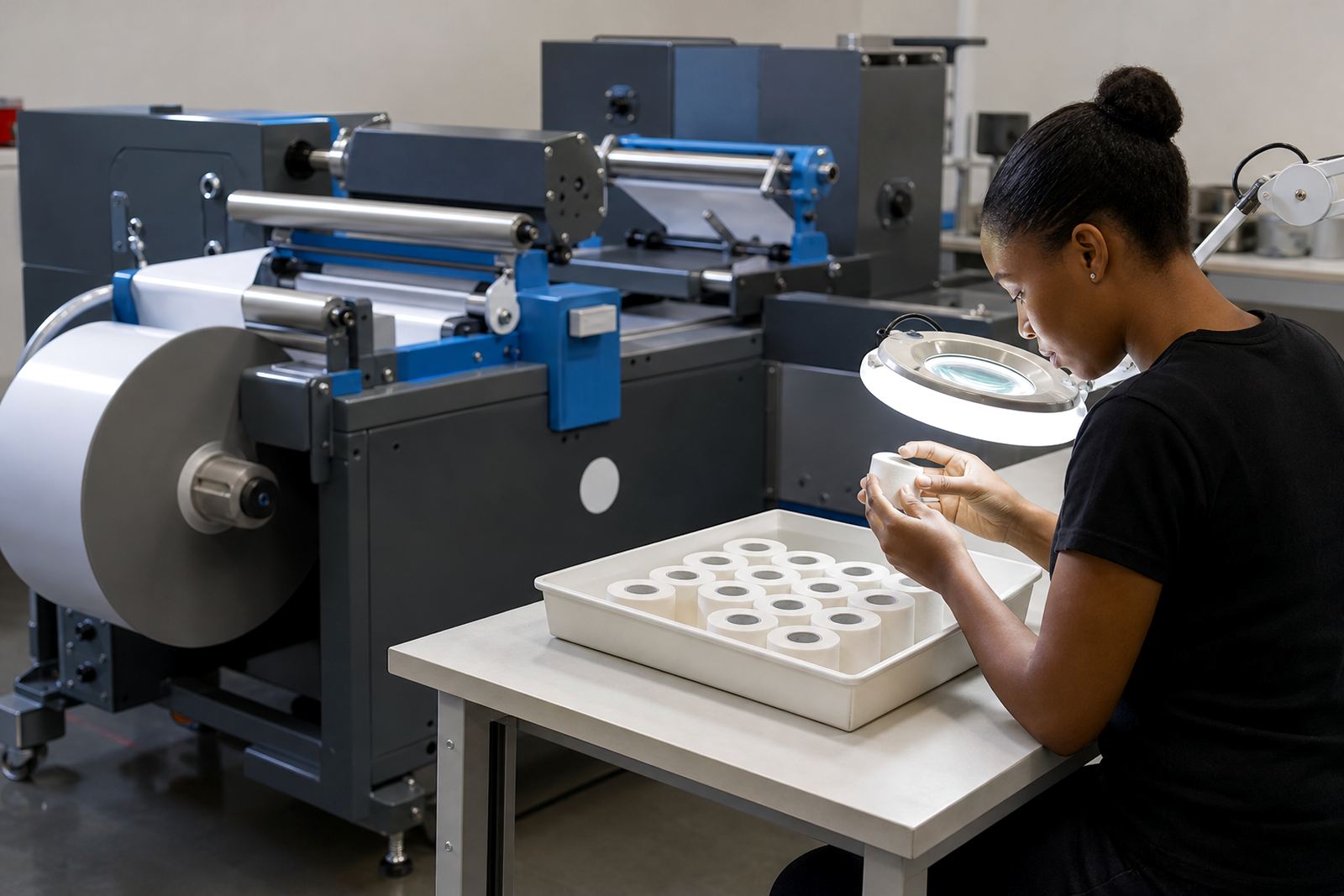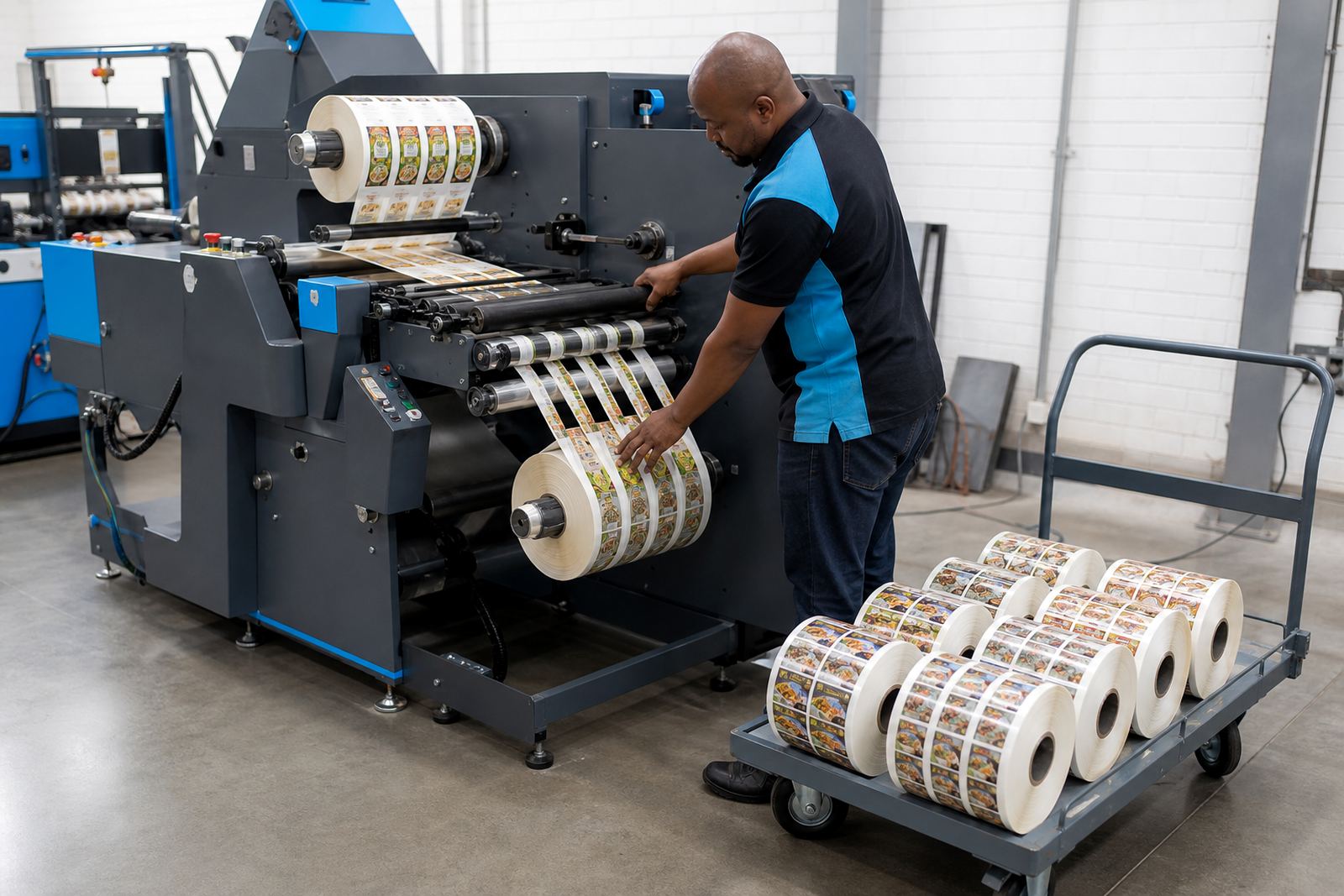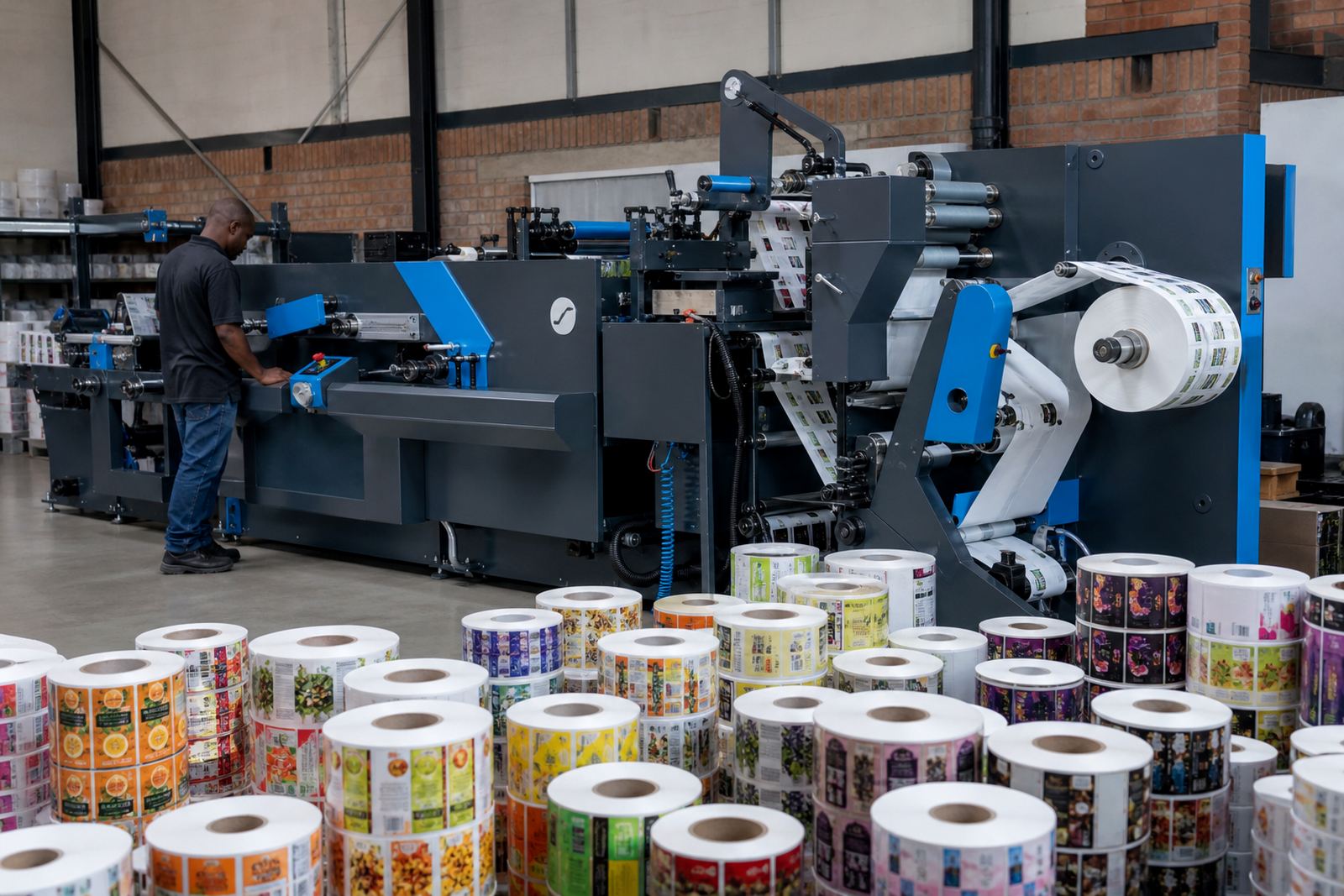
When one artwork becomes many label versions
Versioned work often starts with a single design and then branches into language sets, pack sizes, flavour lines or regional regulatory text. The pressure is not only on print quality, but on keeping each version separate, legible and ready for the right packing line. In a busy shop, one mixed roll can create waste fast, especially where operators are working across several jobs in the same shift.
Digital finishing suits these jobs because the cut path can follow each artwork without waiting for hard tooling every time. Semi-rotary and laser cutting each have their place, and the right choice depends on substrate, volume and how often the artwork changes. Where a label printer is handling frequent version swaps, registration marks, matrix stripping and rewinding need to work together cleanly.
- Multi-language packs with repeated artwork and small text changes
- Short production runs across several SKU variants
- Labels that must stay sorted by version during dispatch
- Rolls that need narrow slit widths for smaller applicators
A practical machine set for version control
The usual setup starts with unwind, web guidance and a cutting stage, then moves into lamination or varnish where the label construction needs extra protection. After that, the web passes through waste stripping, slitting and rewinding so the finished rolls are packed in a clean order. For some jobs, flexible dies are the better fit, while other runs benefit from laser cutting where fine detail and frequent artwork changes are part of the daily pattern.
On versioned labels, the goal is to keep the web stable while the machine reads the marks and holds cut position from one repeat to the next. That matters when the artwork contains fine text, barcodes or small panel shifts between languages. A line that can keep tension steady and rewind neatly is usually easier to run in a plant where more than one operator handles the same job.
- Unwind section with stable tension control for different roll diameters
- Registration reading for printed marks and repeat accuracy
- Lamination or varnish stage where surface protection is needed
- Matrix stripping, slitting and rewind for finished roll order
How layout choices affect the finished roll
Good planning starts with the reel size, core size and the final roll width the customer needs. If the roll is too wide, the next stage on the packing side becomes slower. If it is too tight, the labels can telescope or edge damage starts showing before the cartons leave the floor. The rewind direction, slit positions and waste path should be mapped before the first production run, not after the operator is already adjusting the job.
Versioned labels also benefit from a layout that keeps similar versions grouped together. That makes stock control simpler and helps the packing room pick the right roll without second guessing. Where a plant runs several SKUs in one shift, a tidy rewind plan saves more time than people expect, and it reduces the chance of mixing language sets.
- Match slit widths to the smallest applicator on site
- Keep each version on a clearly separated rewind roll
- Allow enough web path for lamination or varnish cure where needed
- Check core size, roll weight and handling space before production starts
Common mistakes that make versioned jobs messy
A frequent mistake is treating every version like the same job with a different file name. In practice, a label with extra text, a changed barcode or a slightly different panel width can shift the cut position and upset matrix stripping. If the operator is not checking the registration marks and rewind tension, small errors collect across the roll and end up visible on every packed carton.
Another problem is poor separation after slitting. A job may look fine at the cutting stage, then arrive at dispatch with mixed rolls or loose edges because the rewind sequence was not planned around the final packaging method. The machine can do a lot, but the line still needs a proper setup from unwind through to the last rewind station.
- Ignoring registration marks when artwork changes between versions
- Using the wrong die setup for narrow text or fine borders
- Overlooking waste stripping on light films and coated stocks
- Leaving rewind tension too loose for small diameter rolls
Installation, training and servicing for South African floors
Label-Cutter works with label printers and packaging producers in Randburg, Johannesburg, Pretoria, Durban, Cape Town and Gqeberha, with support for commissioning and operator handover on site. The machine has to fit the physical line, the space around the rewinder and the way finished stock moves into packing or storage. If the room is tight, the layout needs clear access for roll changes, waste removal and routine checks.
Training matters because versioned jobs depend on repeatable settings. Operators need to know how to read the job, load the web, verify registration and keep the rewind sequence in order. Preventive maintenance and spare parts planning are part of the same conversation, because a stopped finishing line can leave a printer sitting on completed rolls that cannot move forward.
- Machine installation and line commissioning for new finishing lines
- Operator training for setup, monitoring and roll handling
- Breakdown repairs, preventive maintenance and remote support
- Spare parts supply, die setup help and production optimisation
Rand ranges that help frame the purchase
Budget depends on the cutting method, the amount of automation, and whether the line needs lamination, varnish, matrix stripping and multiple rewind stations. A smaller entry line for versioned labels may sit in the lower six figures in Rand, while a more complete digital finishing line with tighter control, wider web handling and stronger automation can move well into the upper range. Used or compact equipment can reduce the initial outlay, but the real test is whether it handles the label mix already coming through the shop.
It helps to think in terms of production fit rather than machine size alone. A line that handles short runs efficiently can be more useful than a larger unit that needs constant intervention. Budget also needs to cover installation, tooling where relevant, and the practical time needed for operator training and setup work.
- Entry-level finishing setups: often in the lower six figures in Rand
- Mid-range systems with more control and finishing options: higher six figures
- Heavier production lines with broader automation: can reach well above that range
- Allow for commissioning, training and support work in the total plan