Pharma runs punish loose set-up
Pharmaceutical work is usually the first place where a finishing line gets tested properly. Small text, warning panels, variable data, serials and tamper evident features all put pressure on the web path, the registration system and the rewind. A machine that looks fine on plain commercial labels can start wasting material once the artwork carries fine reverses, narrow cut paths and tighter inspection rules.
In Kya Sand and across the country, label printers handling pharma work usually ask for tighter control than their general packaging lines. The web has to stay true through unwind, laminate, die-cut, strip waste, slit and rewind without curling the stock or wandering off the marks. Where labels carry batch data or track-and-trace elements, small inconsistency becomes scrap very quickly, and the roll identification at the end has to stay readable and tidy.
That is why the machine choice, the tension settings and the way operators load rolls matter as much as the finishing method itself. A good line for pharma labels is not only about speed, it is about repeatable output under steady inspection.
Typical line parts on a pharma label job
Pharmaceutical label production can run on different finishing methods depending on the stock, the shape and the print process. Some plants use laser die-cutting for short runs and repeated artwork changes, while others prefer semi-rotary die-cutting with flexible dies for longer repeats and cleaner economics on steady work. Lamination or varnish may be added when abrasion resistance, moisture resistance or scuff protection is needed.
A sensible machine set for this work often includes:
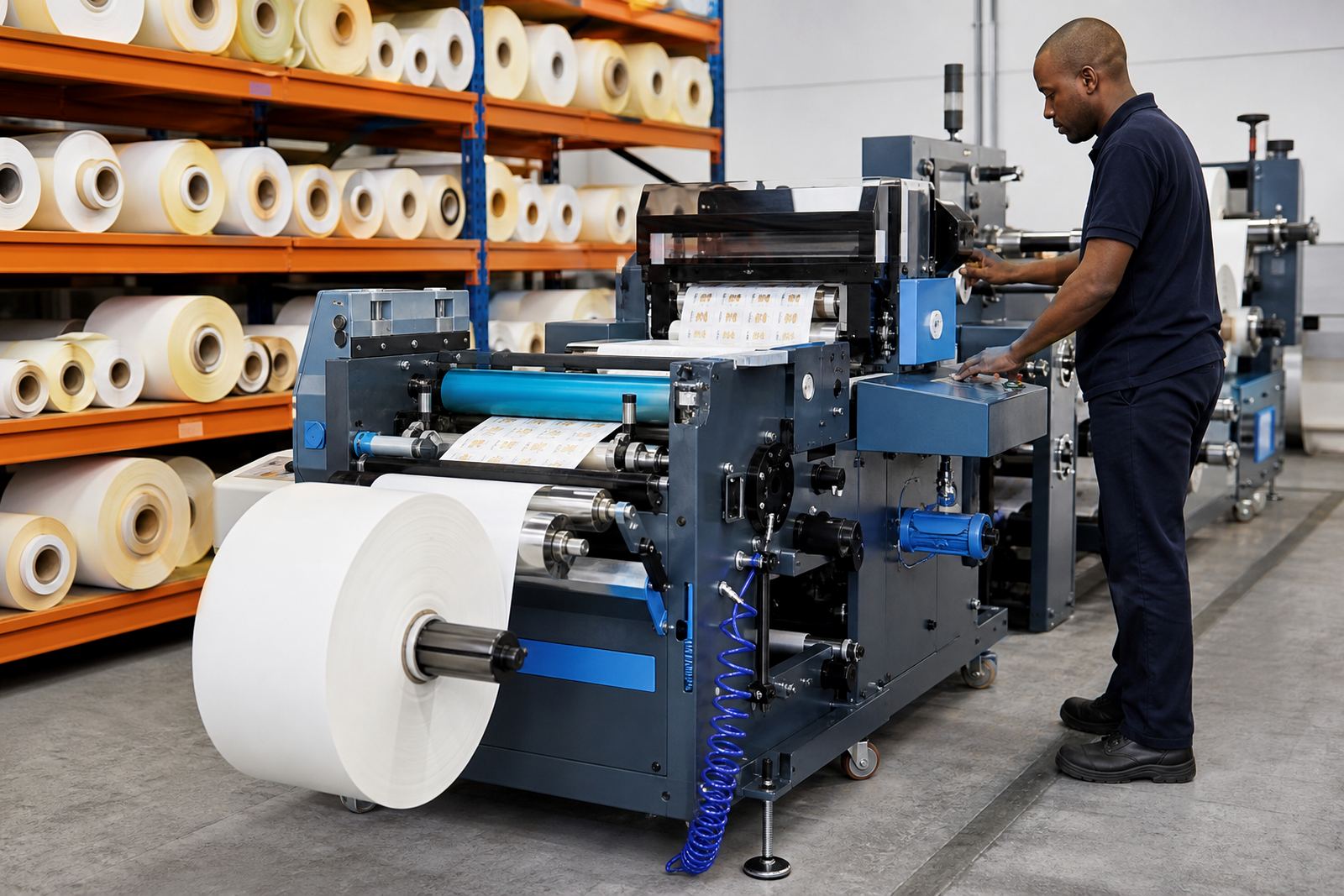
- Unwind with stable tension control for narrow or wide label webs
- Lamination station for clear film or protective coating where required
- Laser or semi-rotary die-cutting section, depending on the job mix
- Matrix stripping for clean waste removal on small label gaps
- Slitting knives for multiple lanes or narrower finished rolls
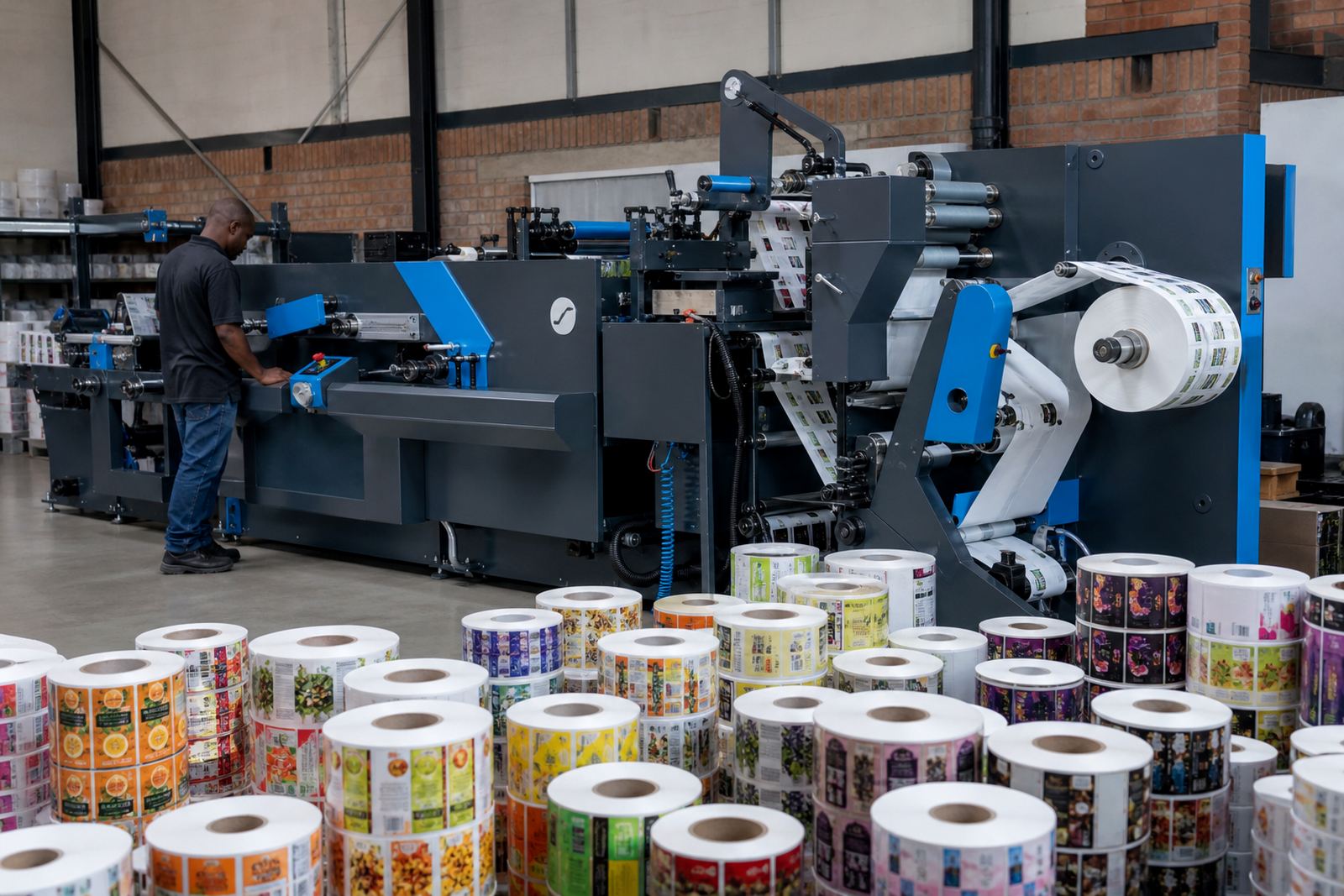
- Rewind stations that keep rolls even and easy to identify
Registration marks matter throughout the line. If the sensor reading drifts, the cut lands off position and the labels stop matching the printed image. On pharma packs, that is not a small nuisance, it changes whether the roll can move forward with confidence.
Layout choices that save hours on the floor
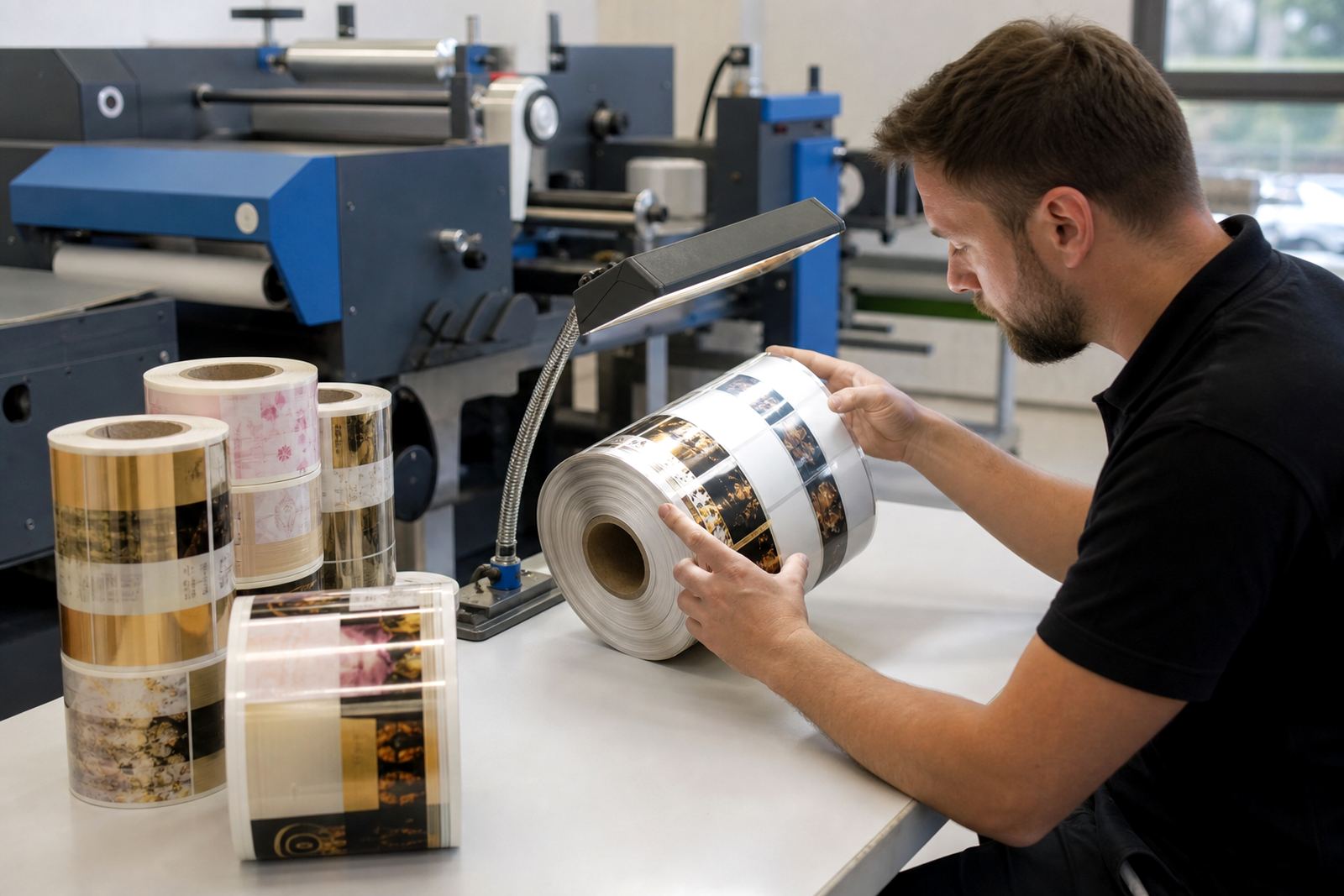
When we look at a pharma label line, the room around the machine matters almost as much as the machine itself. Operators need space to load parent rolls, check the web edge, change knives or flexible dies, and remove finished reels without catching the corner of the roll. If the layout is too tight, people start working around the machine instead of with it, and that is where bad habits creep in.
A practical layout usually keeps the unwind side clear, leaves a straight path for the web and gives the rewind side enough room for finished rolls, cores and packing tables. In humid coastal areas like Durban or Gqeberha, roll storage also matters because coated stocks can change behaviour if they sit badly packed for too long. For that reason, the line should sit in a part of the production area where rolls are handled neatly and not left exposed to dust or damp air.
For mixed pharma and general label work, it is wise to think about changeover space too. A line that can switch from one label format to another without forcing operators into awkward positions tends to keep better control on the shift. The aim is not a fancy layout, just one that lets the crew follow the same sequence every time.
Where pharma jobs usually go wrong
Most trouble on pharmaceutical labels starts with setup, not with the cutting head itself. If the web tension is too high, the stock can stretch and the registration mark loses its place. If it is too low, the web wanders, waste removal becomes messy and the rewind starts building uneven edges. Slitting then magnifies the fault, because every narrow roll shows the mistake clearly.
Common mistakes include:
- Ignoring the condition of the flexible die or laser path setup
- Setting the registration sensor too far from the printed mark
- Using the wrong tension for coated or thinner films
- Running matrix stripping before the cut is fully clean
- Allowing finished rolls to build with uneven core pressure
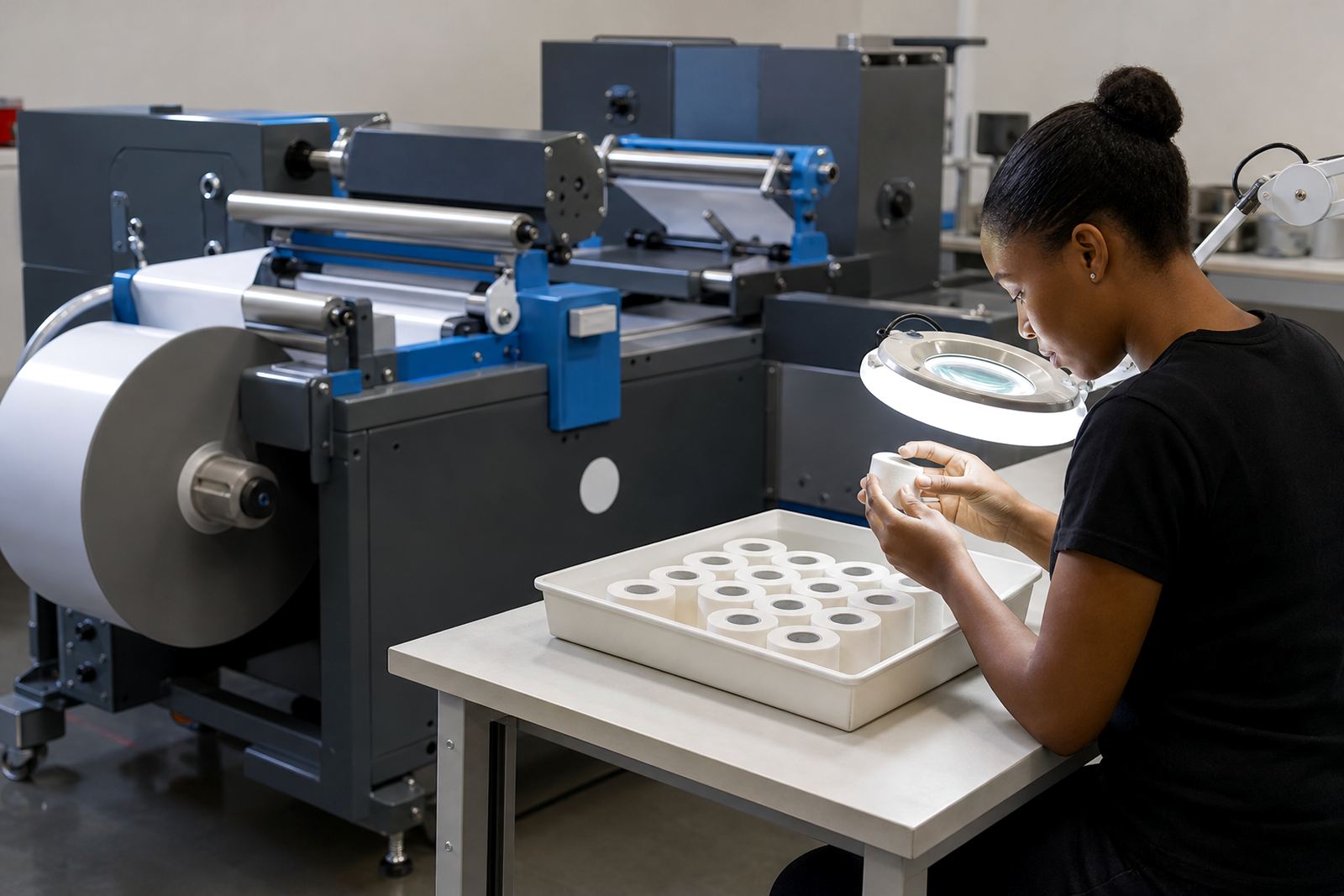
Operators also need to watch label identification. On pharma work, a mixed reel or an unclear roll label can create confusion later in packing or dispatch. That is why disciplined rewinding and roll marking belong in the same conversation as cutting quality.
Training that keeps the line steady
Installation is only the first part of the job. The line still needs hands that know how to read the web, set the tension and recognise when the cut is beginning to drift. Our operator training focuses on the practical side of the machine: loading rolls, setting register, checking slit widths, watching matrix stripping and keeping the rewind clean through a full run.
We also work through preventive maintenance and breakdown repairs so the team knows what should be checked before wear starts affecting output. That includes drive parts, sensors, knife condition, web guides and the general cleanliness of the line. On a pharma label machine, small build-up from adhesive or coating can affect the next batch, so housekeeping is part of production discipline.
For plants with several label types, production optimisation can help the line cope with short runs, narrow widths and tighter inspection standards without making the team chase adjustments all day. The point is to keep the machine predictable enough for the work it serves.
Budget bands for pharma finishing in Rand
Budget depends on whether the line is aimed at short digital runs, medium production volumes or more continuous label work. A compact finishing set for smaller pharmaceutical label jobs may sit in a lower equipment band, while a line with more automation, better registration control and wider finishing options climbs quickly. Semi-rotary systems, laser units, lamination modules and extra rewind or slitting stations all move the number upward.
As a rough planning guide, buyers often need to think in bands rather than exact figures. Entry-level or compact digital finishing systems can begin in the lower Rand millions, while more capable lines with stronger registration control, wider web handling and added finishing modules can reach several million Rand. Installation, operator training, commissioning and spare parts planning also need to sit inside the budget, not outside it.
For plants in Johannesburg, Pretoria, Durban, Cape Town and Gqeberha, the better question is usually which setup will handle the label mix without forcing constant compromise. A machine that suits the work today but cannot cope with tighter pharma jobs later becomes expensive in a different way.
Support from Kya Sand for South African label plants
Our team in Kya Sand, Randburg works with label printers and packaging producers that need digital label die-cutting and finishing machines for demanding pharma work. The service mix includes machine installation, line commissioning, operator training, preventive maintenance, remote support, spare parts supply, die setup help, registration calibration, rewind setup, slitting setup and production optimisation.
The team includes Thabo Mdlalose, Karen Naidoo, Pieter Pienaar, Lerato Bhengu, Musa Wessels and Ayesha Shezi, with support coverage for Randburg, Johannesburg, Pretoria, Durban, Cape Town, Gqeberha, Midrand and Kempton Park. If you are planning a new pharma label line or tightening up an existing one, our contact form is the place to start the process and share the job details.
Pharmaceutical labels reward careful setup and steady routines. Once the web path, register and rewind are right, the whole line becomes easier to live with.