Cosmetic lines need clean cuts and calm handling
Cosmetic labels sit on jars, tubes, bottles and cartons that get handled a lot, so the cut line must stay neat and the roll must run true. A good finishing line keeps the printed image steady through lamination, die-cutting, matrix stripping, slitting and rewinding, with registration marks read properly from the first metre to the last.
For beauty and personal care packs, even a small burr on the edge can show once the label is applied to clear glass or a glossy plastic container. That is why many label printers in Johannesburg, Pretoria and Durban look for equipment that can handle fine detail, narrow webs and stable tension without fuss.
Cosmetic work also has plenty of small SKU changes. One job may be 30 mm round seals for sample pots, the next may be a 4-colour wrap label with foil-look varnish and a tidy gap between repeats. The machine set-up has to move between those jobs without turning setup into a long, messy exercise.
Typical machine set-up for cosmetic label jobs
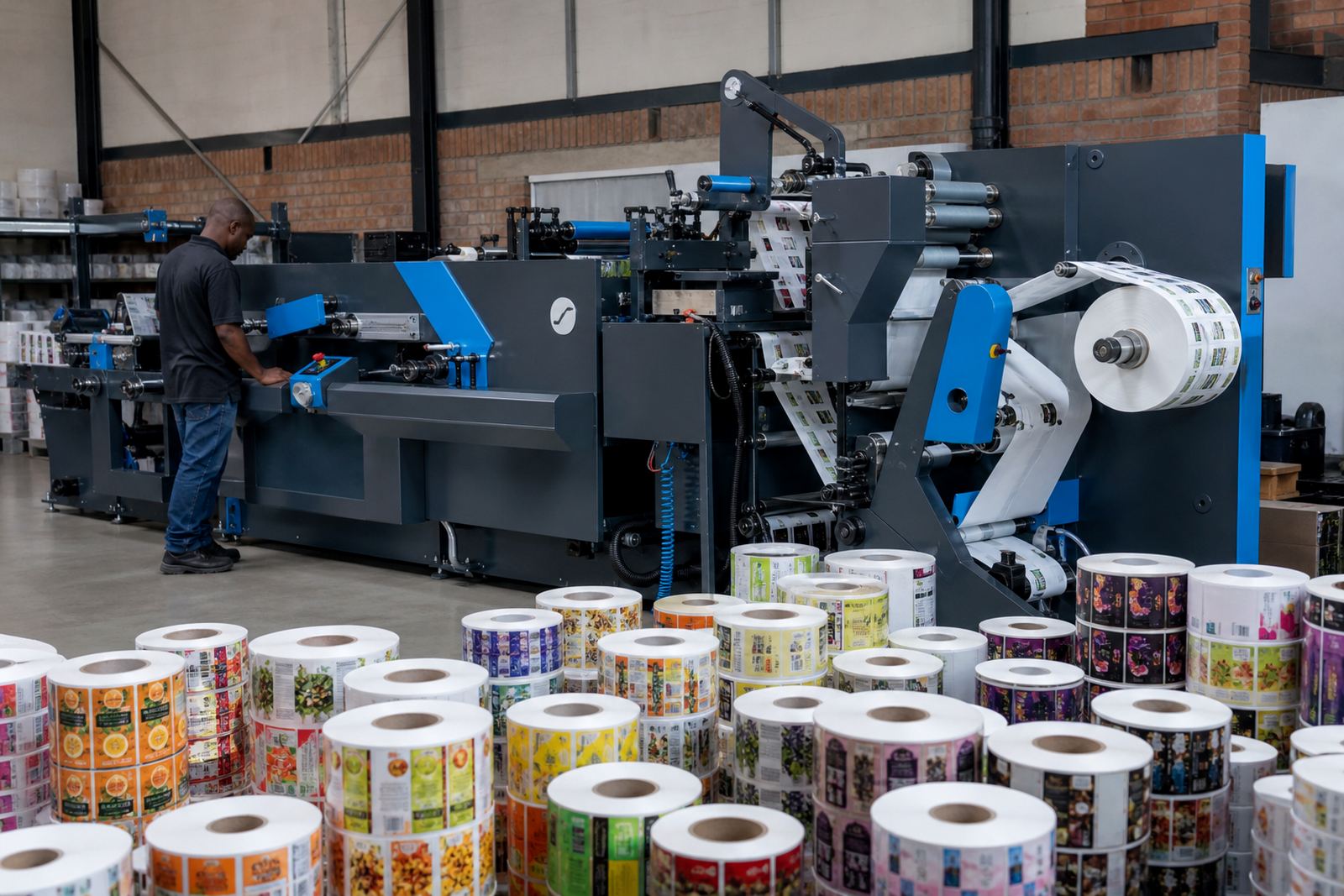
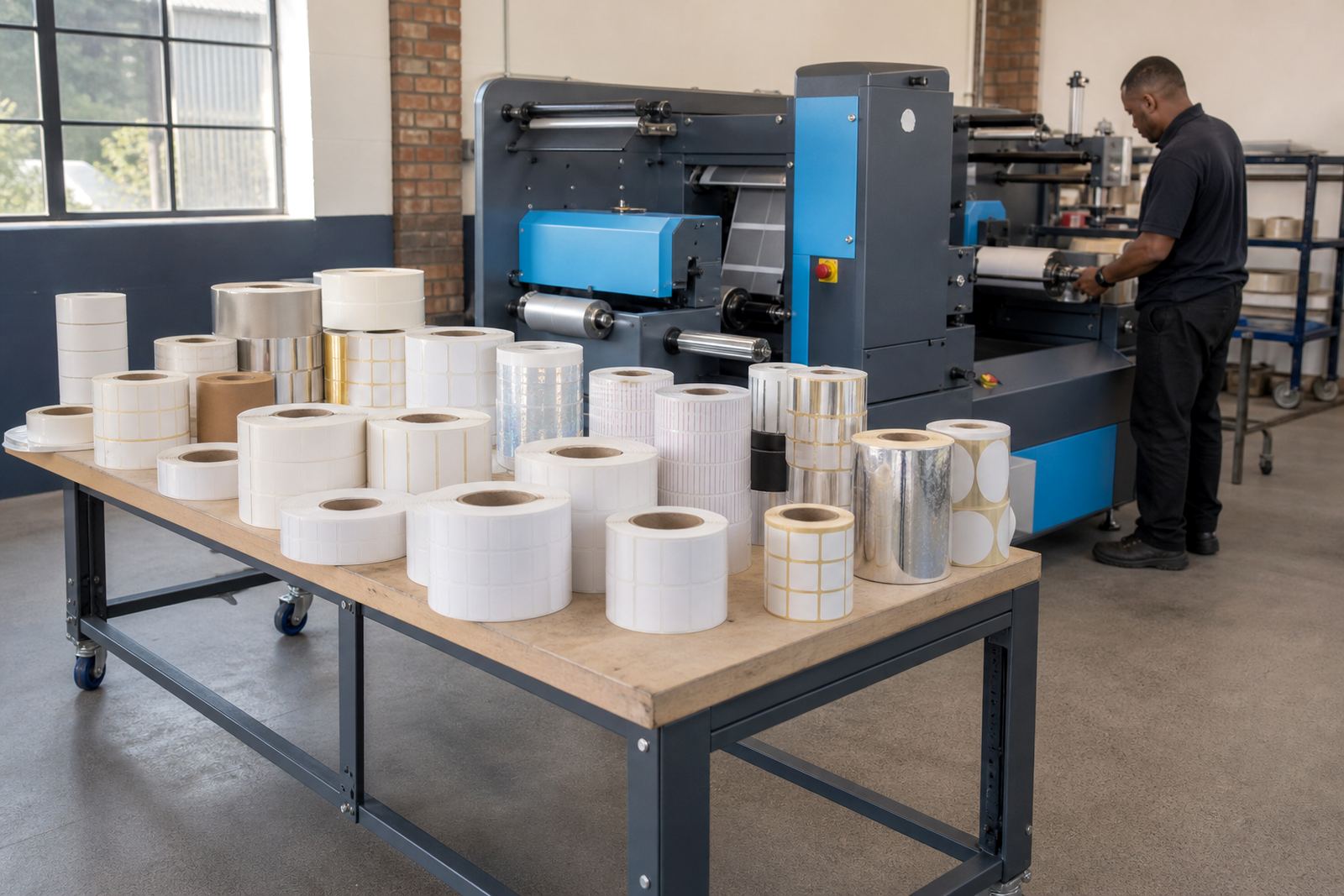
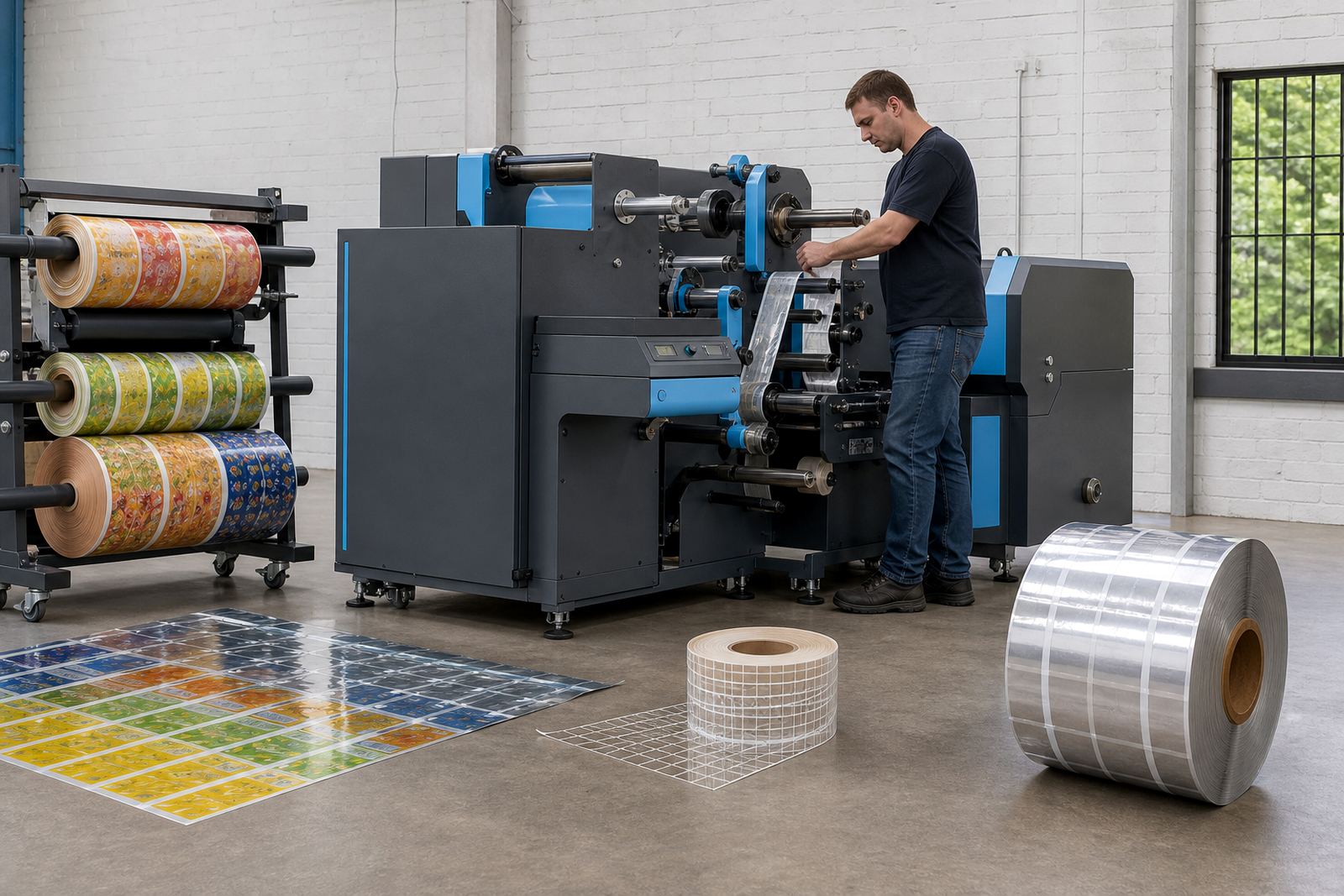
A practical line for cosmetic labels usually starts with unwind control, then lamination if the print needs protection or a richer surface, then die-cutting, waste stripping, slitting and rewinding. Some shops add flexible dies for higher volume runs, while others prefer laser finishing for short, detailed work and variable shapes.
The right layout depends on the web width, the label size and how many designs share the same run. A narrower system can suit small personal care labels, while wider equipment helps when the same shop also handles sleeves, gift packs or larger carton labels. Roll diameter matters too, because a wound roll that is too loose or too tight causes trouble at application.
- Lamination for scuff resistance and a richer surface
- Fine die-cutting for small text and shaped labels
- Matrix stripping that keeps the waste edge clean
- Slitting for multi-up rolls and applicator-ready output
- Rewinding with steady tension for neat final rolls
Registration marks and tight artwork do not forgive sloppy setup
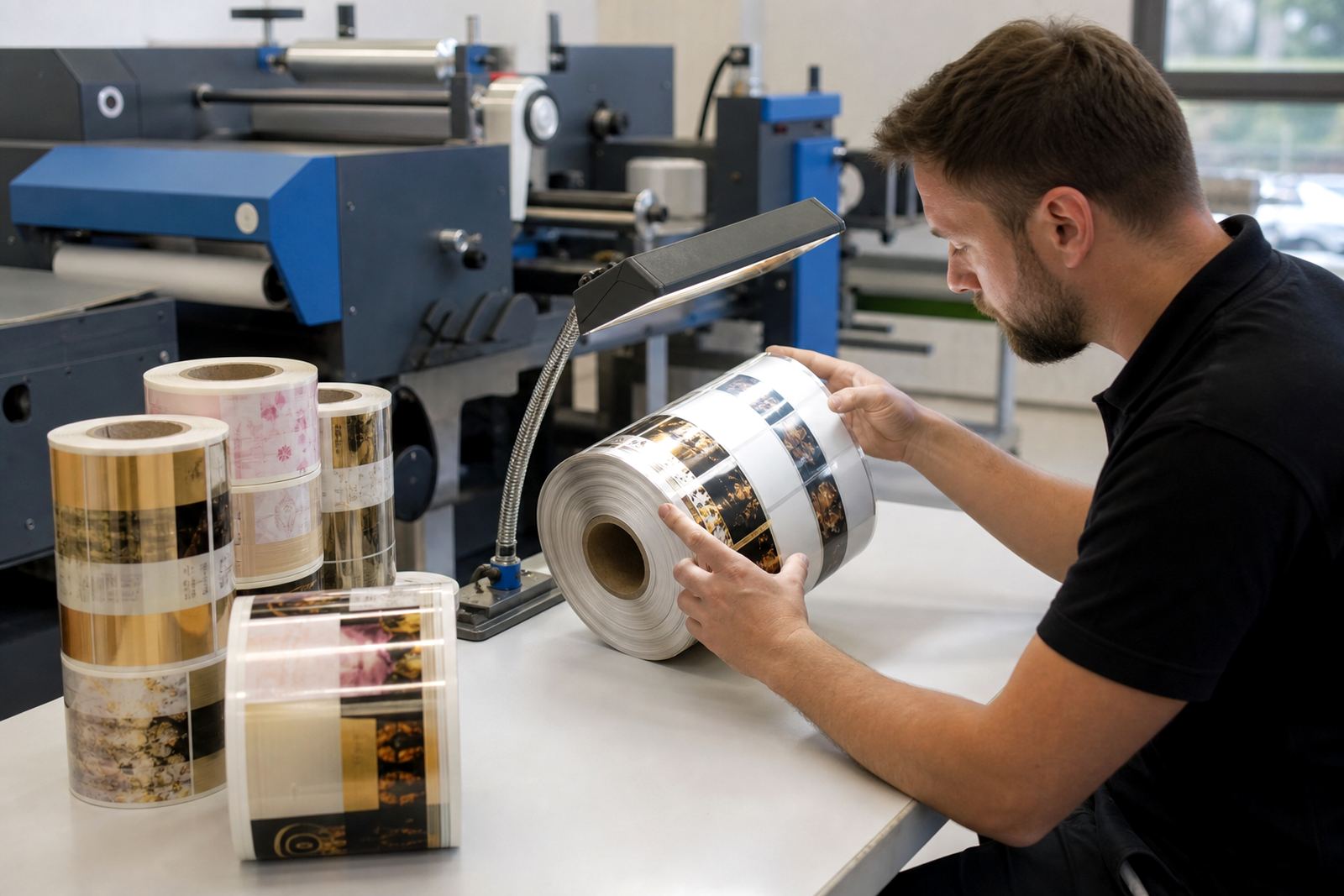
Cosmetic packs often use thin lines, pale tints and small type. That means registration marks need to be read accurately, and the web must stay aligned through the full pass. If the cutter drifts, the waste may start to catch, or the cut may clip into the print area on a narrow border. A small fault like that is enough to throw off a whole lot.
Operators also need to watch the lamination lay-down. Bubbles, stretch marks or edge lift will show badly on a high gloss cosmetic label, especially on clear or metallic stocks. The feed path should stay predictable, with web guides set properly and the rewind torque matched to the material.
- Check mark contrast before the run starts
- Keep the web edge straight through the guide path
- Match knife pressure to stock thickness
- Set rewind tension to suit the roll size
- Test one repeat before filling a full roll
Planning the line around your printed stock and finishes
Some cosmetic labels are printed on paper stocks, others on film, and the finishing line has to suit both. If the job uses gloss laminate, varnish or special coatings, the setup should leave enough drying or curing margin before rewind. A press that prints close to the edge also needs careful matrix removal so the waste pulls cleanly without lifting fine details.
For packaging producers, layout planning should include floor space for roll handling, inspection and storage of finished reels. The path should make sense from print to finish to pack-off, otherwise operators spend too much time turning rolls by hand and the process gets clumsy. In Randburg and Midrand, space is often the first thing that gets underestimated.
Installation and commissioning matter here. The machine must be level, the unwind and rewind axes set correctly, and the registration system calibrated for the exact label length. That sort of setup saves a lot of trouble when the same shop runs perfume labels one week and hand cream labels the next.
Common mistakes on cosmetic label runs
One common mistake is treating a cosmetic label job like a plain utility label. Fancy artwork can hide small errors on screen, but the finished reel shows everything. Another issue is loading the wrong slitting pattern for the applicator, which leads to rolls that do not feed well on the bottling line.
Some shops also rush the first setup and never check the final unwind direction or core size. That sounds minor until a production team in Cape Town or Gqeberha opens the roll and finds the winding orientation is wrong for their applicator. A bad core choice can waste good stock too.
- Skipping a test repeat before full production
- Using poor tension on thin film labels
- Leaving waste matrix too narrow for clean stripping
- Ignoring slitter blade wear on long runs
- Setting the rewind too hard on delicate stock
Budget ranges in Rand for cosmetic label finishing
Budgets depend on whether the shop needs a compact finishing unit, a mid-range production line or a fuller system with lamination, inspection and more automation. Smaller setups for short cosmetic runs can start in the lower hundreds of thousands of Rand, while more capable lines for higher volume work move into the higher hundreds of thousands and beyond. Laser systems for very fine detail can also change the price picture quite a bit.
It helps to think beyond the machine price alone. Installation, operator training, spare parts planning and servicing all affect the real cost of ownership. A line that is easy to maintain and simple to set up can protect margin better than a cheaper unit that needs constant attention from the technical team.
For printers handling premium beauty labels across South Africa, the better question is not just what the machine costs, but how much waste, downtime and rework it avoids. That is where line commissioning, die setup help and production optimisation start to matter in daily use.
Support from Kya Sand to the main print centres
Label-Cutter works from Kya Sand, Randburg and supports cosmetic label producers across Johannesburg, Pretoria, Durban, Cape Town and Gqeberha, with extra coverage around Midrand and Kempton Park. The team handles machine installation, preventive maintenance, breakdown repairs, remote support, spare parts supply, registration calibration, rewind setup and slitting setup.
That mix suits shops that print private label creams, fragrance lines, bath products and skincare packs, where the finishing stage has to stay neat without wasting stock. Thabo Mdlalose leads the business, with Karen Naidoo on sales, Pieter Pienaar on technical support, Lerato Bhengu coordinating service, Musa Wessels handling training and Ayesha Shezi managing parts and logistics.
Cosmetic labels leave little room for rough handling, so the finishing line has to be set up with care and kept in step with the printed artwork. When the roll looks good on the bench, it usually behaves better on the filling line too.