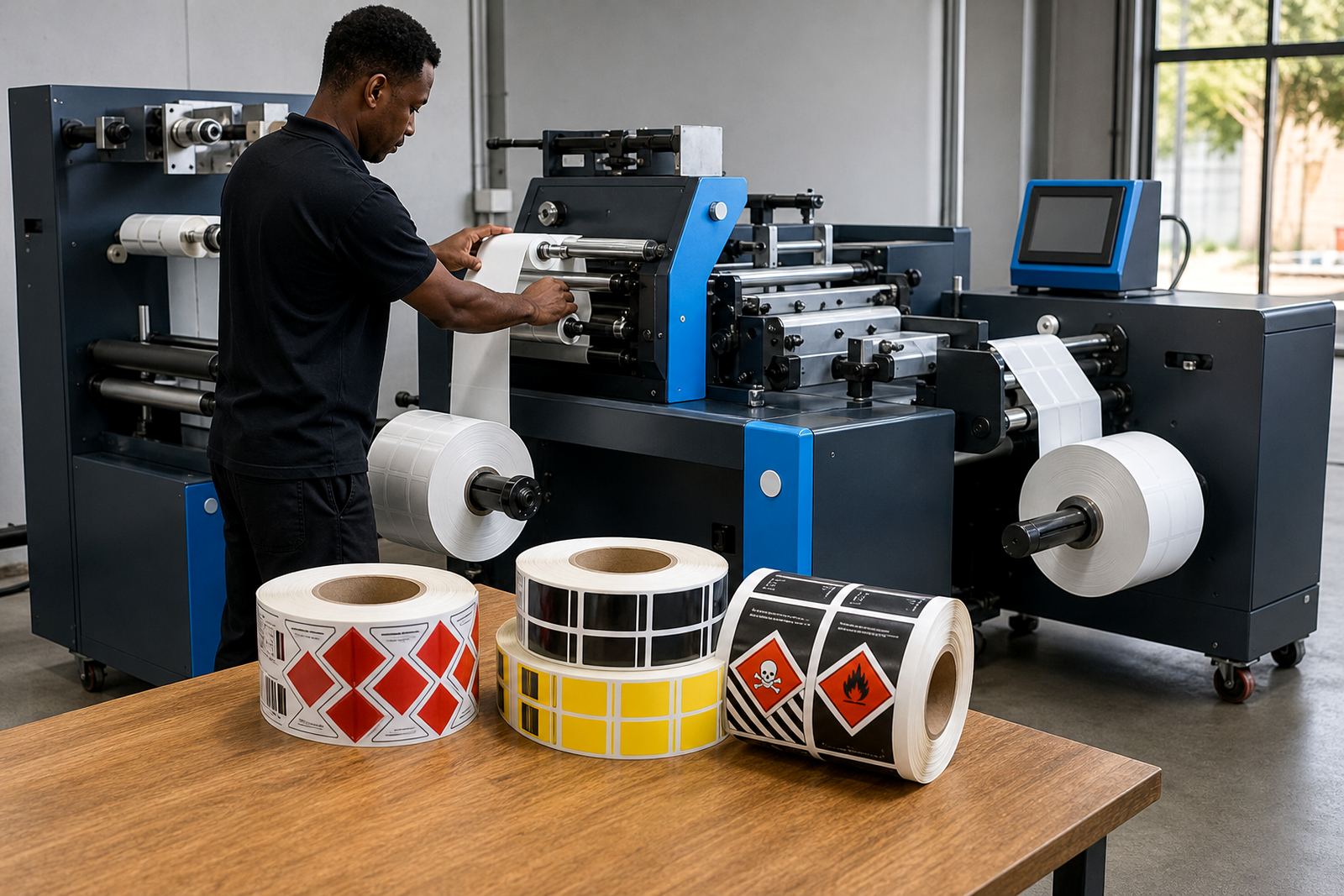
When sample rolls need to look like a real order
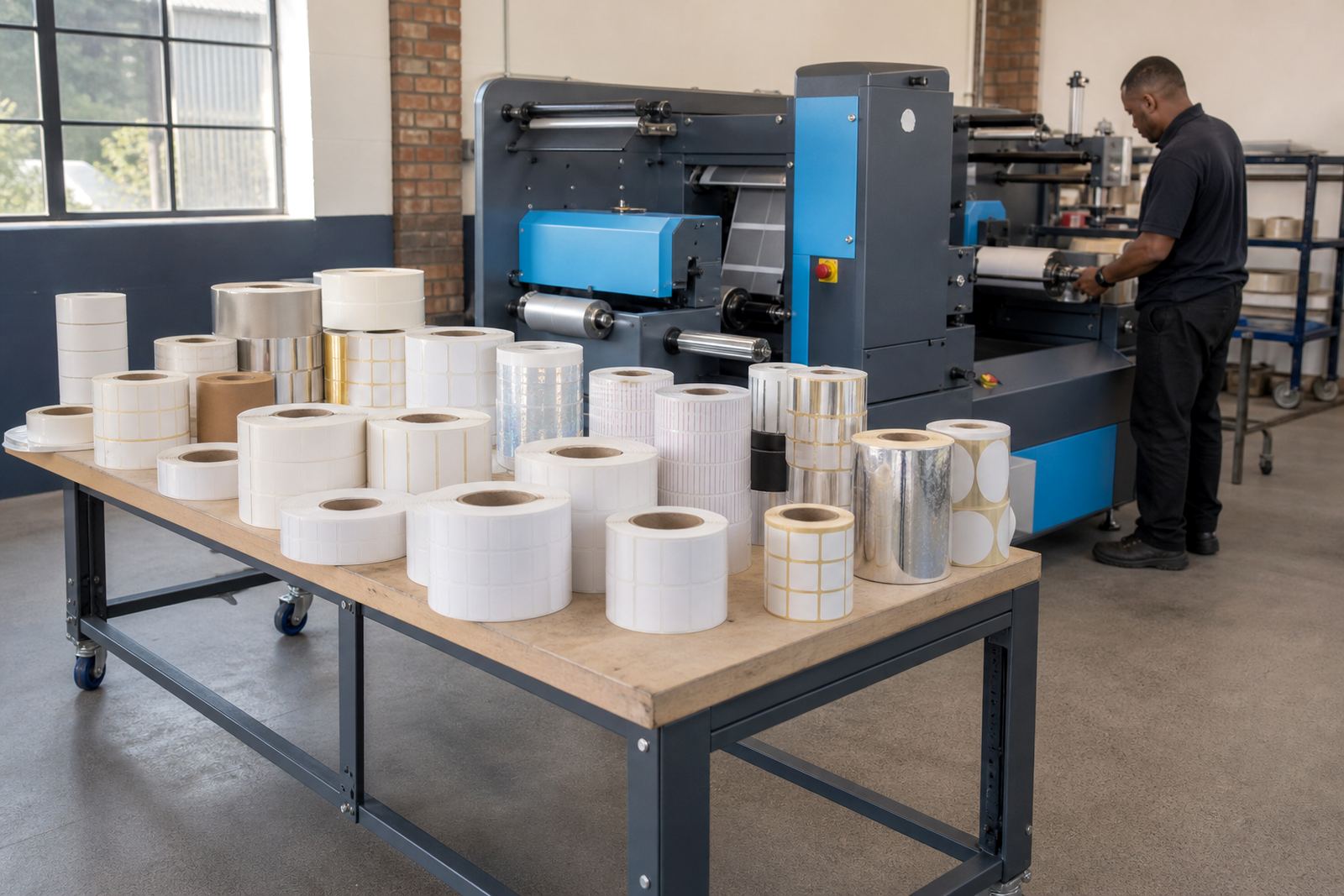
Sample production is rarely about volume. It is about getting a narrow web to behave, keeping print image to cutter alignment tight, and finishing a handful of metres without crushed edges or wandering slits. Many label printers use sample rolls to prove artwork, check adhesives, test substrates, or show a customer what a final label will feel like once it leaves the press.
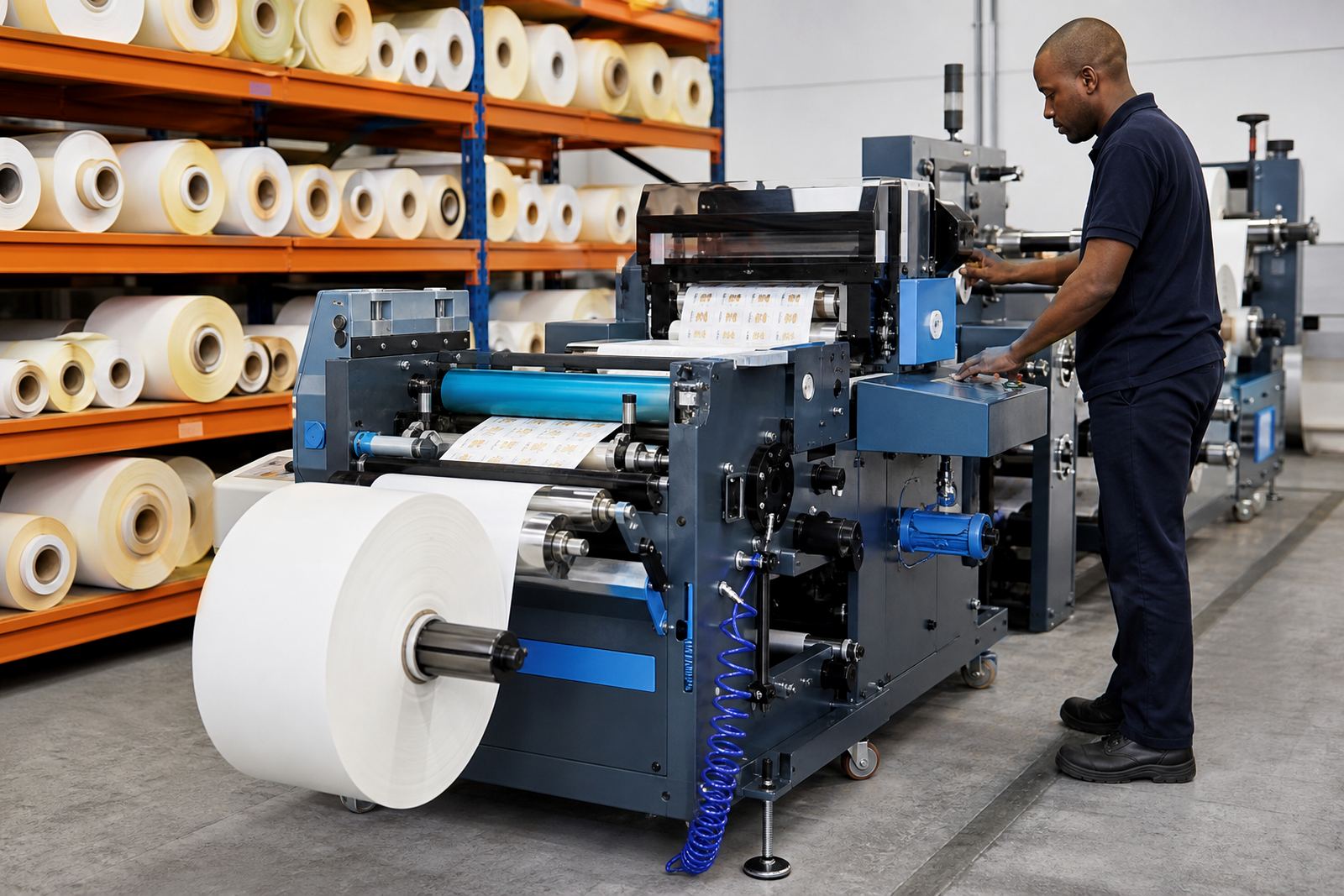
That is where a label finishing line earns its keep. A practical setup will handle unwind, lamination where needed, digital die-cutting or laser finishing, matrix stripping, slitting and rewinding in one flow. For sample rolls, the operator usually wants quick job changeover, stable tension and a clean finished edge on a small diameter rewind. If the web drifts, the sample can look uneven even when the print is sound.
A sample-roll line built for short web lengths and fast changeovers
The exact layout depends on the press output and the roll format, but a compact line often includes an unwind stand, web guide, lamination or varnish station if the sample needs surface protection, a cutting unit, waste removal, slitting knives and a rewind section. Some customers use semi-rotary die-cutting for repeat work. Others prefer flexible dies for a familiar label shape. Laser die-cutting can suit shorter sample batches where tool changes need to stay simple.
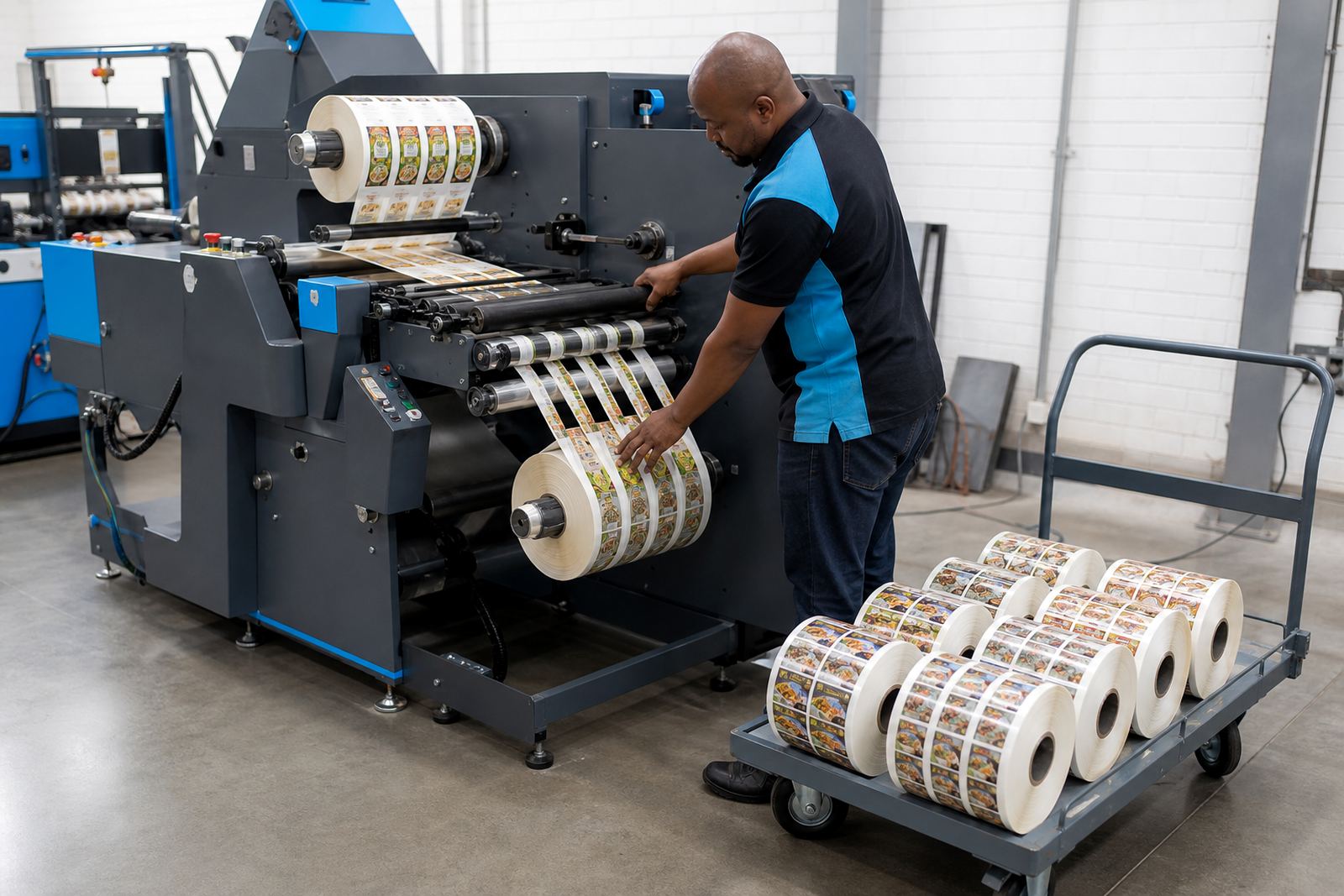
Small-diameter rewinds need careful control. A sample roll may be only a few metres long, but it still has to wind evenly on the core with no telescoping. Registration marks matter here because the cutter must stay in step with the printed repeat. On short labels, even a small registration error shows up fast on the finished roll.
- Keep the unwind tension light and consistent for thin face stocks.
- Check that matrix stripping has enough clearance for narrow waste webs.
- Match slitting positions to the final sample pack size, not the master roll width.
- Set the rewind core and tension for the smallest roll diameter you need to present.
Lamination, varnish and finishing choices that affect the sample
Some sample rolls need lamination because the label surface must survive handling, moisture or repeated inspection. Others use varnish instead, especially where the aim is to show gloss, touch, or print protection without adding too much build to the web. The finishing path changes with the substrate. Paper stocks, films and textured materials all behave differently once tension, heat and pressure enter the job.
If the sample is going to a packaging buyer or a brand owner, the finish needs to tell the truth. A satin lamination on a small roll can look very different from a gloss varnish on the same print. It is sensible to decide early whether the sample must reflect the final production method or just the printed look. That one decision affects the cutter setup, waste handling and final rewind quality.
- Use registration calibration before the first sample set is run.
- Confirm die setup help for the repeat length and web width.
- Allow space for inspection of the first few wraps on each rewind.
- Keep spare blades, dies and waste take-up parts close to the line.
Planning the floor around a sample roll workflow
Sample work often runs beside production work, so the floor plan has to make sense in a busy room. The web path should stay short and clear, with enough room for roll loading, sample inspection and operator movement around the machine. A cramped layout can make it harder to thread narrow webs and harder still to handle short roll outputs without marking them.
In Kya Sand, Randburg and across Gauteng, many label shops work in units where every metre matters. The same is true in Durban, Cape Town and Gqeberha where humidity can affect how certain stocks sit on the roll. Planning should include where the finished samples are packed, labelled and stored, plus where spare cores and slit knives are kept. If the sample line is shared with larger production, the transfer path needs to stay neat and safe.
Operators also need a clean routine for setup notes. Small changes in web tension, die pressure or slit position can alter the end result. A clear worksheet beside the line is often more useful than guesswork during a rushed sample run.
Common mistakes that waste time and roll stock
Sample roll jobs can go wrong in ordinary ways. The first is poor registration setup, which leads to off-cut labels and waste. The second is trying to run the web too fast before tension is stable. The third is using a slitting pattern that suits a larger production roll but not the narrow sample format. The fourth is forgetting that the rewind must stay tight enough for presentation yet loose enough to avoid edge crush.
Another issue is underestimating service work. Blunt blades, worn rollers and dirty sensors show up quickly on short batches. If the equipment is not maintained, sample work becomes unpredictable and operators start compensating by eye. That usually creates more waste, not less. Preventive maintenance and breakdown repairs both matter, even on a line that only runs sample quantities on some days.
- Do not assume the press repeat and the cutter repeat are already aligned.
- Do not over-tighten the rewind when the roll diameter is small.
- Do not ignore matrix stripping when the waste web is narrow.
- Do not leave sample setup to memory alone after the first job.
Rand figures for sample roll finishing and support
Budget ranges depend on width, automation, die method and whether the line includes lamination, slitting and rewind control. A smaller sample-focused finishing unit can sit in the lower Rand range for a basic setup, while a fuller line with better web control, inspection aids and finishing stations moves higher. Installation and commissioning add to the total, as do training, spare parts and any custom layout work for the shop floor.
For planning purposes, it helps to separate the machine cost from the running cost. A sample workflow may need flexible dies, spare blades, waste rewind parts, shutdown servicing and occasional remote support for setup checks. In larger label operations, a production optimiser may also help decide whether sample work should run on the same line as everyday jobs or on a dedicated station.
Clients in Johannesburg, Pretoria, Durban, Cape Town and Gqeberha can arrange machine installation, line commissioning, operator training, preventive maintenance, remote support and spare parts supply through our contact form. The office team includes Thabo Mdlalose, Karen Naidoo, Pieter Pienaar, Lerato Bhengu, Musa Wessels and Ayesha Shezi, and the support areas cover Randburg, Midrand and Kempton Park as well as the main metro regions.