When linerless work moves from sample to production
A linerless brief usually starts with a label that must release cleanly, cut accurately and run without a backing liner. That changes the whole finishing conversation. The face stock, adhesive release, top coating and roll tension all need to suit the press output and the finishing line. If the coating is too soft, the knife can mark the surface. If the web is not stable, rewind quality slips and the roll starts to telescope.
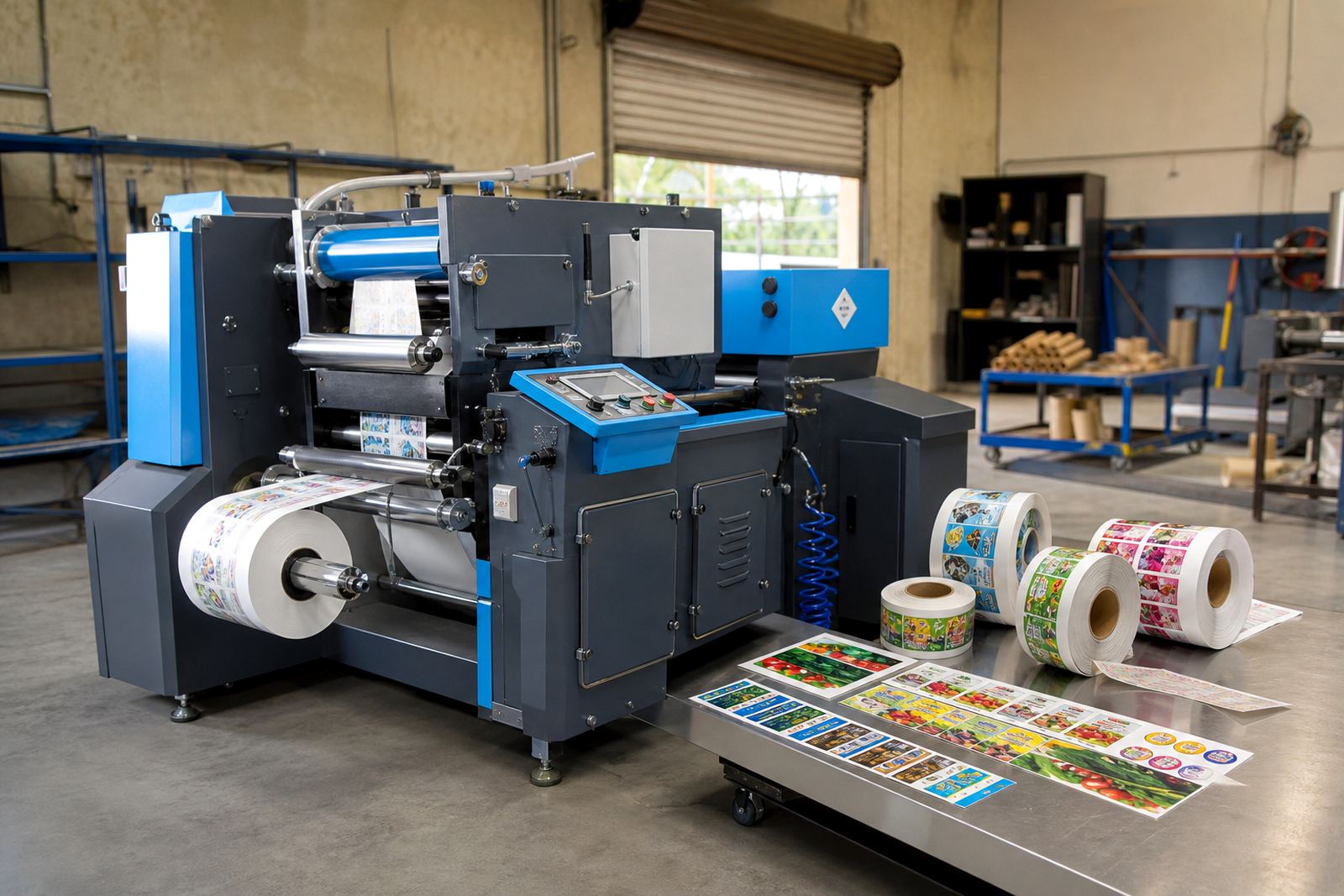
For concept work, we look at the end use first. Food, courier, weigh scale and variable data labels all place different demands on edge quality, adhesive control and roll build. That is where registration marks, slit positions and waste removal become part of the planning, not afterthoughts.
- Short rolls suit test runs and artwork trials.
- Longer production rolls need tighter rewind control.
- Coating chemistry affects both cut edge and rewind quality.
- Registration marks must stay readable through the full run.
Typical machine set for a linerless line
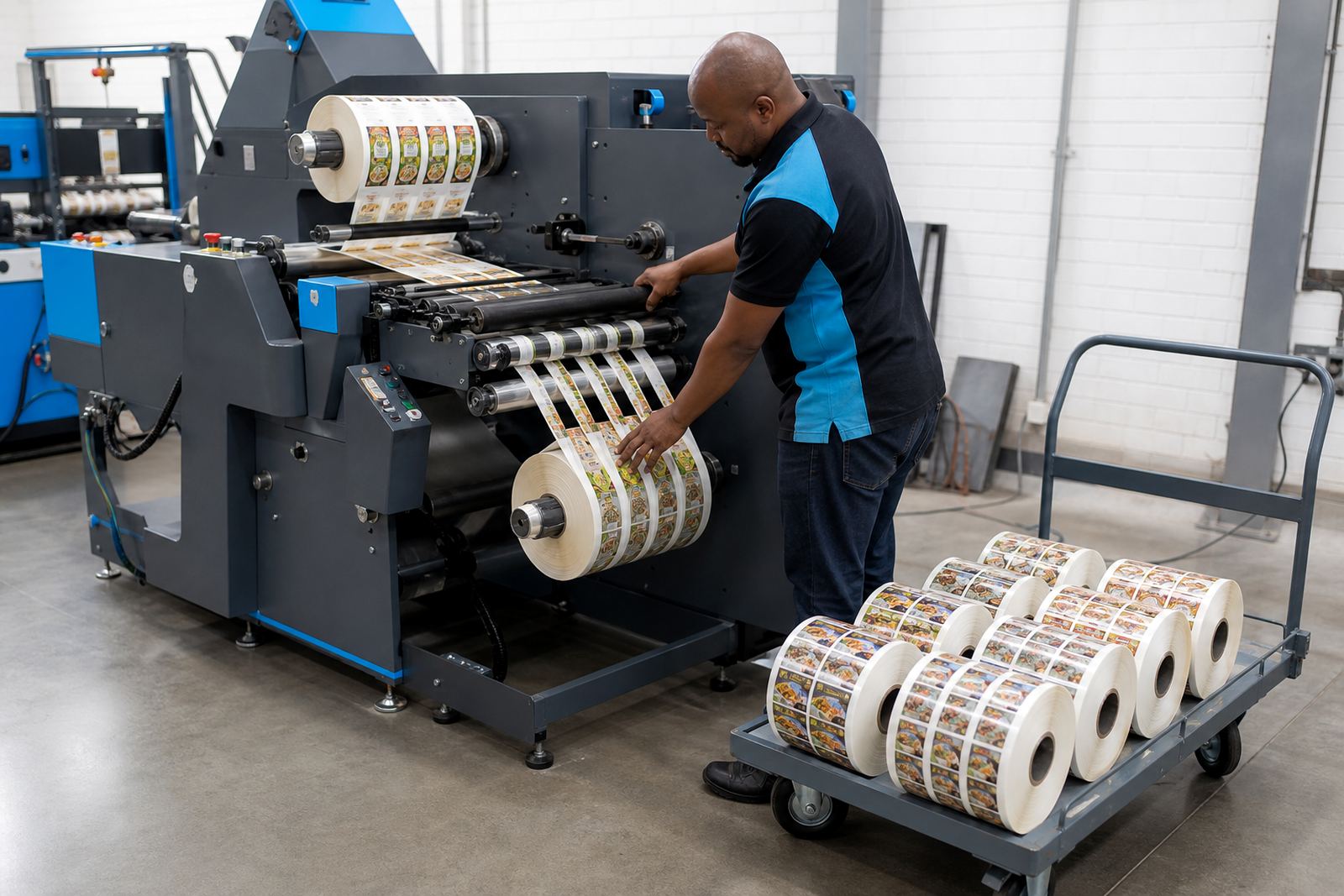
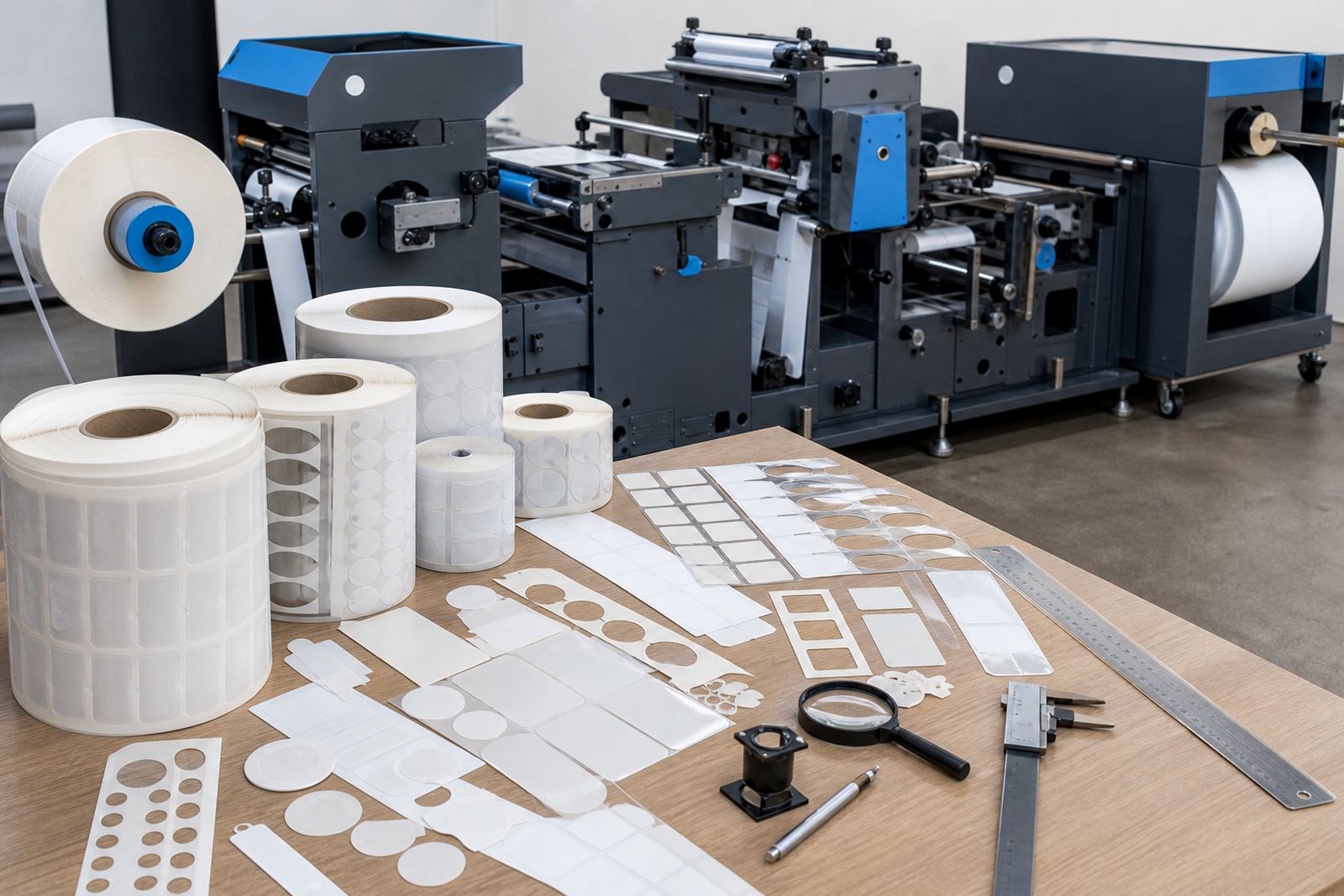
A workable line often combines unwinding, web guidance, lamination where needed, finishing, waste handling and rewind in one sequence. Some jobs use semi-rotary die-cutting with flexible dies, while others lean on laser cutting when artwork changes often or tool storage is a problem. Slitting stations, matrix stripping and rewinds are common on both routes, but the cut method and web path are not the same.
When packaging teams ask for a concept plan, we usually map the roll format before talking about machine speed. Outer diameter, core size, web width and label pitch all influence the line choice. A machine that handles 330 mm rolls may suit one application, while another needs wider rolls and stronger unwind control.
- Unwind with brake or servo tension control.
- Web guide for stable tracking through print marks.
- Die station or laser station for the cut pattern.
- Matrix stripping and slit knives matched to the format.
- Rewind with enough control for neat roll edges.
Planning points that protect the roll from trouble
Most linerless problems start before the first roll enters the machine. Artwork that ignores cut spacing can leave weak bridges or make labels lift at the edge. Poor coating choice can create adhesive build-up on knives, which then affects the next job. If the roll is wound too tightly, the label face can scuff and the reel may go out of round.
Registration calibration matters when variable print and cutting must stay in step. The same is true for slitting setup, because a neat master web can still produce poor finished reels if the knives are not aligned. In hot coastal conditions, roll storage and handling also matter because heat and moisture can change how the web behaves on the line.
- Check whether the coating can handle the intended knife pressure.
- Set label pitch to suit the chosen cut method.
- Allow for safe waste removal where matrix stripping is used.
- Keep core sizes consistent across production rolls.
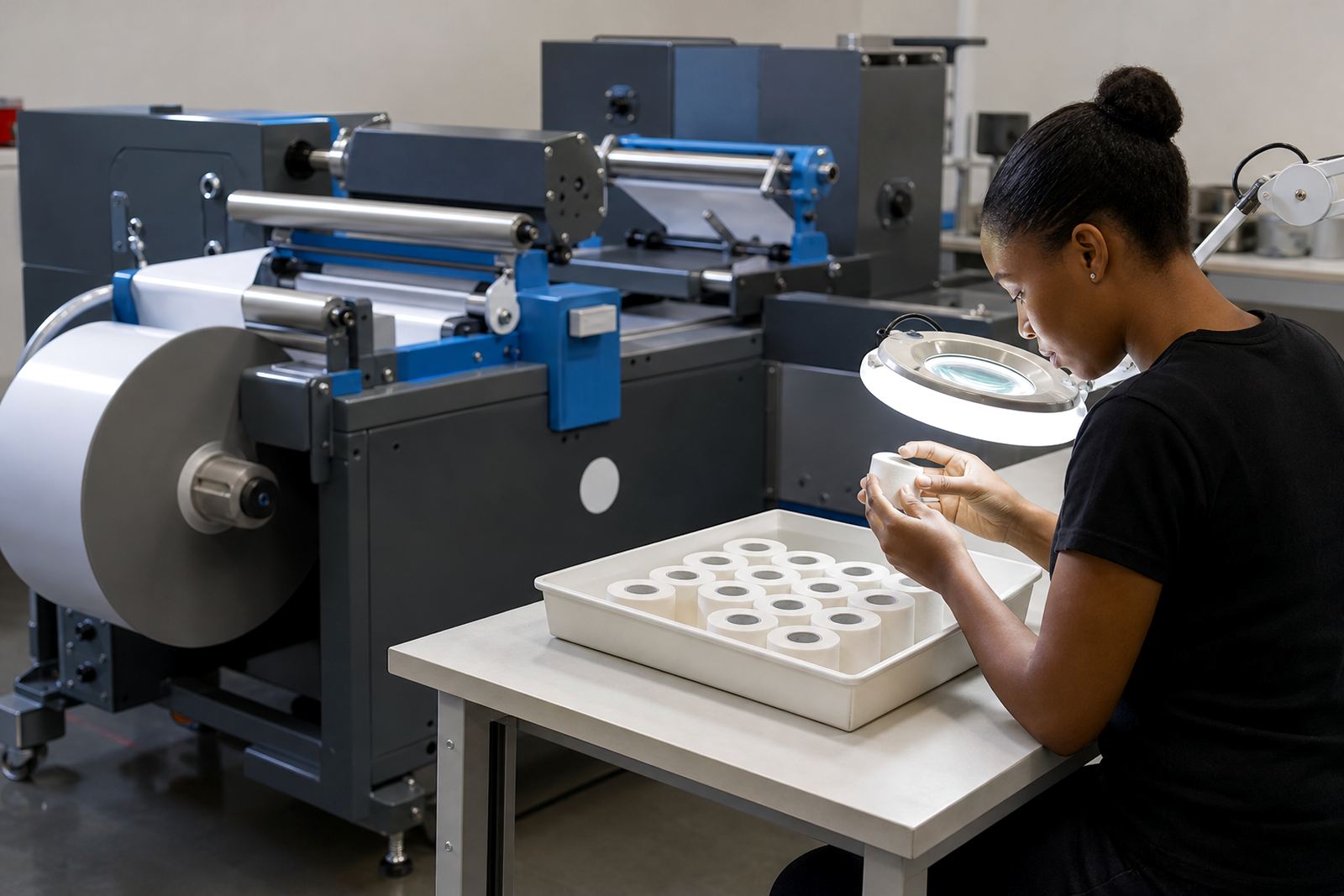
- Test roll shape after winding, not only during cutting.
Operator training that is worth more than one run
Once the machine is installed, the line still needs people who can read the web and hear when tension shifts. Training should cover die setup help, reel build, knife condition, web path and the signs of a bad rewind. When a team understands these basics, fewer rolls are scrapped and fewer jobs need rework after the first run.
Our team in Kya Sand, Randburg supports linerless concept work across Johannesburg, Pretoria, Durban, Cape Town and Gqeberha. The practical side is usually straightforward: show the operator how the web should sit, how to check registration marks, and how to recognise when the strip waste is starting to drag. That kind of routine saves time during changeovers and keeps the next production batch cleaner.
Budget ranges in Rand for concept work and production
Budget depends on the finishing route, the width of the web and how much automation is needed. A compact finishing setup for trials and short runs is very different from a production line built for wider rolls, more slitting positions and tighter rewind control. Laser systems usually ask for a different spend profile from semi-rotary systems with flexible dies, especially once lamination or varnish is part of the brief.
As a broad planning guide, concept development and smaller finishing systems may start in the low hundreds of thousands of Rand. Mid-range lines with better web handling, slitting and rewind control can move into the higher hundreds of thousands. More advanced lines with stronger automation, inline inspection and broader format handling can sit above that. Installation, commissioning, maintenance and spare parts should be part of the first budget, not added later as a surprise.