When dispatch labels need to move faster than the carton line
Logistics labels are rarely about decoration. The job is to keep variable data labels, shelf labels, parcel labels and pallet labels moving in the right sequence, with roll edges that stay even and matrix waste stripped cleanly. If the line feeds printers, labelling heads or packing stations, finishing has to protect registration marks and keep each roll easy to handle.
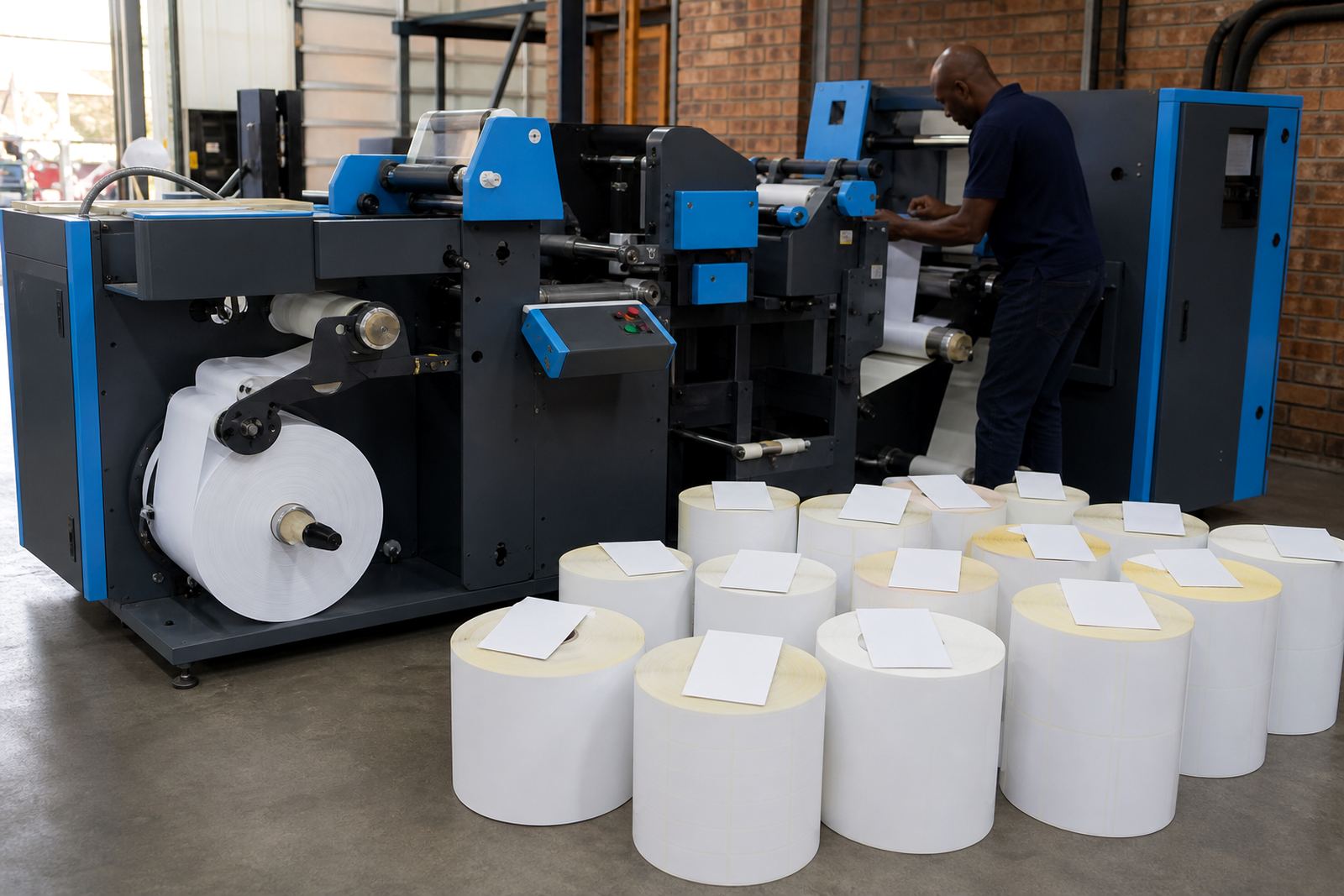
For a label printer or packaging producer, the problem is often not print quality alone. It is the gap between print and dispatch, where poor rewind tension, loose slitting or a badly cut liner can turn a normal batch into time lost at packing tables. The right machine set trims that risk by controlling unwind, lamination, cutting, waste removal and rewind in one planned flow.
A practical machine set for warehouse and courier labels
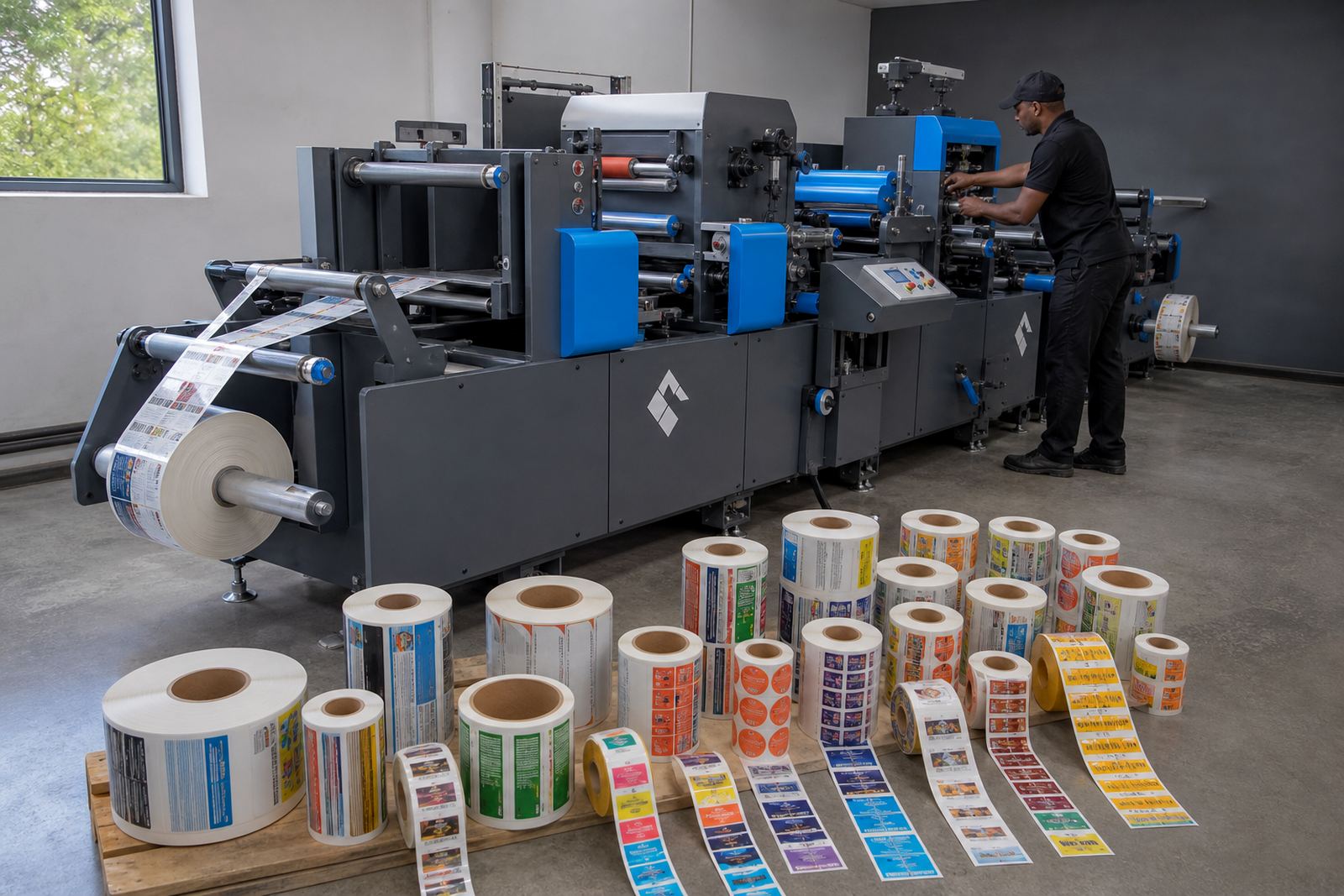
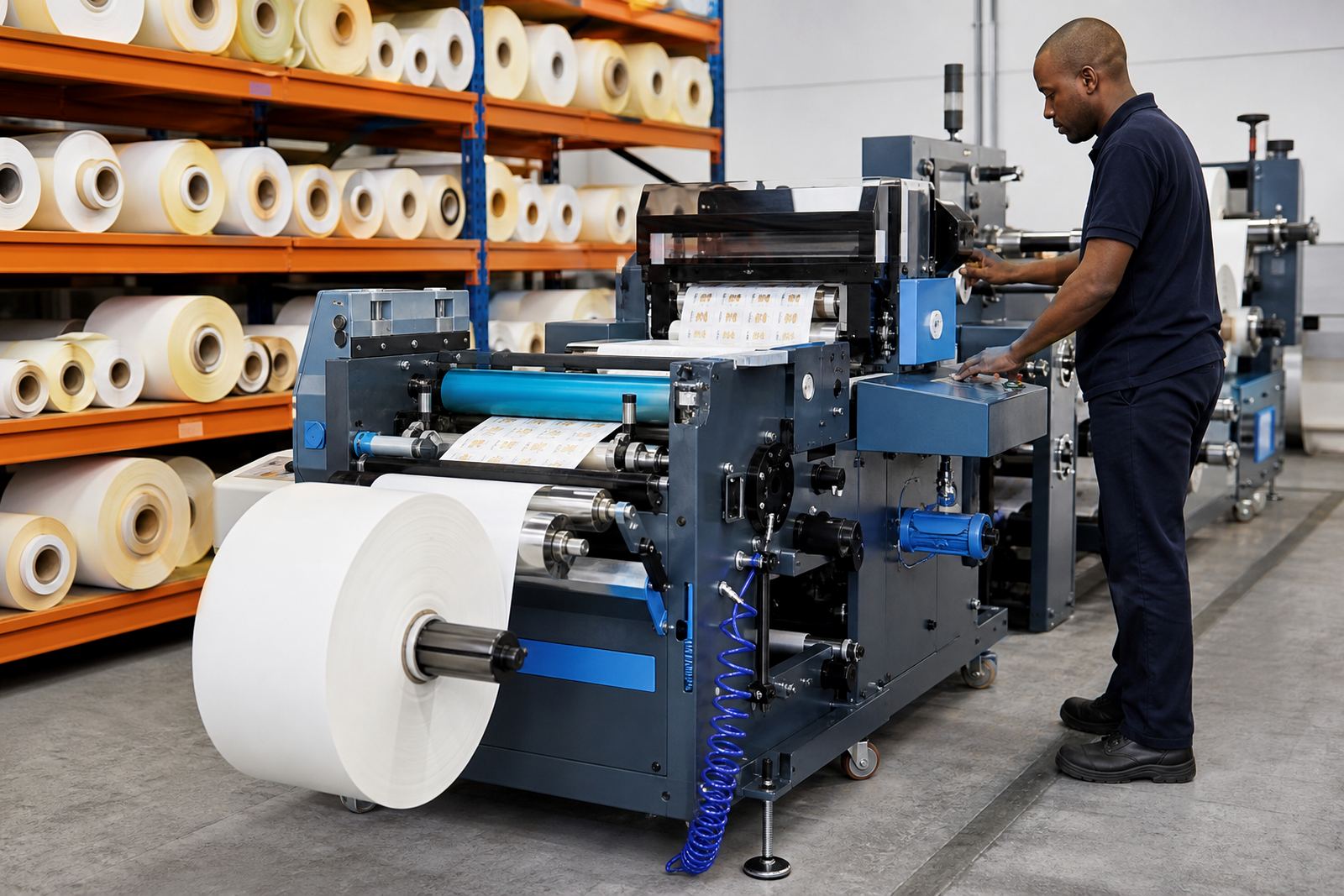
Most logistics label lines benefit from a finishing set that can handle repeated runs without fuss. A digital die-cutting unit may use laser, semi-rotary or flexible die methods depending on artwork, substrate and production volume. Lamination is useful where scuff resistance matters, while varnish can protect print in a lighter way when the label surface and job spec allow it.
- Unwind with stable tension for narrow or wide label webs
- Lamination for abrasion resistance on handling-heavy labels
- Die-cutting with registration mark tracking
- Matrix stripping for cleaner waste removal
- Slitting for multiple roll widths from one parent roll
- Rewinding for neat dispatch-ready rolls
Roll sizes matter as much as the finishing method. A shop running short courier rolls will plan differently from one producing large pallet label runs, and the core machine choice should match the parent roll width, core size and expected batch length.
Layout choices that save trouble at the packing table
Good planning starts with the final use of the label, not the print file. If labels are being applied in a warehouse or by a courier team, the roll direction, unwind side and slit width need to suit the applicator or hand application method. A job that looks fine at print stage can still stall if the rewind is too tight or the slit edges are uneven.
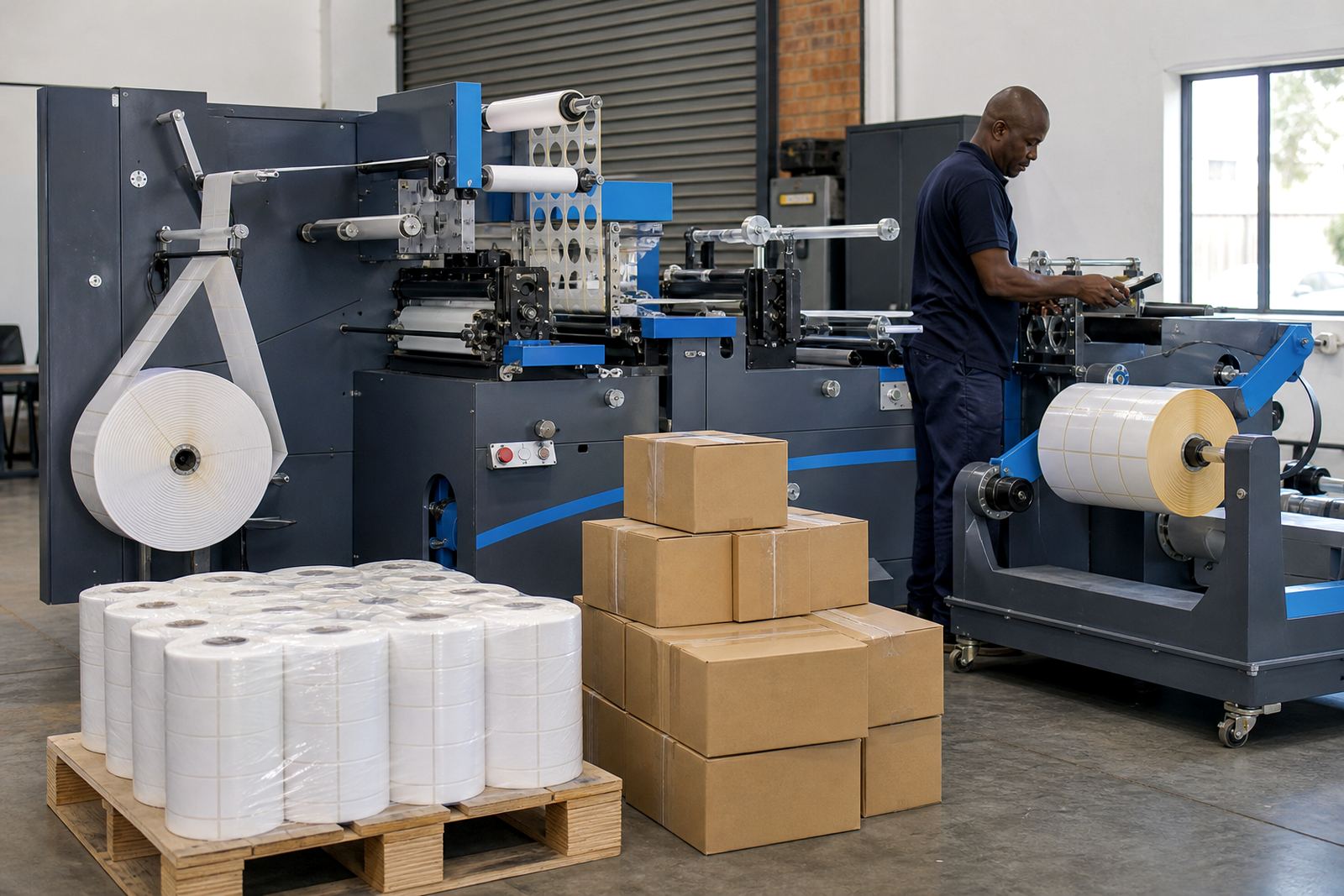
In mixed logistics work, it helps to keep the production lane plain and predictable. That means enough floor space for roll handling, clear access for changeovers and a path for finished rolls that does not force staff to lift or turn heavy bundles more than once.
- Check the label web width against the finishing unit before layout is fixed
- Plan for registration marks that stay visible through print and finishing
- Leave room for rewind and offload tables if batches are long
- Keep core sizes and roll build-up consistent for dispatch teams
Common mistakes on logistics label runs
One mistake is treating a logistics label job like a decorative label job. The artwork may be plain, but the finishing demands are sharper because the label has to peel, stack, scan and stick without slowing the line. Another common slip is setting up for one roll width and then asking the same line to handle a narrower batch without adjusting slit positions or rewind tension.
Varnish, lamination and adhesive choice also need to be matched to the job. Cold stores, dusty depots and humid coastal distribution centres put different pressure on the label face and adhesive bond. A machine that can keep tension, cut cleanly and strip waste without tearing the liner gives the operator more control when those conditions shift.
- Ignoring the final application method at dispatch
- Overlooking roll hardness and edge quality on rewind
- Leaving registration calibration too loose for repeat runs
- Mixing print and finishing settings without a proper trial batch
Budget bands in rand for planning a finishing line
Budget depends on speed, automation level and whether the line needs laser cutting, semi-rotary die-cutting or a more compact finishing setup. For smaller logistics label rooms, a basic finishing and rewinding arrangement can sit in the lower hundreds of thousands of Rand. A mid-range setup with better waste handling, slitting and registration control usually moves into a higher band, while a more advanced line with wider roll handling, lamination and stronger production control can move well past that.
It helps to budget for installation, operator training and setup time as part of the project. Preventive maintenance, spare parts and breakdown support should sit beside the machine cost, not after it. That way the line is planned as a working asset rather than a one-off purchase.
- Entry-level finishing and rewind setups: roughly R250,000 to R600,000
- Mid-range digital finishing lines: roughly R650,000 to R1.5 million
- Higher-output lines with broader automation: from about R1.6 million upward
- Installation, training and support should be costed separately
Support that keeps the line useful after commissioning
Label-Cutter supports logistics label production from Kya Sand, Randburg and works with print and packaging teams across Johannesburg, Pretoria, Durban, Cape Town and Gqeberha. The service work matters because a finishing line is only useful when the operator knows the setup, the waste path is behaving and the rewind is building rolls that leave the shop neatly.
Our team handles machine installation, line commissioning, operator training, preventive maintenance, breakdown repairs, remote support, spare parts supply, die setup help, registration calibration, rewind setup, slitting setup and production optimisation. For logistics labels, that support often comes down to small details: tension, cut depth, strip quality and how the finished roll lands in the next part of the workflow.
Thabo Mdlalose leads the business, with Karen Naidoo on sales, Pieter Pienaar on technical work, Lerato Bhengu coordinating service, Musa Wessels handling applications training and Ayesha Shezi managing parts and logistics. If you are planning a logistics label line, our contact form is the place to start the conversation.