Paper label rolls that still need a neat finish
Paper stocks are common in everyday label work because they print well and can suit a wide mix of jobs, from food and household packs to warehouse labels and short promotional runs. The material itself may be familiar but the finishing step decides whether the rolls feed cleanly, stack neatly and stay usable on press or on a label application line.
On paper, the web can behave differently from film. It can dust more, mark more easily and react to blade pressure in a slightly less forgiving way. That means the line needs proper unwind control, stable registration and a clean path through the die-cutting, stripping and rewind stages. When the setup is right the rolls hold their shape and the labels separate cleanly at the point of use.
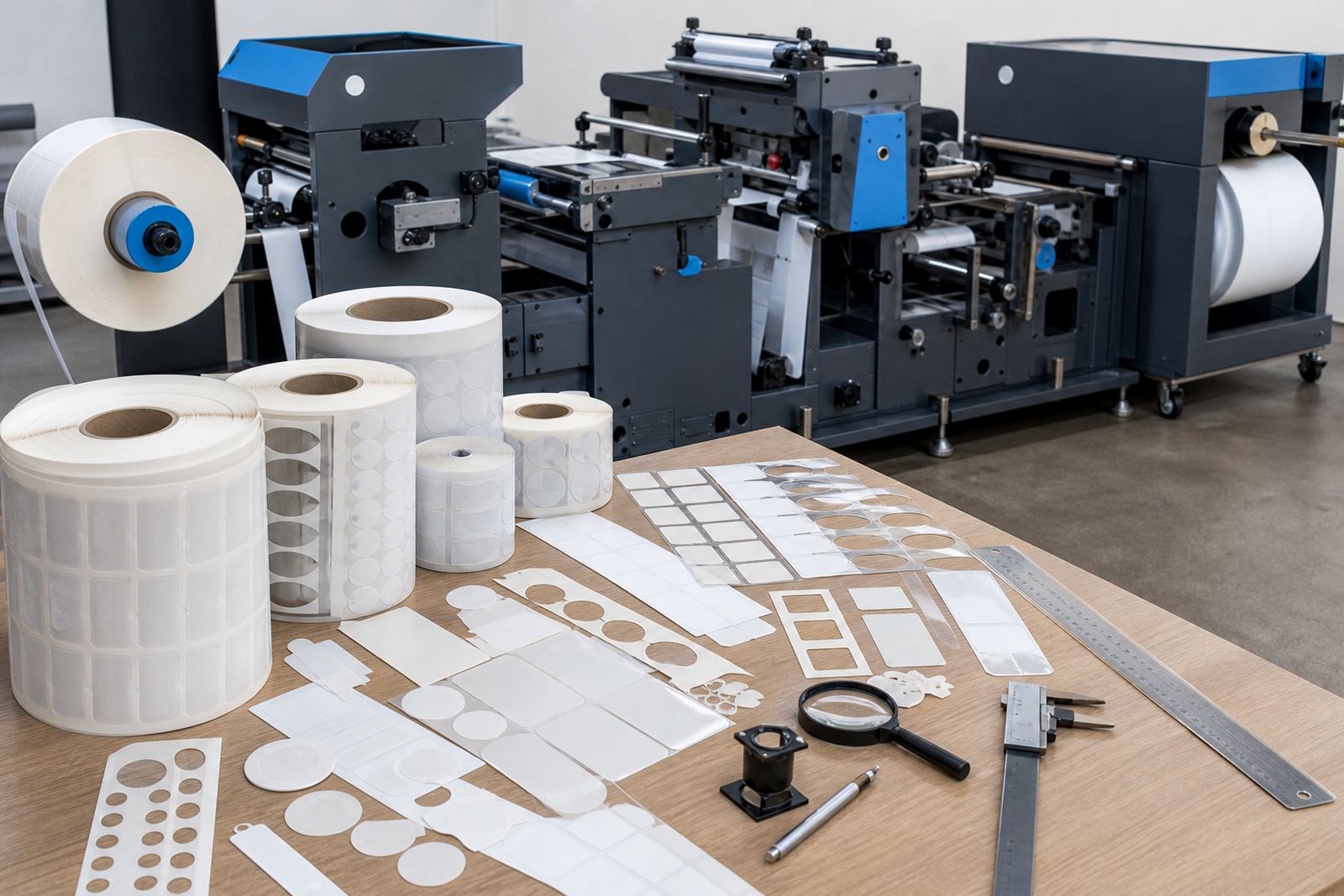
Paper labels also suit a range of finishing methods. Some jobs work well with semi-rotary die-cutting, while others need flexible dies, slitting knives or a more detailed finishing pass that keeps the matrix under control. For printers in Johannesburg, Durban or Cape Town, the key question is rarely whether paper can be finished. It is whether the equipment is matched to the rolls, the adhesive face stock and the run length.
Typical line set-up for paper stock finishing
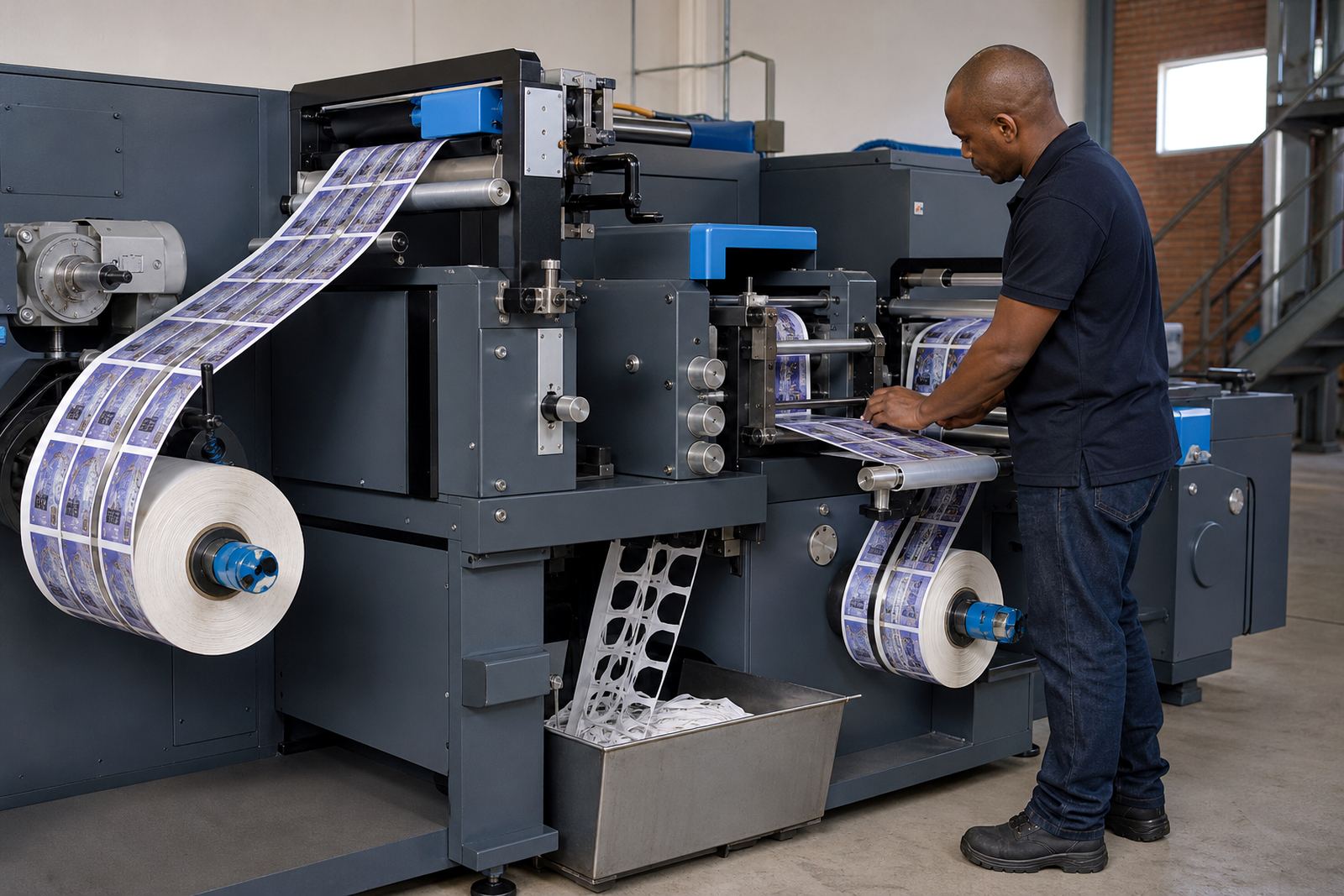
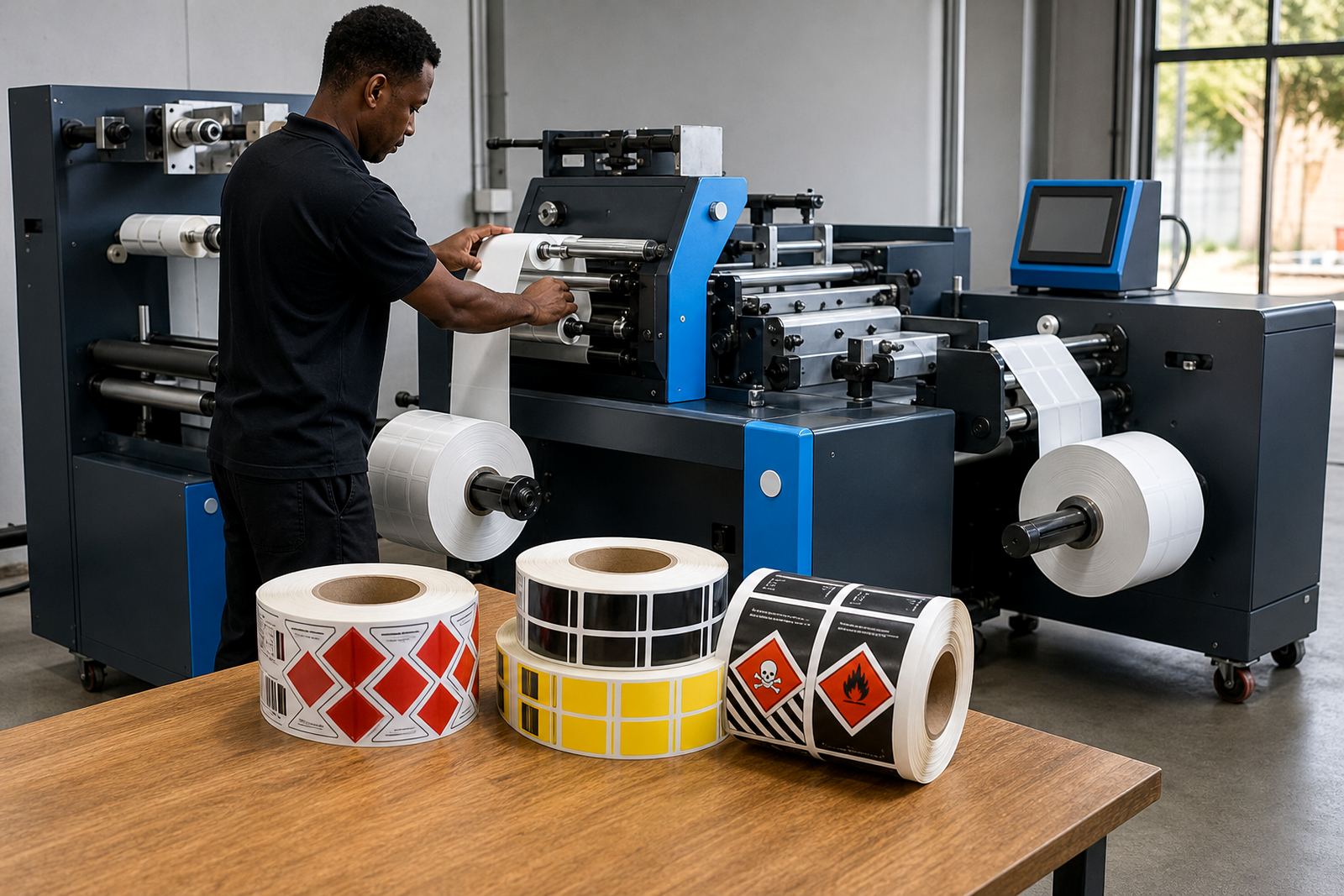
A paper label finishing line usually starts with unwind, then moves through print registration, cutting or laser finish where specified, matrix stripping, slitting and rewind. Some lines add lamination or varnish before cutting, especially where the print face needs protection or extra surface hold. The exact set-up depends on the label size, the roll width and how many finished lanes must come off the machine.
For smaller work, a compact system can manage narrow webs and shorter rolls. For higher output, a wider machine with stronger tension control and better rewinding can save time on handling. Semi-rotary systems suit many paper jobs because they give accurate repeat cuts without forcing every job into a fixed label shape. Where the artwork changes often, registration marks and easy die setup help keep the line practical.
- Unwind control for paper rolls that may vary in tightness
- Registration reading for printed labels with fine artwork
- Semi-rotary or laser cutting, depending on the job mix
- Matrix stripping that keeps waste from wrapping back onto the web
- Slitting and rewind for single lanes or multiple finished rolls
Layout choices that matter before the first roll runs
Paper finishing works best when the line is planned around the actual roll sizes used in production. A wide web can be trimmed down to smaller finished rolls, but only if the slitting and rewind section is set for the right widths and the operator can maintain tension without crushing the edges. That matters for labels going into retail, logistics or packing lines where edge quality affects the final feed.
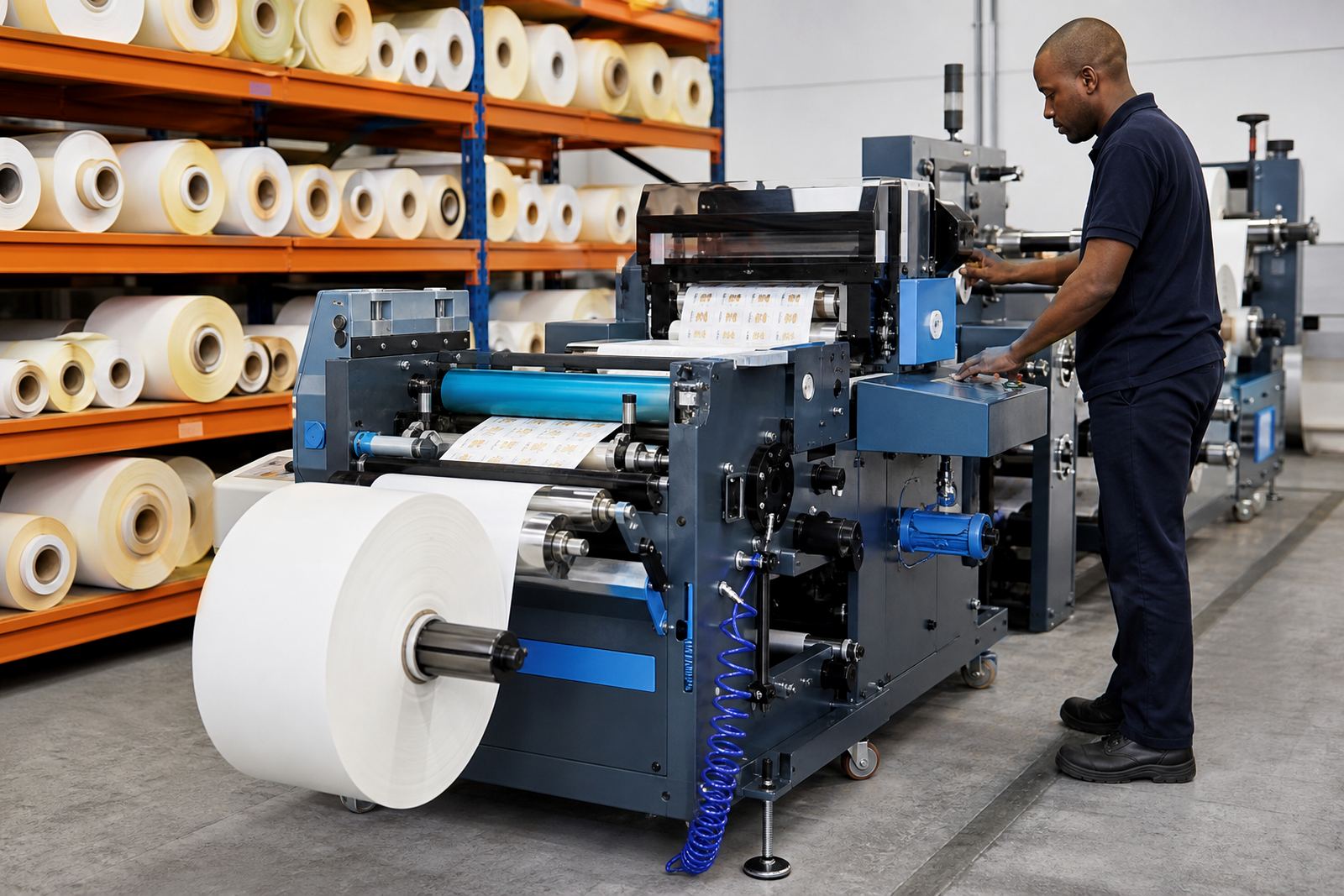
Good layout planning also looks at where printed rolls enter the machine and where the finished reels leave it. Paper stock can curl or mark if it is carried around awkwardly, so the path between stages should stay short and clear. In many shops the machine sits beside print finishing, with enough room for roll loading, set-up checks and sample pulls. A tighter floor can still work, but only if the operator has space to work the web properly.
For customers in Randburg, Pretoria and Midrand, the practical question is often how much variation the line must carry. A machine that handles one paper grade nicely may struggle when the next roll is lighter, wider or more heavily printed. Planning should therefore include the range of paper faces, liner types and label sizes that will pass through during a normal month.
Common errors that show up on paper labels
Paper is forgiving in some ways and less forgiving in others. A dull cutting edge can leave ragged label edges, while too much pressure can mark the face or distort the liner. When the matrix stripping is poor, loose waste may pull back into the web and leave fibres on the finished roll. That is where clean set-up and regular checks make a clear difference.
Another common error is setting registration too loosely. If the printed mark is not read correctly, the cut drifts and the label edge starts wandering across the roll. On a short run this can waste a small batch; on a longer run it can affect a full production sequence. Rewind tension matters too, because paper rolls that are wound too tight can telescope or create edge crush during storage and transport.
- Cut depth that is too heavy for the paper face
- Slitting knives set without proper edge clearance
- Waste stripping that leaves fibres or loose matrix strands
- Registration marks placed where the sensor struggles to read them
- Rewind tension that makes the reel too tight or uneven
Budget ranges in Rand for paper label finishing lines
Budget depends on output, roll width, automation and whether the machine must combine cutting, stripping, slitting and rewind in one pass. A smaller entry line for paper labels will cost less than a wider machine with finer registration control, lamination and stronger rewind sections. A line built for short runs and occasional changeovers sits in a different band from one meant for daily production across multiple SKUs.
For planning purposes, a basic paper-label finishing machine can start in the lower hundreds of thousands of Rand, while a more capable semi-rotary or multi-function line can move into the higher hundreds of thousands or beyond. Once you add installation, operator training, die setup help and spare parts planning, the working budget should also allow for commissioning and early maintenance checks. In practice, the final figure comes down to the job list and the roll widths being processed.
It also helps to budget for the less visible items. Flexible dies, rewind cores, slitting parts and calibration work all affect the line over time. If the machine is expected to run paper grades with different coatings or varnish layers, the finishing set-up may need more care and a slightly higher allowance for setup time and consumables.
Support across South Africa for paper label finishing
Label-Cutter works from Kya Sand, Randburg and supports paper label finishing across Johannesburg, Pretoria, Durban, Cape Town and Gqeberha. The team handles machine installation, line commissioning, operator training, preventive maintenance, breakdown repairs, remote support, spare parts supply, die setup help, registration calibration, rewind setup, slitting setup and production optimisation.
The team includes Thabo Mdlalose, Karen Naidoo, Pieter Pienaar, Lerato Bhengu, Musa Wessels and Ayesha Shezi, each focused on a different part of the working line. That matters when a paper job needs more than a machine drop-off. A new line may need sensor checks, tension settings, waste removal tuning and reel handling that suits the actual room on the floor, not an ideal drawing.
For printers and packaging producers, paper labels are often the stock that has to move fastest through the plant. A machine that is fitted properly and set for the web width can help keep the rolls presentable from the first cut to the final rewind.
Paper labels that behave on press and after rewind
Paper label finishing works best when the machine is matched to the stock, the artwork and the real roll handling on site. Clean stripping, stable cutting and a well wound reel make the difference between a job that sits neatly in store and one that gives trouble at application.
When paper labels are part of a wider production mix, the finishing line should be treated as a working tool, not a one-size fit. That means checking the web path, the registration, the slitting plan and the rewind order before the roll goes into steady production. Our contact form is the route clients use when they need a paper label line set for their own format and output pattern.