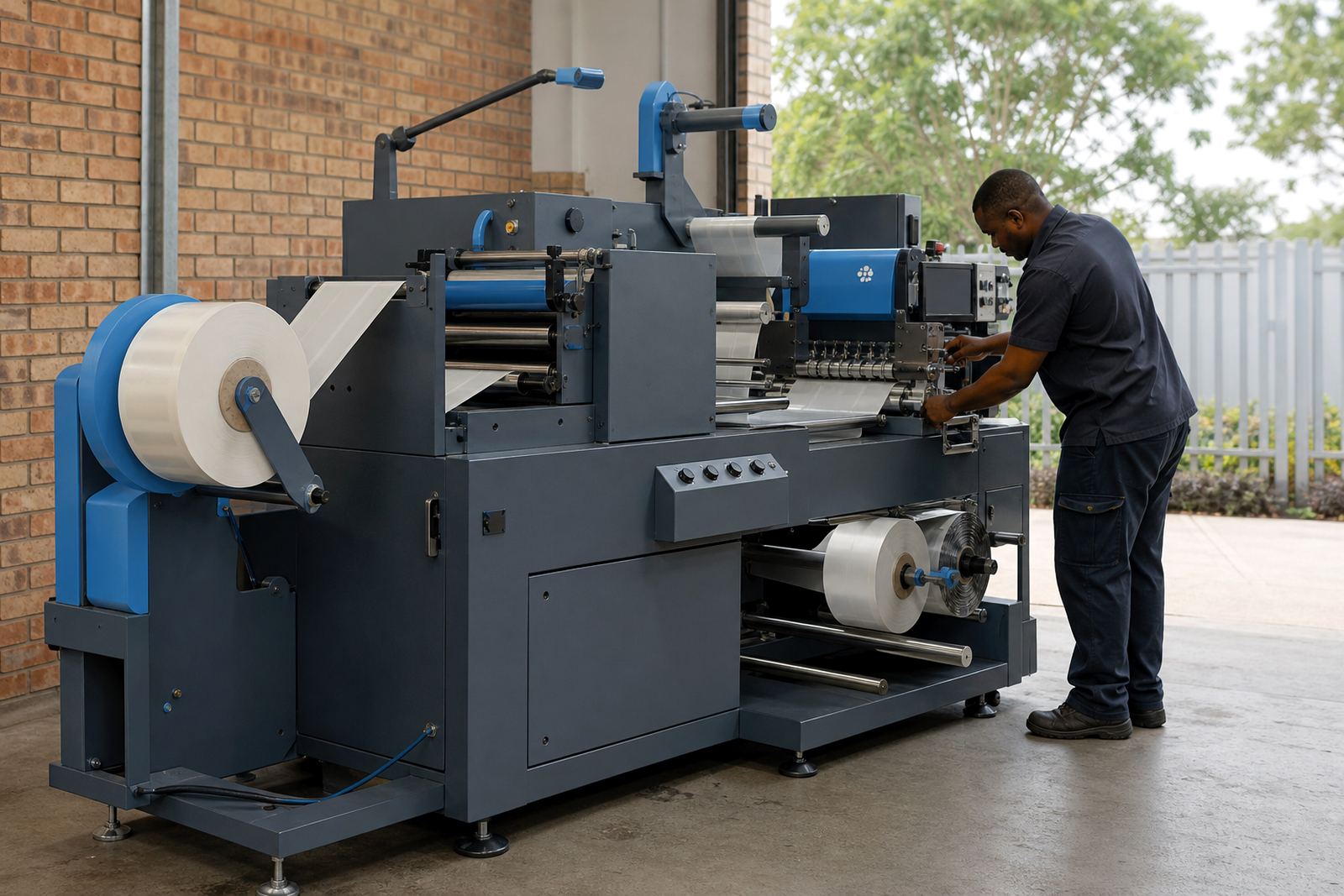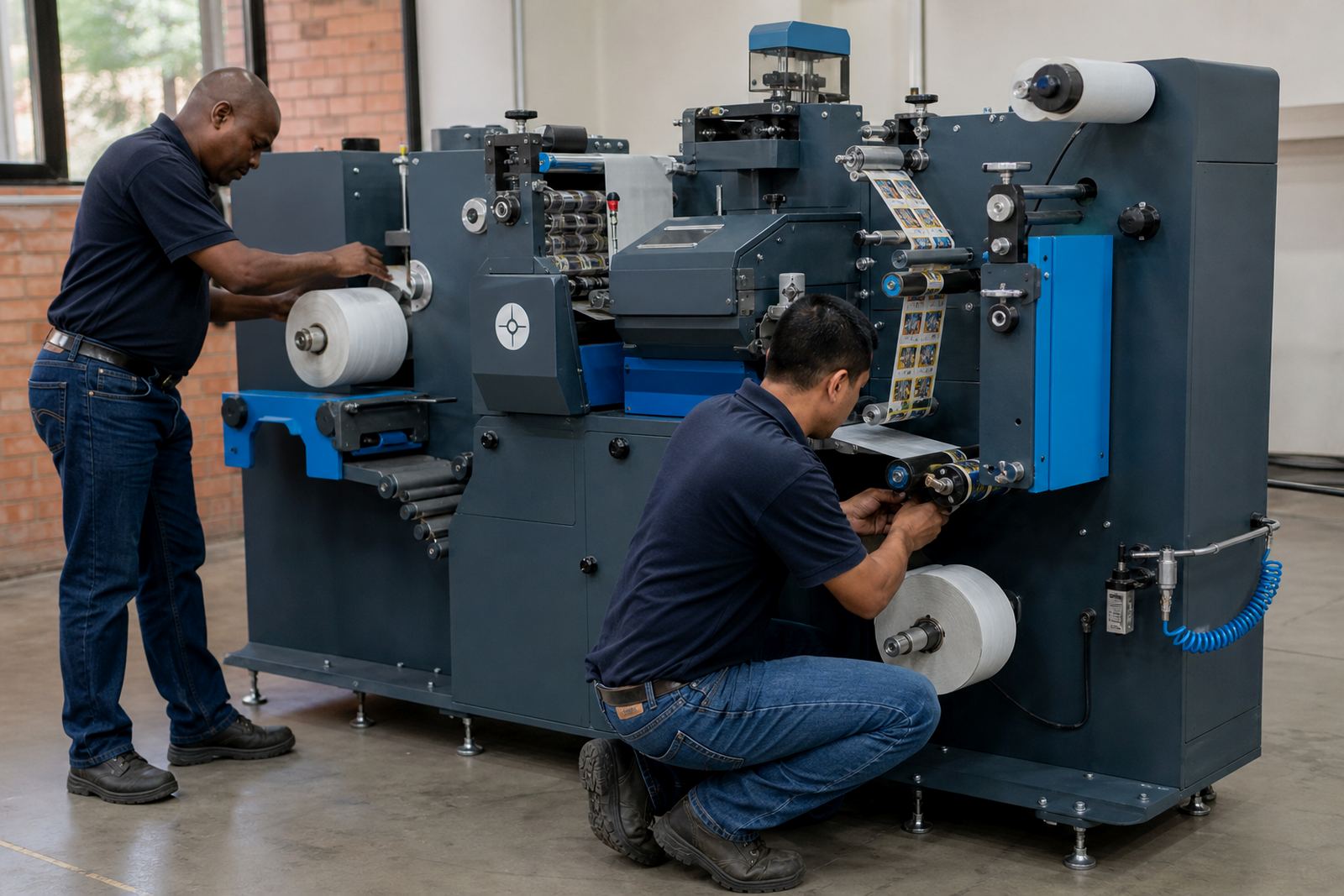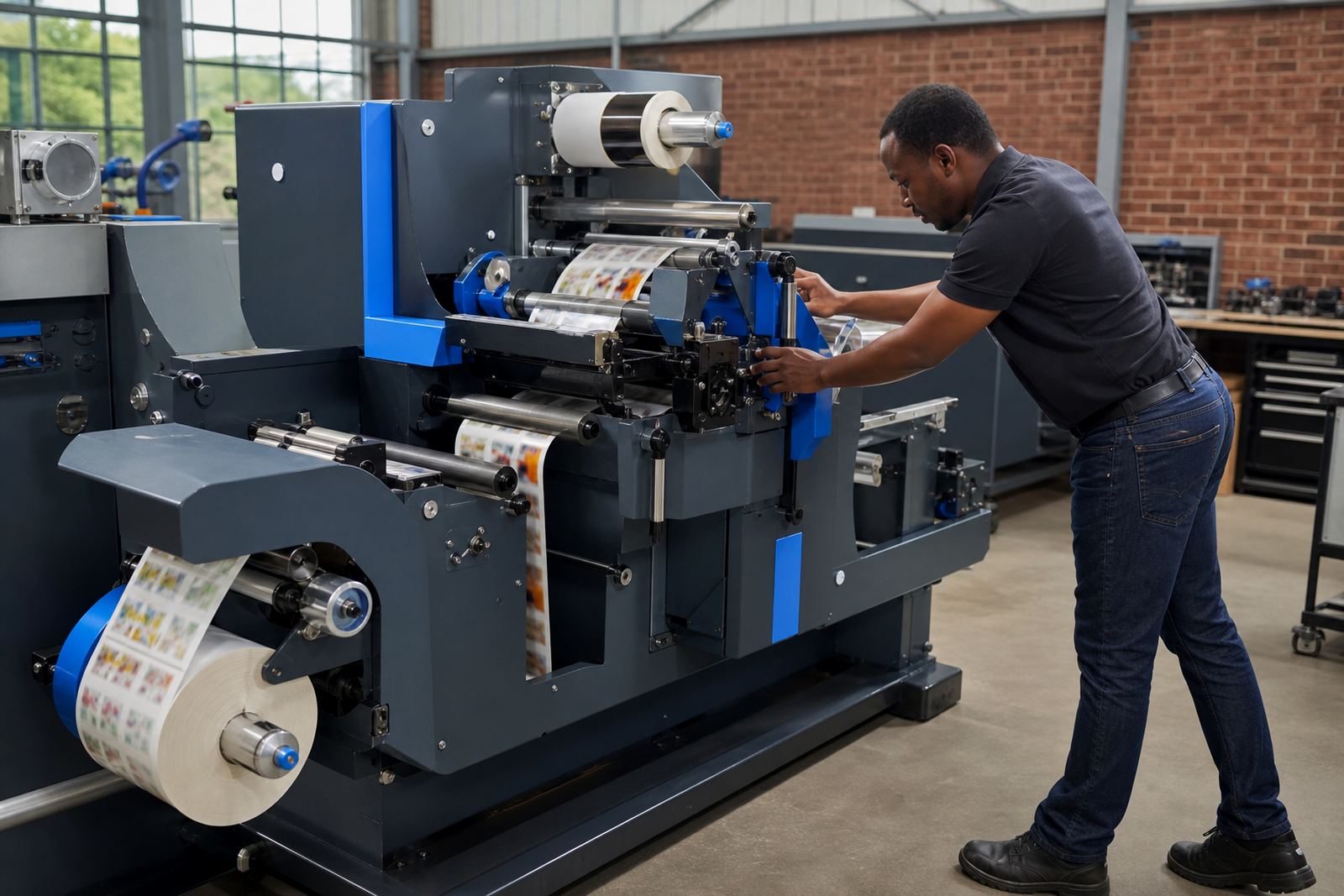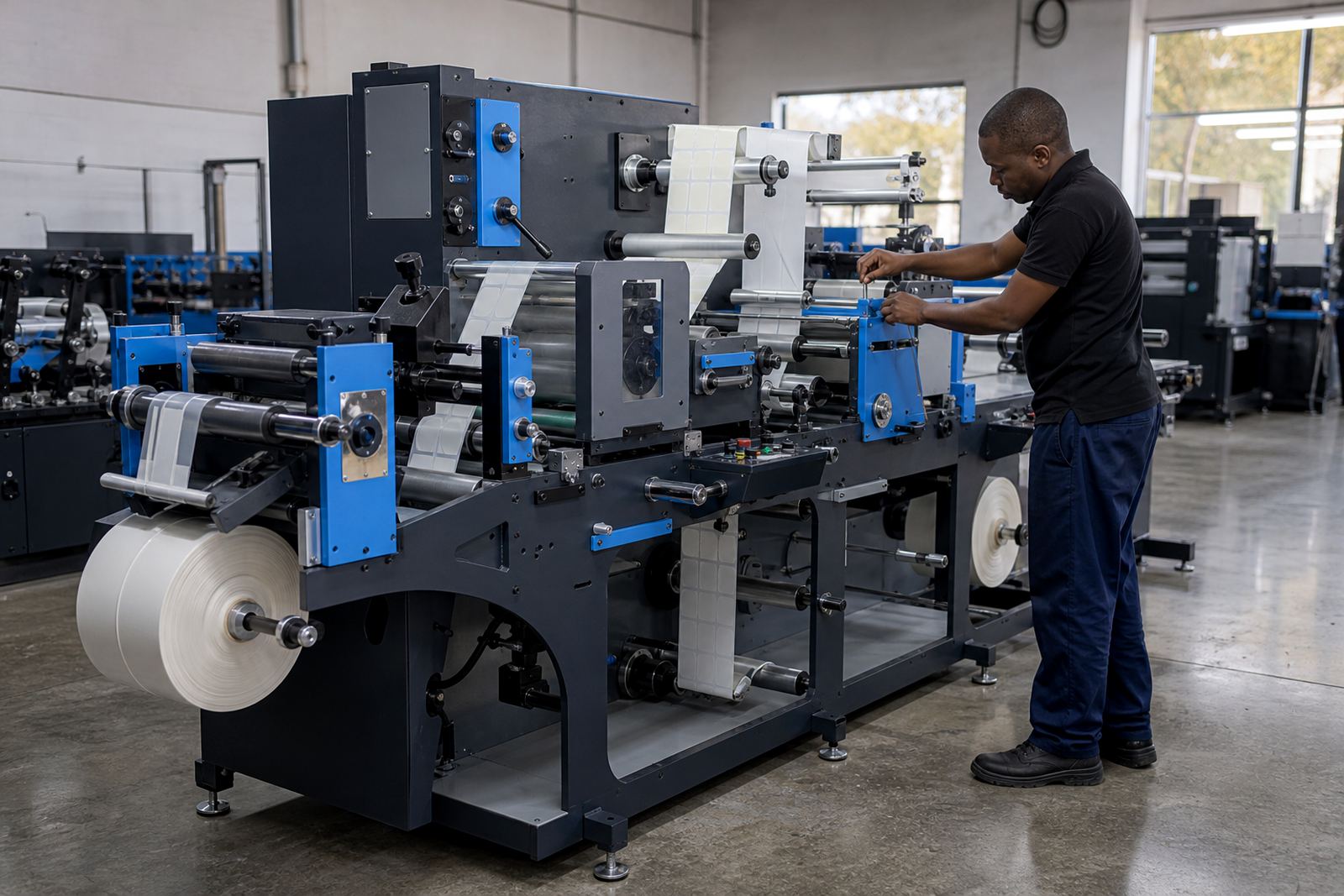
Start with the line layout, not the crate
A new finishing line works best when the floor plan is settled before the machine arrives. We look at roll direction, unwind and rewind positions, access for pallets, the space needed for lamination or varnish units, and where finished rolls will leave the line. For sites in Kya Sand, Jet Park, Midrand or elsewhere in Gauteng, that first layout check often saves a lot of moving about on installation day.
Registration marks, web tension and waste removal all need room to behave properly. If your line includes laser cutting, semi-rotary cutting or flexible die stations, the path through the machine must stay clean and straight. A cramped layout can throw out tracking, make waste stripping untidy and slow production before the first good roll is complete.
- Check the entry side, exit side and operator standing room.
- Leave clear access for service panels and consumable changes.
- Plan where trim, matrix waste and finished rolls will go.
- Confirm power, air and floor loading points before delivery.
Delivery day needs the right sequence
Once the order is released, the next step is getting the machine onto site in the right sequence. That includes offloading, moving the main sections into position and placing each module so the unwind, lamination, die-cutting, stripping, slitting and rewinding path stays true. If the line includes several frames or accessory stands, each part must land where it belongs the first time, not after a rushed shuffle.
We also check that the machine matches the label stock format you are running, whether that is short rolls, wider rolls or heavier packaging webs. A finishing line built for narrow labels behaves differently from one handling larger outer cartons, and the setup has to suit the job. That is where careful preparation matters more than speed.
- Confirm the route from loading point to final position.
- Keep lifting gear ready for the machine mass and footprint.
- Have the operator and maintenance staff on hand during placement.
- Separate machine parts, tools and consumables as they land.
Commissioning is where the line proves its worth
Commissioning brings the machine from installed to usable. We test movement, web alignment, tension control, register reading, cutting depth, stripping, slitting and rewind quality. On digital label work, small errors show up fast, so the first setup has to be measured carefully. A clean cut that stays true to the print mark is worth far more than a quick start with loose settings.
When the line includes varnish or lamination, we also look at edge finish, adhesive transfer and how the laminated web feeds into the finishing section. Some jobs need flexible dies, others are better on semi-rotary tooling, and some short runs lean on laser cutting. The machine has to be tuned for the way your own label artwork is built, not for a generic sample roll.
- Test the web path with the stock you will actually run.
- Set the register position against printed marks.
- Check slitting widths and rewind tension on finished rolls.
- Inspect waste removal so matrix stripping stays consistent.
Operator training should match the shift on the floor
Training works best when it uses the same reels, print layouts and finishing sequence your operators will see in production. We show the team how to load material, set unwind tension, keep the roll tracking straight, set die position, handle waste stripping and manage rewind build-up. If a line is running in Johannesburg, Pretoria or Durban, the people working it need practical steps that fit local shift patterns and production pressure.
The aim is steady output with fewer stops and fewer mistakes. Operators also need to know what changes with coated stocks, clear labels and heavier packaging material, because each one behaves differently through the line. A good training session leaves the team able to start, monitor and finish the job without guessing at every setting.
- Loading reels and threading the web safely.
- Reading registration marks and checking cut position.
- Changing slitting widths and handling trimmed waste.
- Recording the settings that work for repeat jobs.
Support after commissioning keeps the line useful
Once the machine is running, the practical work does not stop. Preventive maintenance, spare parts supply, breakdown repairs and remote support all help the line stay productive over time. In coastal areas such as Durban, Gqeberha and Cape Town, humidity and storage conditions can affect stock handling and machine condition, so service planning matters just as much as the first install.
Our service team works with the same equipment family through the machine life cycle, from initial setup to later production changes. If the job mix shifts from simple slitting to more detailed finishing, or if your production team adds new roll sizes, the setup can be adjusted without starting from scratch. That keeps the machine matched to the work on hand.
- Keep a record of cutting depth, tension and register settings.
- Replace worn parts before they affect label quality.
- Review the rewind and slitting setup when stock changes.
- Schedule maintenance around production, not after a fault grows.
How to book the installation work
To book installation support, send the machine details, the finishing steps in the line, the roll sizes you expect to run and the site location. It helps to include whether the line will handle lamination, varnish, laser cutting, semi-rotary die-cutting, flexible dies or matrix stripping. The more exact the job picture, the easier it is to line up delivery, commissioning and training around it.
Our contact form is the place to share the project notes, whether the site is in Randburg, Kempton Park, Midrand or further afield. We can then match the installation work to the machine type, the production schedule and the people who will run it. For packaging producers, that often means setting the line up for longer runs and heavier webs; for label printers, it may mean tighter register control and quicker changeovers.
- Machine model and finishing functions.
- Site address and access details.
- Stock widths, roll diameters and core sizes.
- Any extra setup for slitting, rewinding or waste stripping.