Training built around the line in front of you
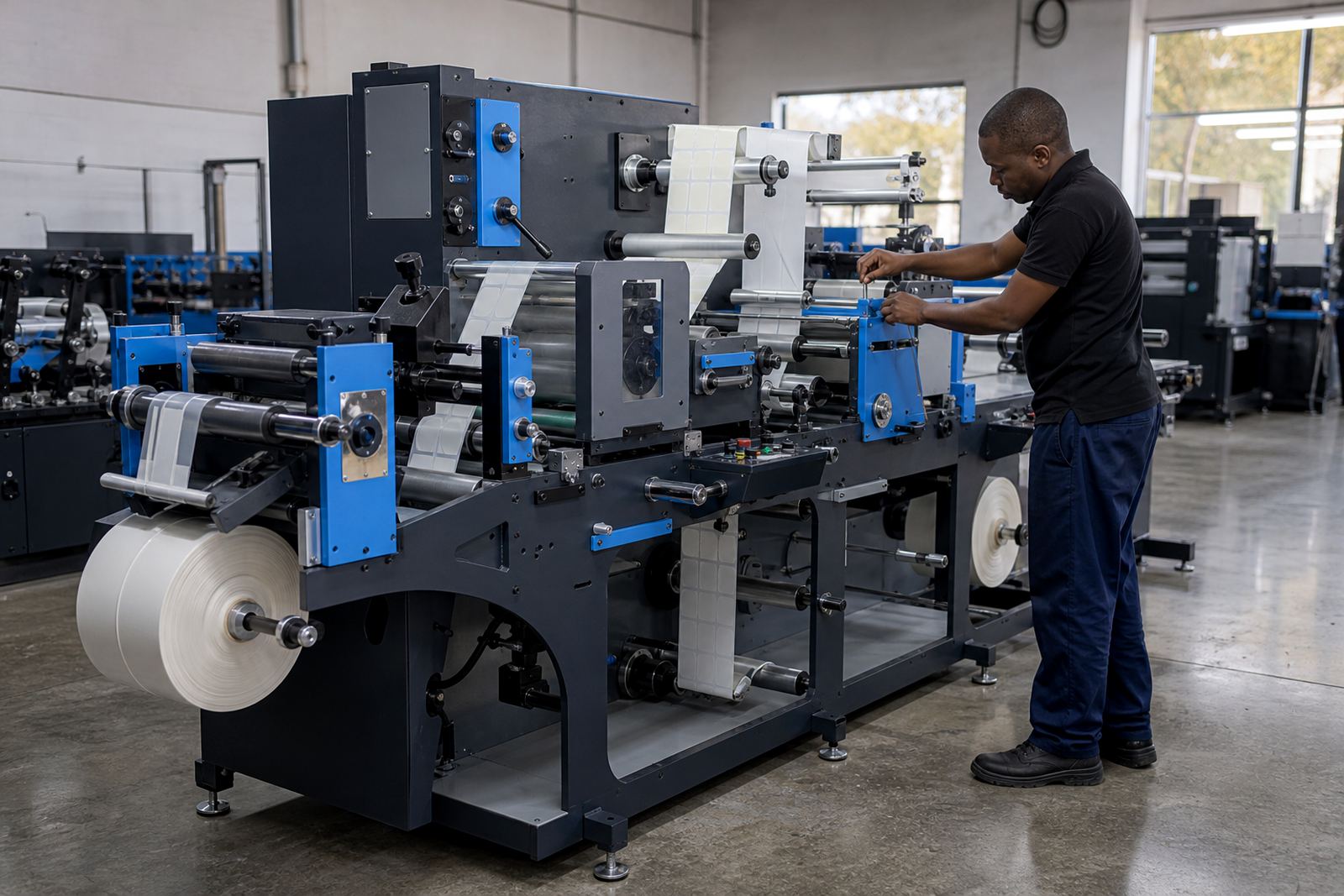
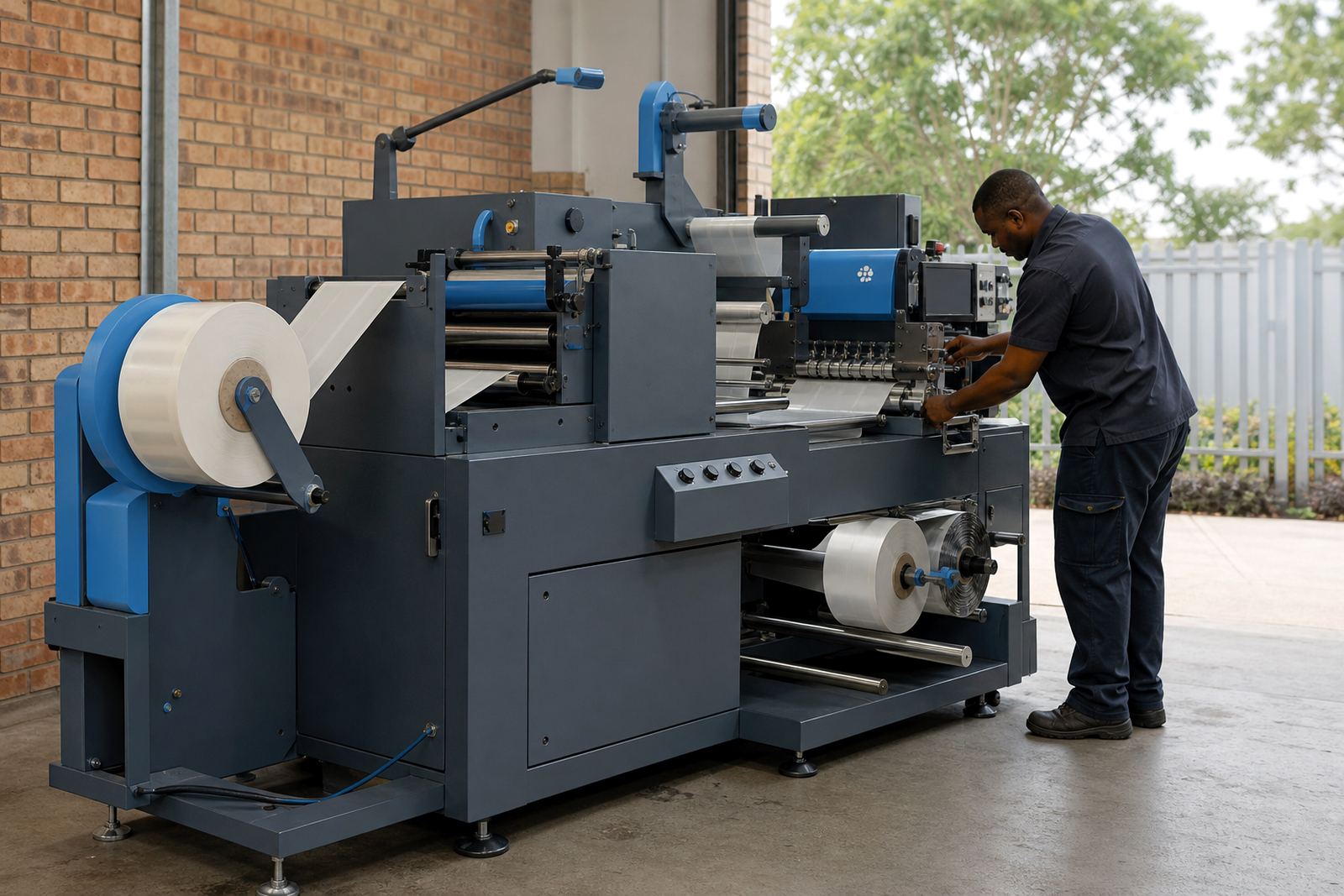
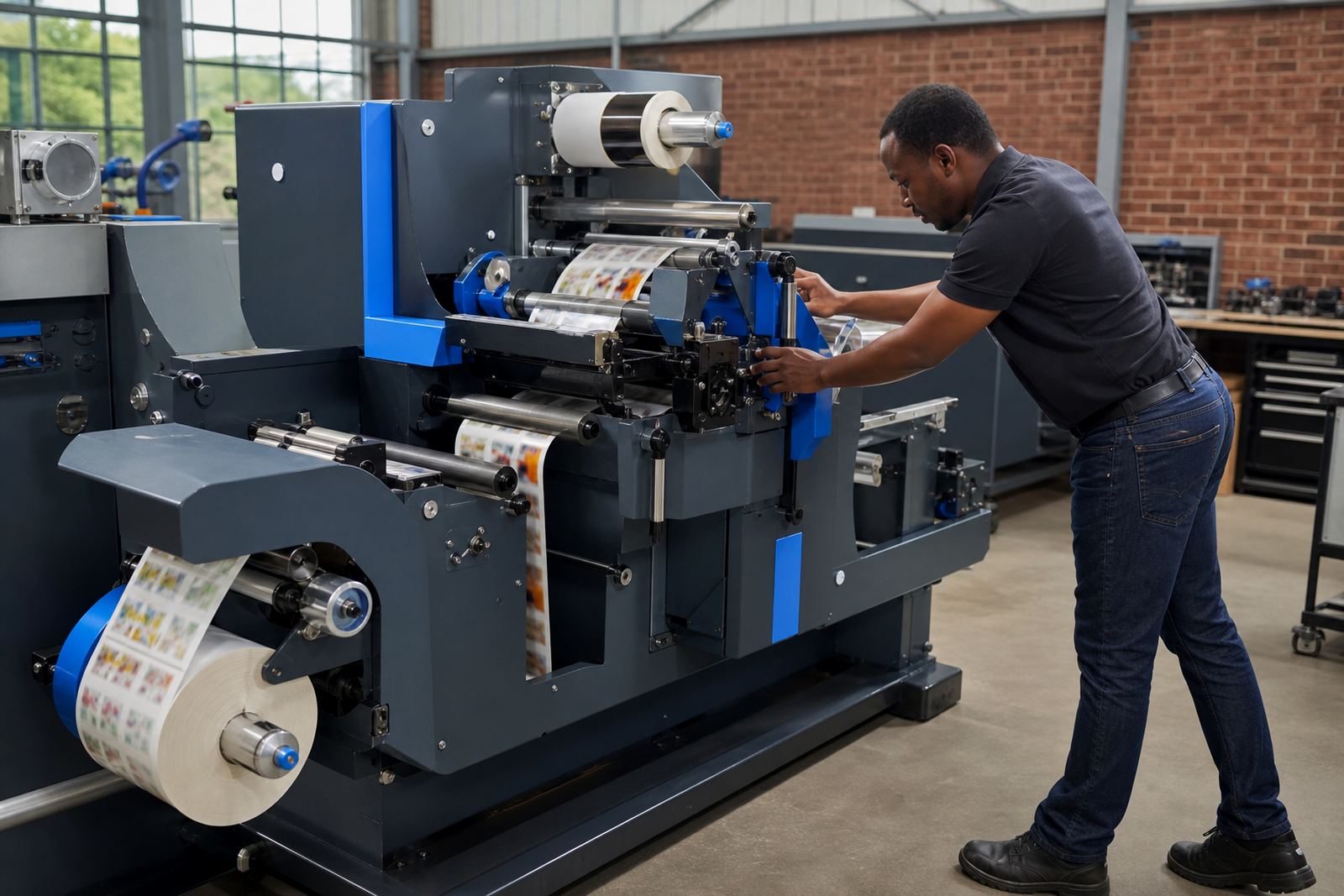
Every finishing line has its own rhythm. Some runs need lamination first, others move straight into semi-rotary die-cutting, matrix stripping, slitting and rewinding, and the operator has to know how each stage affects the roll. Our training is practical and focused on the machine as it sits in your shop, not on theory that falls apart once the web is threaded.
We cover the common tasks that matter on real jobs: loading parent rolls, setting web tension, reading registration marks, setting pressure, watching cut depth and checking that the finished roll stays clean and square. The aim is to give operators enough confidence to work through changeovers with care, especially when a job uses narrow webs or heavier laminate layers.
- Web threading and roll orientation
- Registration mark detection and fine adjustment
- Die setup for flexible and semi-rotary systems
- Slitting, rewind tension and core alignment
A step-by-step session on the machine
Training starts with the machine switched off and the path laid out clearly. We show the operator how to inspect the unwind, nip points, dancer system and rewind shafts before any production run begins. From there we move through the job ticket, the substrate details and the sequence of settings that influence finish quality.
Once the line is threaded, we work through a controlled start-up. The operator learns how to bring the web up to speed without drifting off register, how to check the matrix strip, and how to read the first metres of output for signs of crush, overcut or poor slit tracking. Small corrections matter here, because a tiny change in tension can alter the whole roll.
- Pre-run inspection and safety check
- Setting unwind, guide and tension points
- Finding register and holding it through the run
- Checking matrix removal and rewind build-up
What operators learn on day-to-day label jobs
Digital label finishing often looks simple from a distance, but the details sit in the setup. Operators need to know how lamination film behaves over different facestocks, how varnish or coated webs change friction, and how slitting blades react when the roll width shifts. We explain those links in plain terms and with the job in front of us, so the operator can recognise what is changing and why.
We also spend time on the things that save material. That includes spotting waste before a long run goes wrong, checking edge quality after slitting, and knowing when a rewind core needs adjusting before the roll starts wandering. For packaging producers, these habits help when labels have to leave the line neat, square and ready for the next process.
The checks that keep the run under control
A good operator knows what to look at before the roll becomes expensive scrap. We show the practical checks that belong to each shift and each changeover, including registration marks, nip pressure, matrix strip behaviour and the way the finished roll builds on the rewind shaft. The point is not to rush, it is to keep the line predictable.
Where the job calls for a different die setup or a narrow slit pattern, we work through the adjustments that keep the job within spec. That includes a close look at spacing, side guide movement and any drift that appears once the line settles into production.
- Registration marks staying sharp and visible
- Matrix strip clearing without tearing
- Slit edges staying clean across the roll
- Rewind tension holding the finished roll evenly
Training for new hands and experienced crews
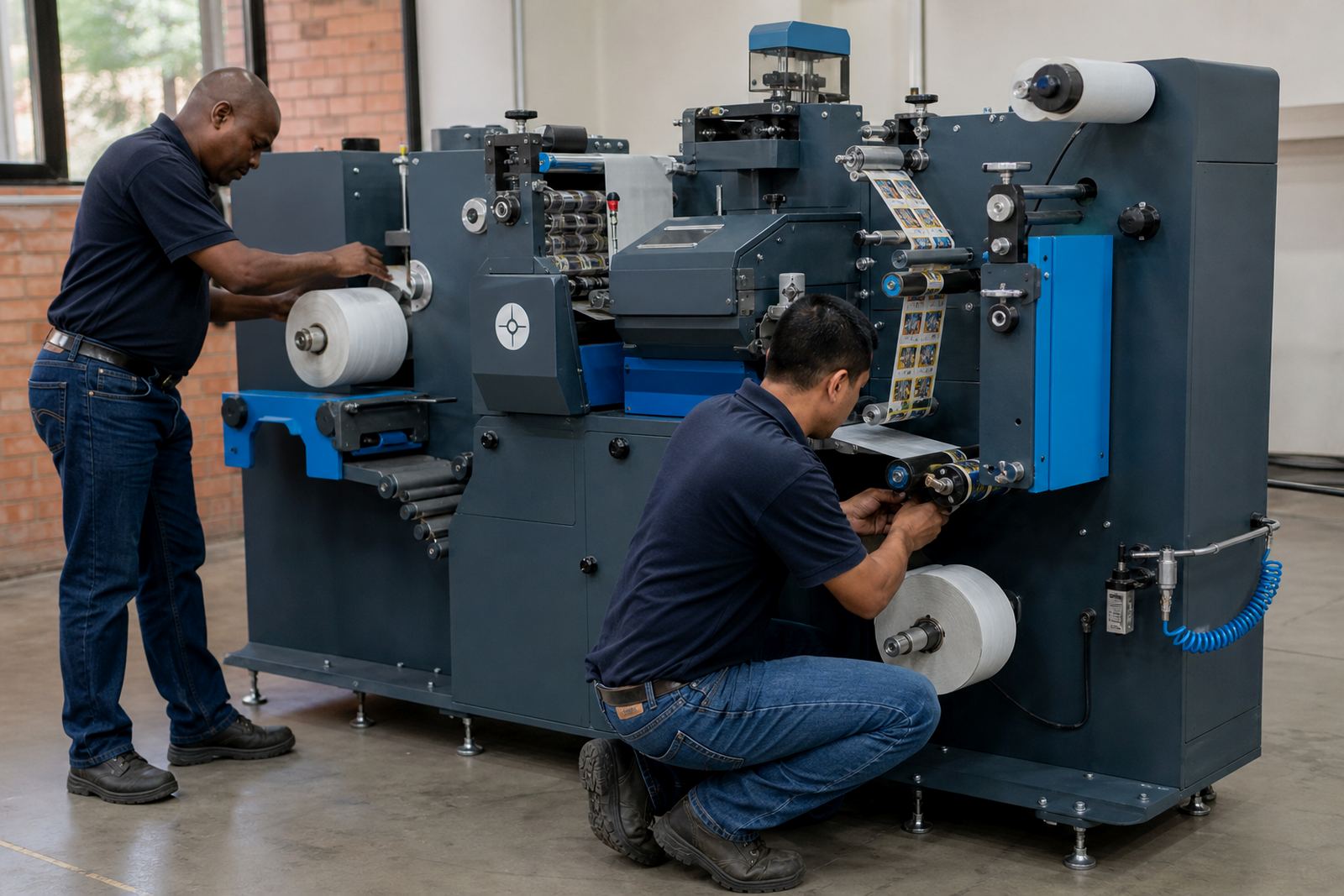
Some operators are learning a label finishing line for the first time. Others know the basics but need a better grip on changeovers, fine adjustment and fault-finding. We shape the session to match the crew in front of us, so the time spent on site is useful to the people who will stand at the machine every day.
For busy plants in Johannesburg, Pretoria, Durban, Cape Town and Gqeberha, training can focus on the parts of the line that cause the most interruptions. In some shops that means unwind control and registration. In others it is rewind build, slitting accuracy or how to recover after a web break without wasting too much stock.
Support after the session is part of the job
Operator training does not stop at the machine room door. After the session we can support your team with line commissioning, preventive maintenance, die setup help, registration calibration and production optimisation. If a machine is running well but the crew wants a cleaner method for loading or rewind setup, we build the session around that gap.
Our workshop and support team in Kya Sand, Randburg works with label printers and packaging producers across South Africa. When a machine line needs parts, a setup check or a service visit, the same practical approach carries through the rest of the support work.
A short checklist for the next training plan
If you are planning operator training for a new line or an existing crew, it helps to gather the machine details before the session. That includes roll widths, substrate types, typical label sizes, whether the line uses laser or semi-rotary die-cutting, and whether lamination or varnish is part of the job. With those details in hand, the training can focus on the right settings from the start.
- Machine type and finishing stages in use
- Common roll widths and core sizes
- Typical label stock and liner construction
- Current issues with register, rewind or slitting
Clients reach us through our contact form on our contact page, and we use that first note to shape the training around your production line.