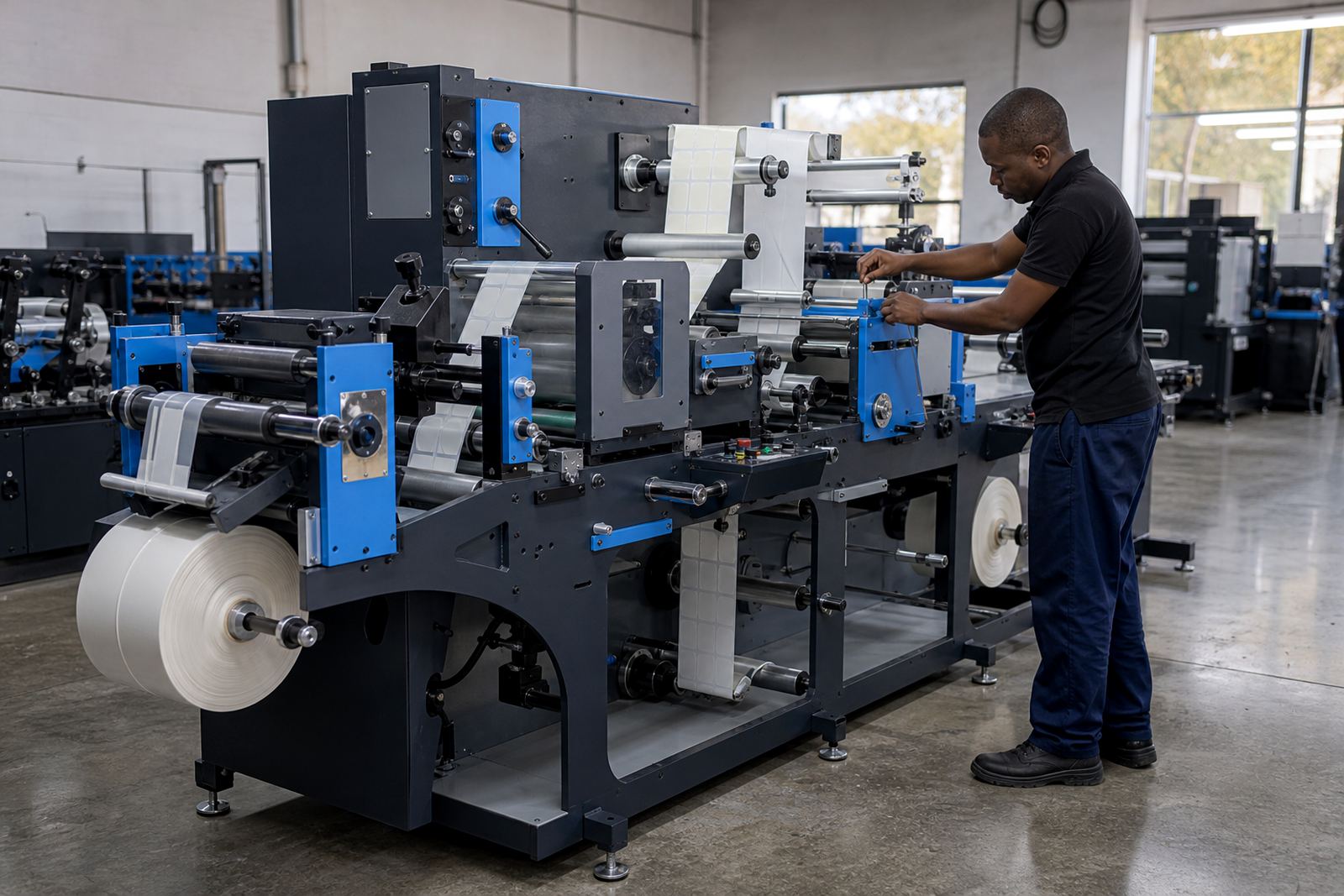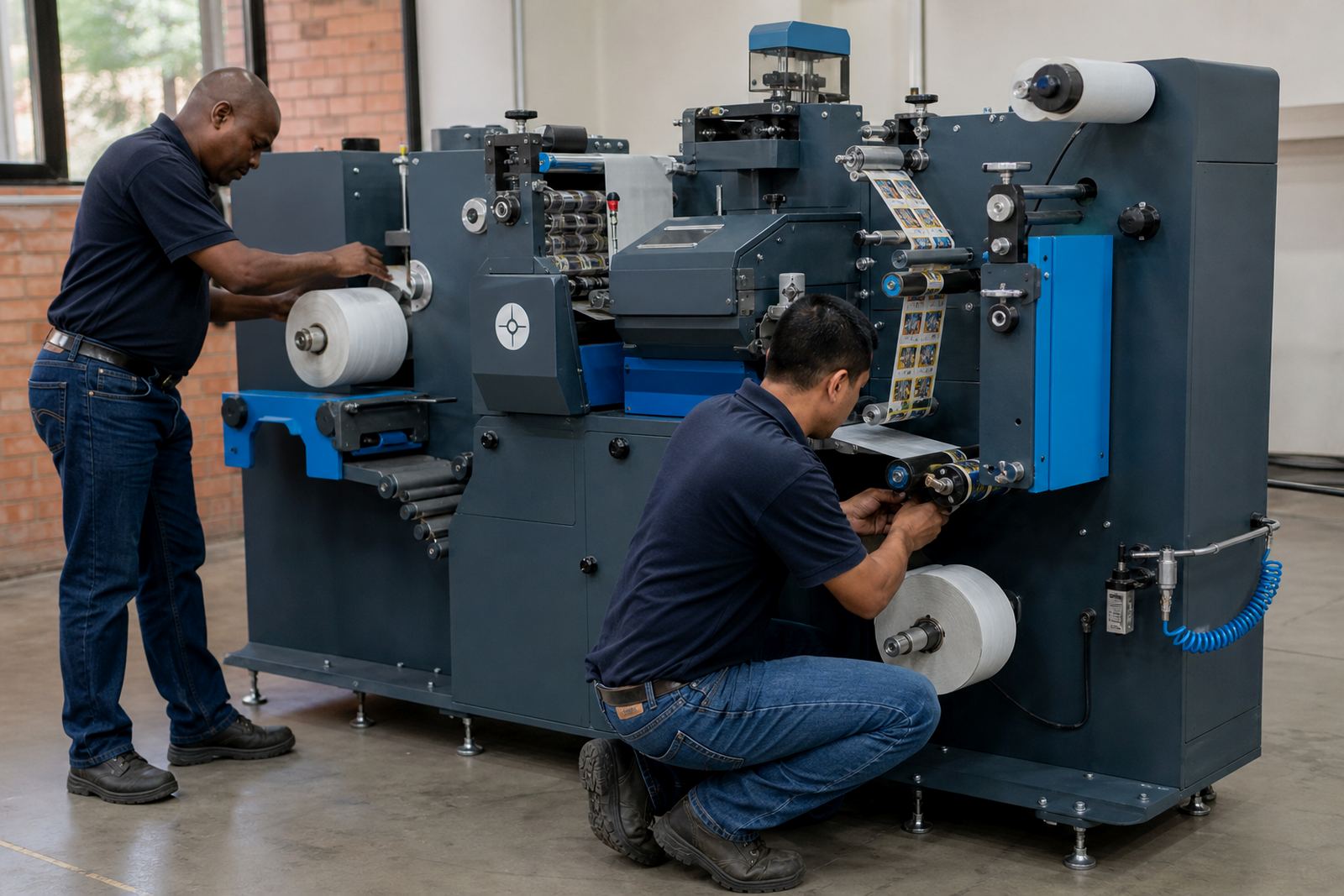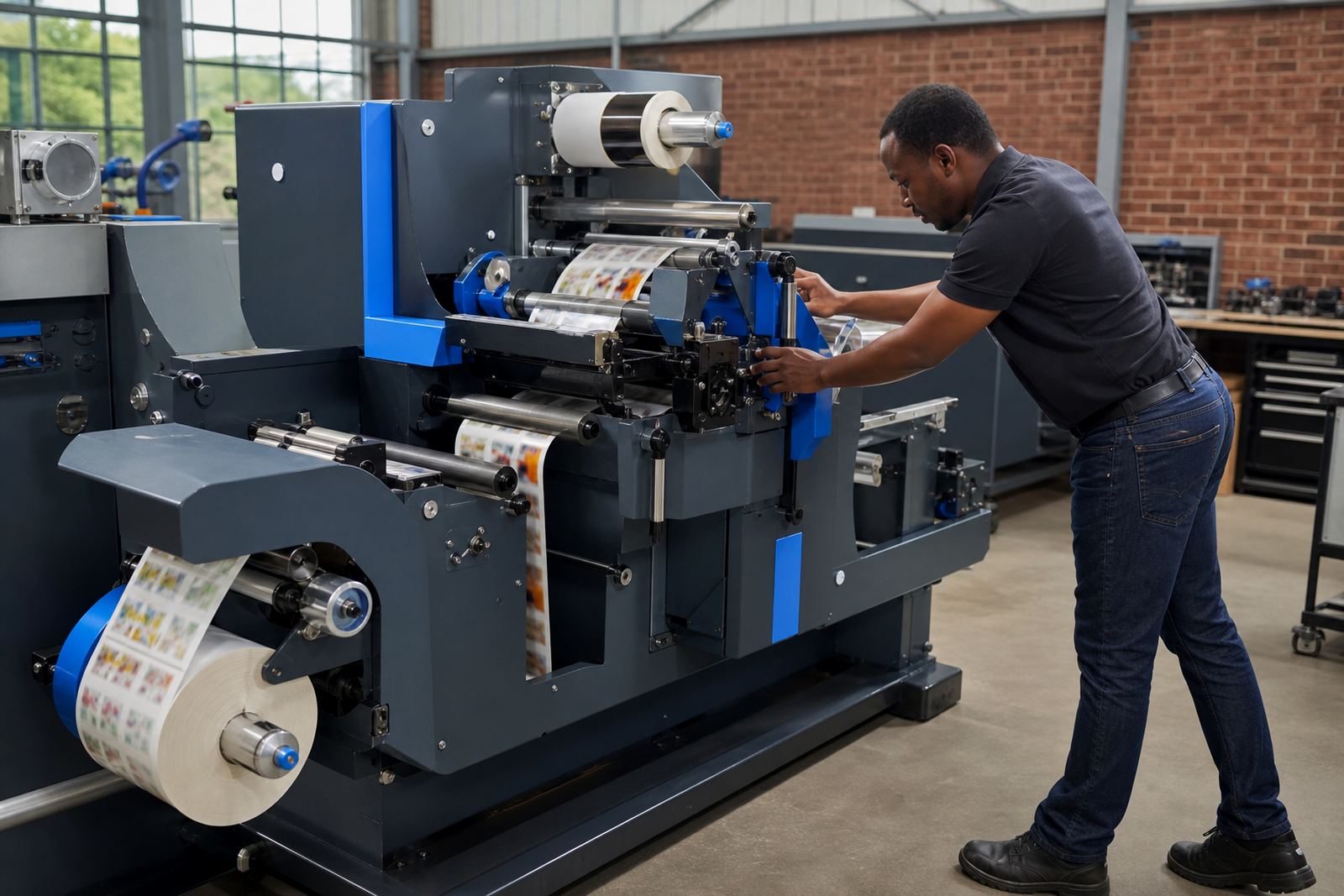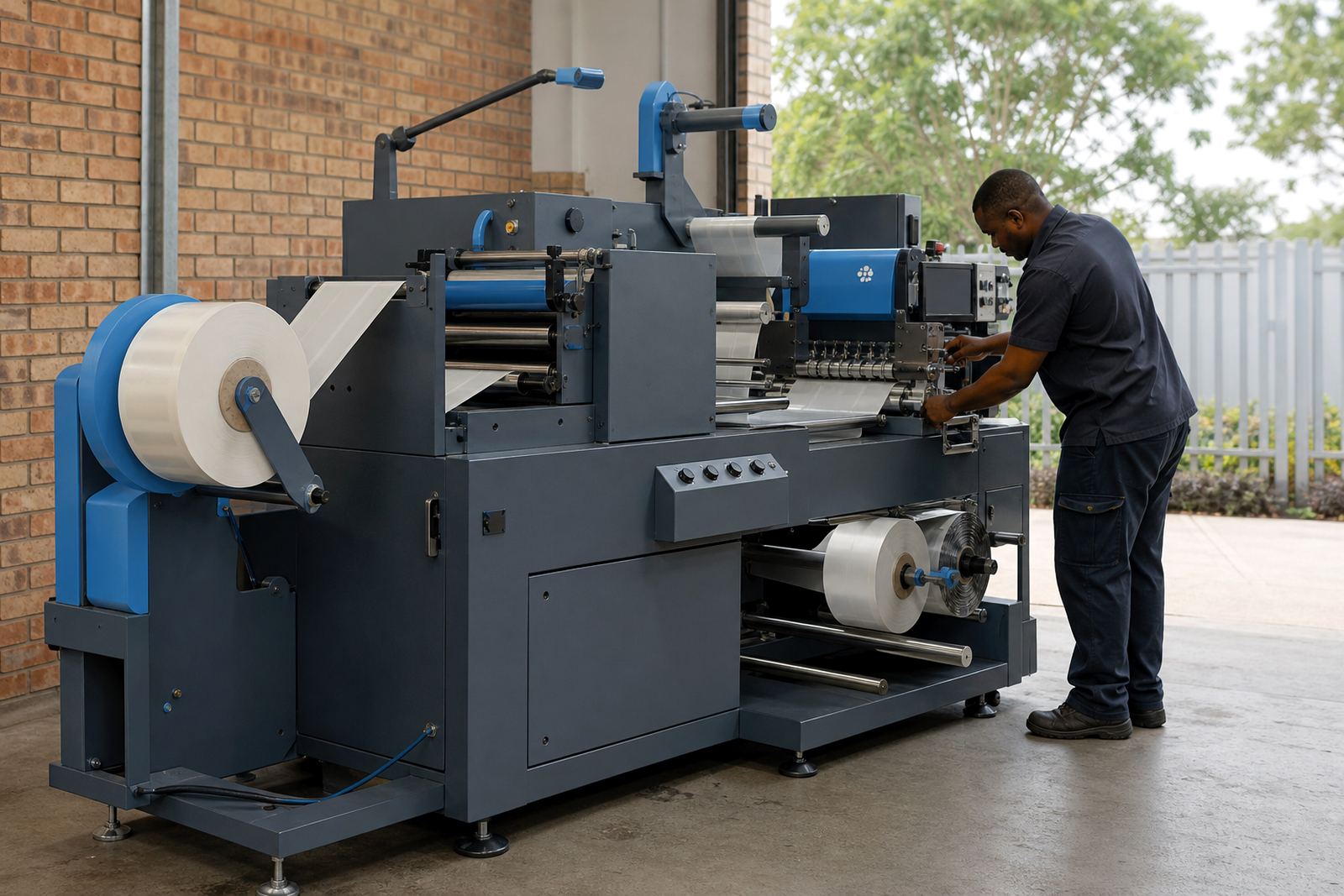
Start with the machine and the fault you can see
When a finishing line stops behaving, the quickest way to narrow it down is to name the machine, the material and the symptom. Tell us whether the issue sits in unwinding, lamination, die-cutting, matrix stripping, slitting or rewinding, and mention if the job uses a flexible die, semi-rotary tooling or laser cutting. If the fault changes with a different roll width or substrate, include that too.
Good service requests usually include the roll size, label length, web width and whether registration marks are holding steady. A clean description helps us prepare the right tools, spare parts and test stock before the site visit.
What to include on the service request
The details below help us work from the same page when the machine is on your floor. Small points matter, especially on label work where a slight offset can throw out the whole run.
- Machine type and the main process in use
- Site suburb or town, for example Kya Sand, Midrand or Durban
- Fault description, such as web wander, poor cut depth or waste build-up
- Recent changes to tooling, film, paper or adhesive stock
- Any alarms, marks, noise or tension changes noticed during production
- Whether the issue affects one station or the full line
If the machine was recently set for a new label size or a shorter repeat, mention that as well. A setup change can leave the rewind, slitting knives or registration system needing a fresh check.
Breakdowns, inspections and production faults on site
Not every call is a full failure. Some jobs start as a fault and end as a process correction, especially where output quality drops before the machine stops completely. We handle breakdown repairs, preventive maintenance and production optimisation for label printers and packaging producers who need the line back in shape.
Common service calls cover uneven die wear, poor matrix stripping, liner tearing, loose rewind tension and cuts that drift away from the printed mark. In humid coastal conditions, adhesive lift and edge curl can also show up, so it helps to check the stock conditions and the finishing path together.
What happens when the technician gets to site
The first step is a working check of the line as it is used on your shift. We look at feed alignment, tension control, web path stability, cut registration and the handover between stations. If the fault sits in the tooling or setup, we adjust from there rather than guessing.
For deeper faults, the machine may need a registration calibration, die setup help or a rewind and slitting reset. When spare parts are needed, we identify the worn item first so the replacement matches the machine's duty and the job format.
- Line inspection and fault tracing
- Operator guidance during the check
- Setup correction for registration and rewind
- Repair work for mechanical wear or damage
- Parts identification and fitment support
Training after the repair matters
A repaired line still needs the operator to run it with confidence. That is why service work often includes a short walk-through on tension settings, waste removal, slitting knife position and how to spot early signs of drift. A clean setup at the end of a job saves needless scrap on the next roll.
When the issue came from a rushed changeover or a new material, we can also cover the handling points that usually catch the team out. This is where practical training saves a lot of frustration, especially on mixed work where one shift handles labels, tags and shorter packaging runs.
Areas we cover for service work
Our team works from Kya Sand, Randburg and supports sites in Johannesburg, Pretoria, Durban, Cape Town and Gqeberha, plus nearby industrial areas such as Midrand and Kempton Park. That includes label print rooms, converting floors and packaging sites that depend on finishing machines for daily output.
If your machine is part of a larger finishing line with lamination, varnish, slitting or rewinding, mention that in the request. The more the workflow is described, the easier it is to match the fault to the right station and avoid a second round of fixes.
Use our contact form for the service brief
Log the request through our contact form and set out the fault in plain words. If you have a photo of the web path, the cut edge or the affected roll, add that with the machine details. A short note on the label size, material type and what changed before the problem started is usually enough to begin.
For planned inspections, breakdowns or production issues, keep the note practical and specific. That gives the service team a clearer line of travel when the machine needs attention on site.