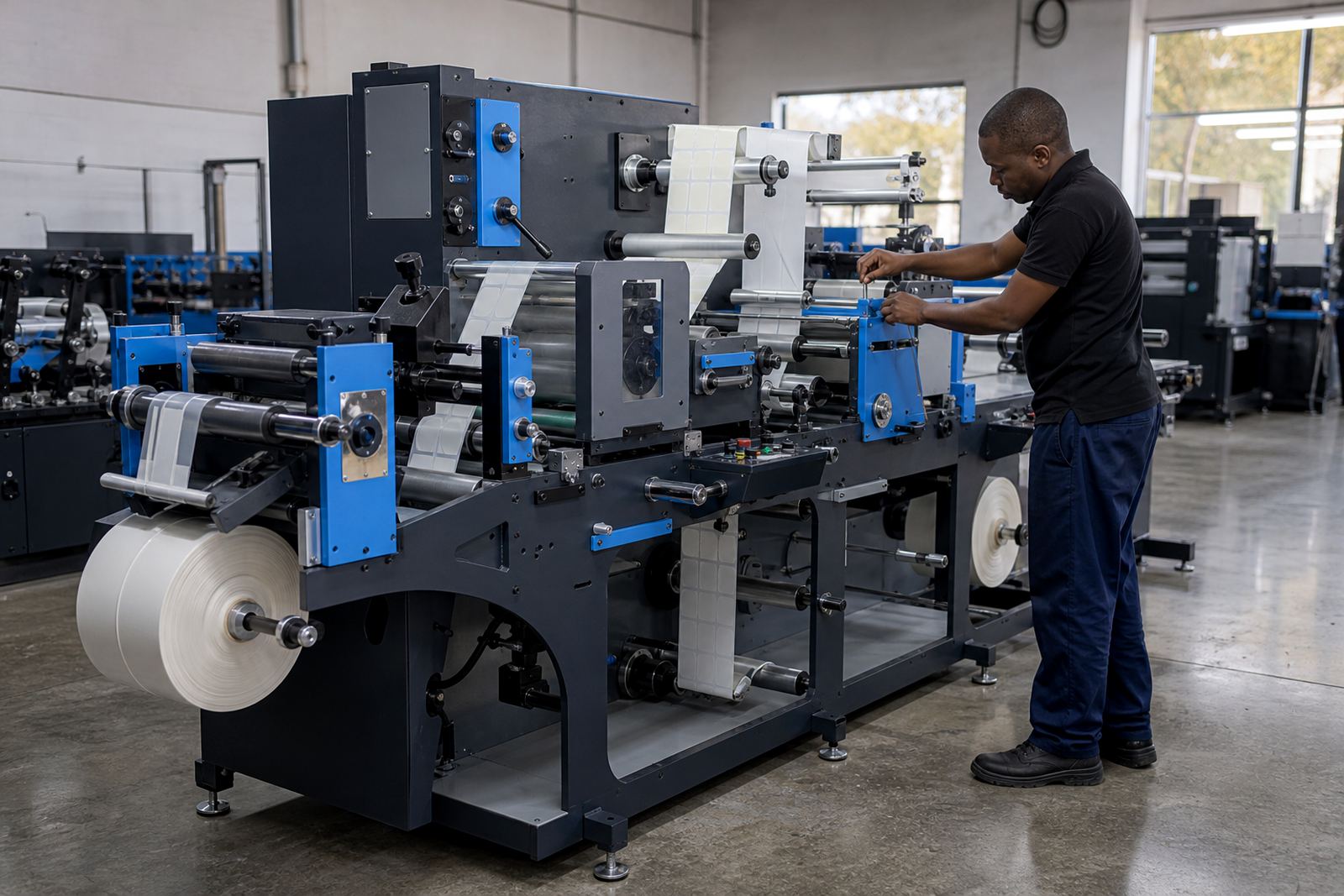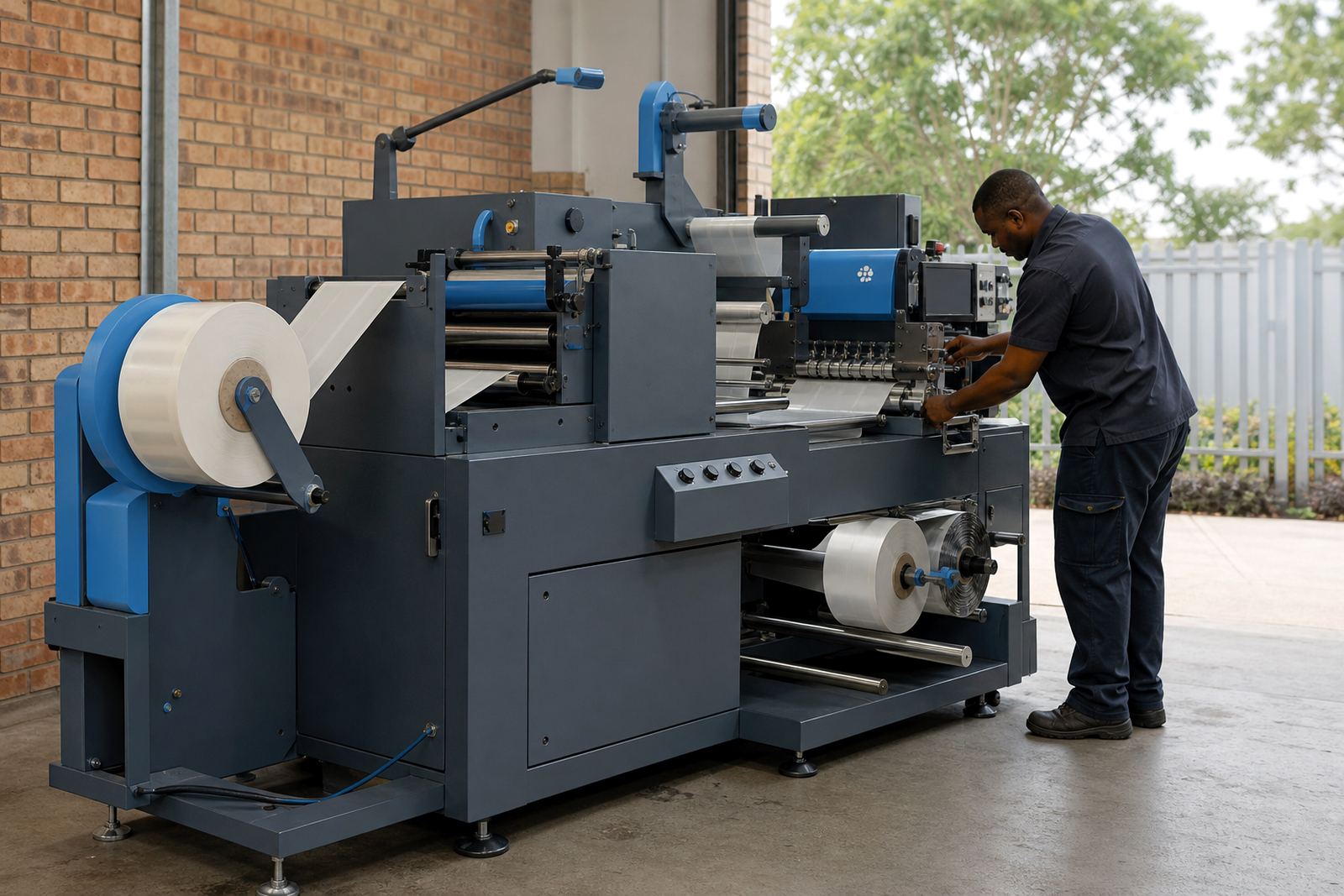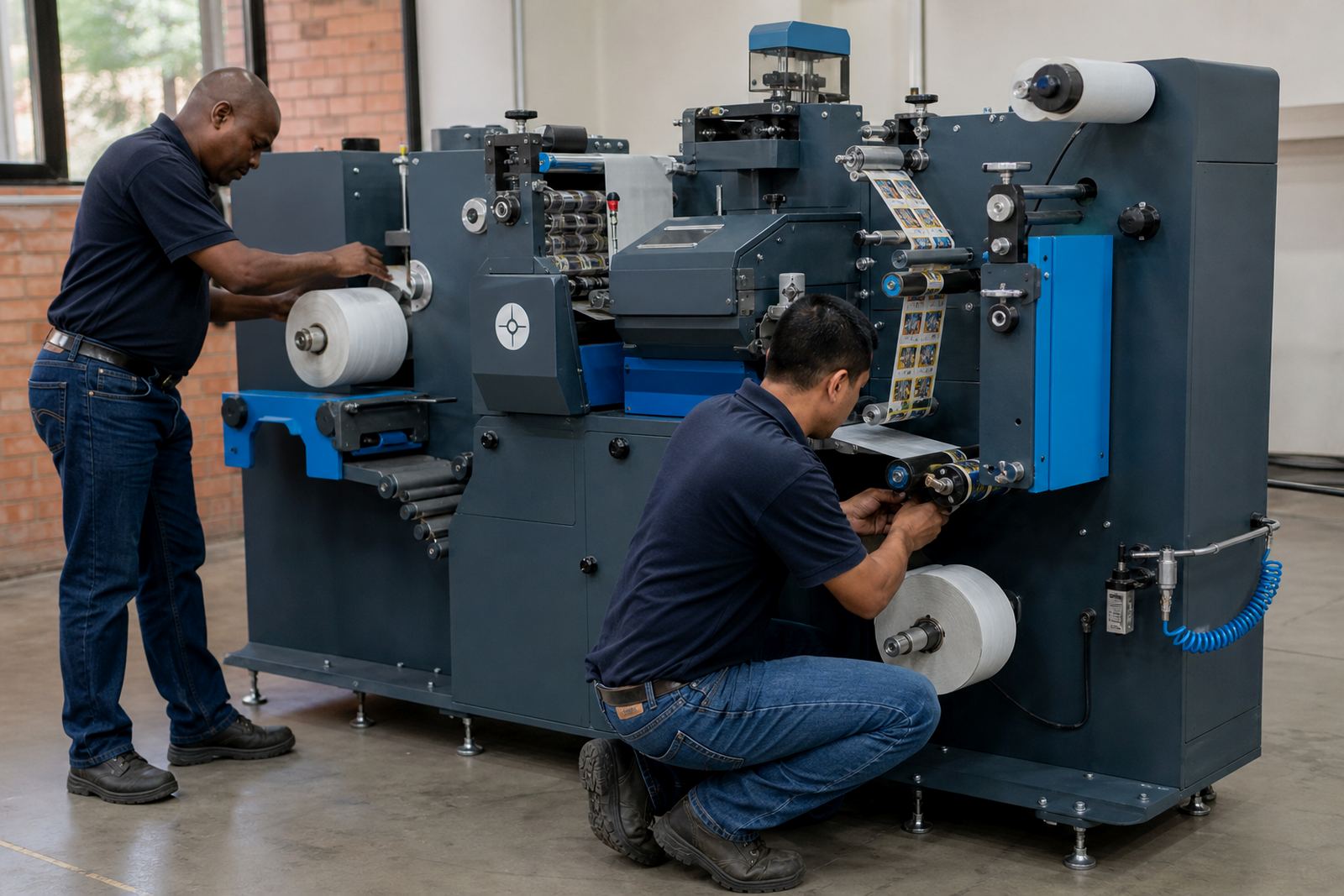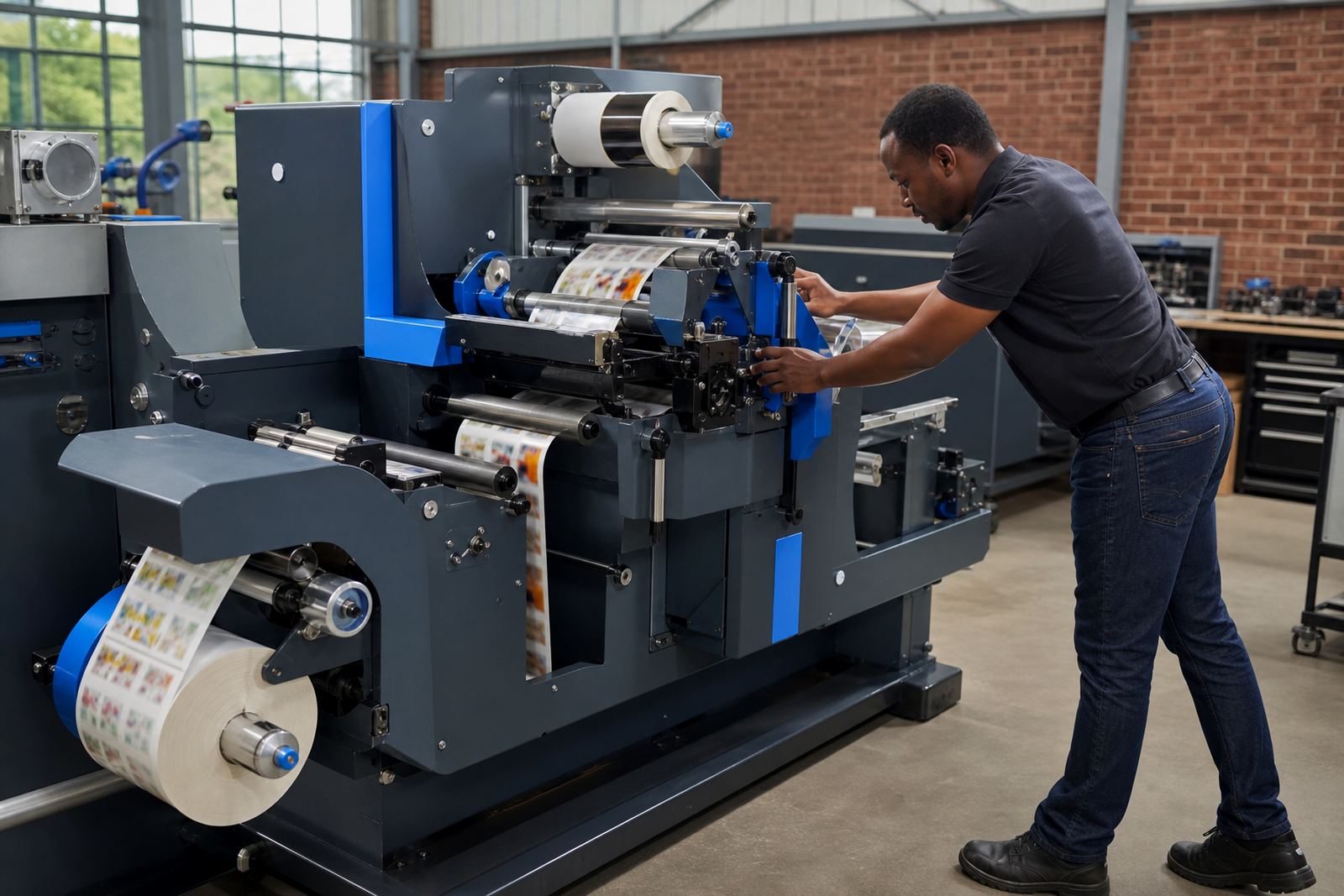
Start with the machine and the fault pattern
Before you ask for parts, note the machine type, the material you are running and the symptom you can see on press or in finishing. A clean cut that drifts out of register is not the same as a stripped matrix, and a rewind that pulls unevenly usually points to a different set of parts again.
It helps to name the station where the problem shows up, such as unwind, web guidance, lamination, die-cutting, stripping, slitting or rewind. If you work with clear labels, foil stocks or textured paper, mention that too because some wear items behave differently on each material.
- Machine model or build details if you have them
- Material type, width and roll diameter
- Fault area, such as cut depth, slitting, tension or matrix removal
- Any recent change in print stock, adhesive or finish
The spares that are asked for most often
Some parts are service items, others are wear items that should sit on hand if the line runs daily. On digital label finishing machines, that often includes blades, anvils, bearings, belts, rollers, sensors, guides, cutting modules and rewind components. For systems using flexible dies or semi-rotary stations, the wear pattern can reach the die holder, backing surfaces and registration parts as well.
When a job uses lamination or varnish, look at pressure rollers, web path parts and edge guidance too. A small mark on a roller or a tired bearing can leave a line in the laminate or pull the web off square, and then the waste grows fast.
- Cutting blades and backing parts
- Bearings, shafts and drive belts
- Web guides, sensors and tension parts
- Matrix stripping and rewind parts
- Slitting knives and spacers
Tell us how the roll runs through the line
A parts enquiry is easier when the web path is clear. Share the roll width, core size, unwind direction and whether the line runs inline or as a separate finishing unit. If the machine handles narrow labels one hour and wider cartons the next, that matters because the guides, shafts and slitting setup often change with the job.
Registration marks are worth mentioning where they are used. If the marks are faint, drifting or being read late, the issue may be in sensor position, contrast settings or the material surface, not only in the cutting section. In many cases the best spare part is the one that restores stable movement before the fault spreads into the next station.
When a worn part becomes a production risk
Waiting too long on a tired component can turn a small fault into wasted rolls, damaged dies or a stop-start shift. That is especially true on line work where matrix stripping and rewind tension must stay balanced. A weak roller or loose guide can make the waste strip curl, snap or trap itself inside the machine.
For packaging producers, the cost is not only the spare itself. Miscut labels, poor rewind quality and a wavering slit line can all lead to rework. If your line handles short runs or frequent changeovers, keep a service set ready so the operator does not have to strip a machine for one small part while the next job waits.
- Keep notes on any repeated failure point
- Check if the part wears on one side only
- Record the last service date and the last changeover issue
- Keep the removed part for comparison if possible
What our team checks before recommending a part
Our service team looks at the fault in context, not only the worn item. Pieter Pienaar and the technical team check the machine condition, the wear pattern and the job setup. That matters when a part failure is caused by tension, alignment, humidity in the room or a setup change that moved the web off centre.
For operators, the useful detail is plain and practical. Say what the line was doing, what changed and what the finished roll looked like. If the machine needs registration calibration, die setup help, rewind setup or slitting setup, those points should be included with the parts request so the wrong item is not ordered for the job.
Service spares for a steadier store room
Some customers keep a small service pack on the shelf for the parts that fail under normal use. That is a good habit for shops running daily label work across Johannesburg, Pretoria, Durban, Cape Town and Gqeberha. A sensible pack usually covers the items that stop a shift fastest and the ones that take the longest to source once they are needed.
We can help you build a list that fits your own machine mix and production pace. That may include cutter consumables, web path parts, spare sensors, rewind parts and the wear items that sit behind a clean finish. A good store room list is not large, it is specific.
How to send a parts enquiry through our contact form
Use our contact form and include the machine name, the part description and a clear note about the fault. If you have a photo of the worn item or the finished defect, add that too. A short line on the material, roll width and finish type helps the team narrow it down before the parts are matched.
Our Kya Sand, Randburg team supports label printers and packaging producers across South Africa with installation, training, servicing, remote support and spare parts supply. If the enquiry is about a full replacement set, mention whether you need a single wear item, a service kit or a wider list for a planned maintenance stop.
- Machine details and setup notes
- Part name, number or a clear description
- Photo of the worn part or the fault on the roll
- Delivery town and any site access notes