Where the roll loses time and material
A review starts with the points where production usually slows down: unwind tension, web tracking, web clean-up, die or laser alignment, and the way the finished roll is wound. On label work, a small shift at registration marks can turn into extra spoilage, loose edges or a roll that does not stack cleanly for the next process.
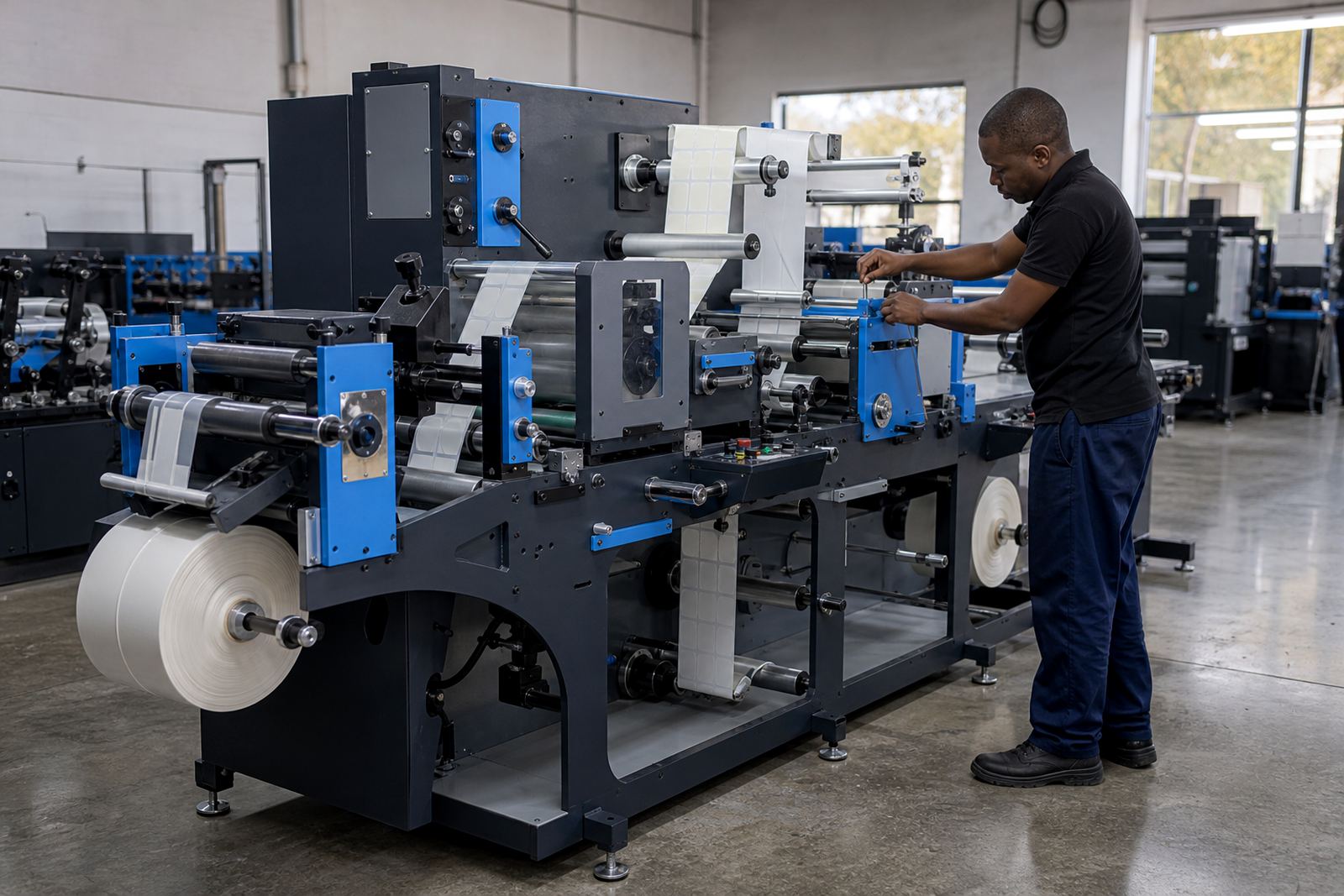
We look at the full path of the web through digital finishing equipment, from incoming printed roll to the slit and rewound output. The aim is to see where set-up steps are taking too long, where operators are compensating by feel, and where material is being lost in the first few metres of a new job.
- Check unwind condition, web path and brake control
- Review registration reading at the printed marks
- Inspect matrix stripping, slitting and rewind handling
- Note waste created during changeovers and fine adjustment
What we inspect during the line review
The review covers semi-rotary die-cutting, flexible dies, lamination, varnish, matrix stripping, slitting and rewinding where those steps form part of the line. If the line uses laser cutting for certain jobs, we look at cut quality, edge finish and how the print and cut stay aligned through the run.
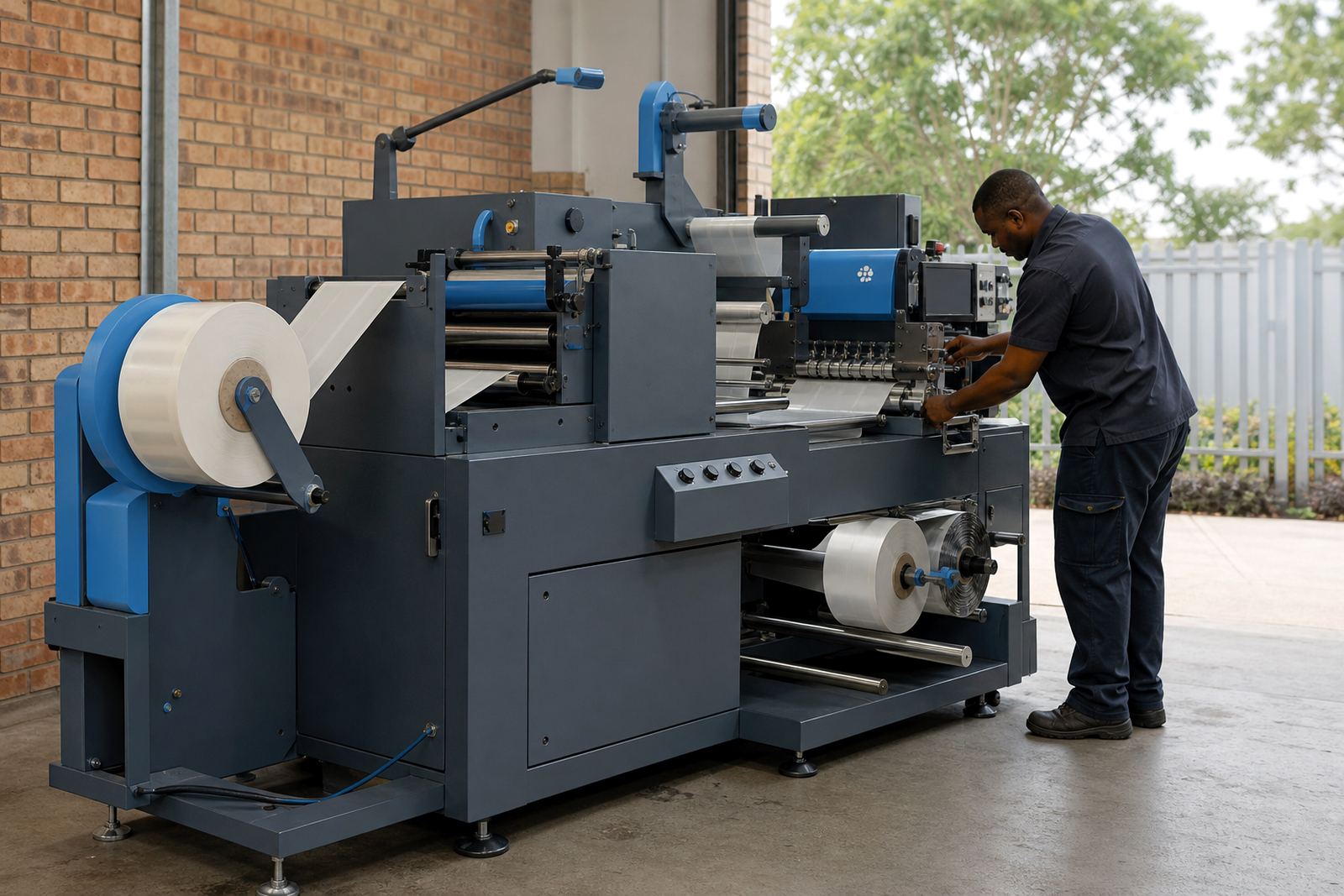
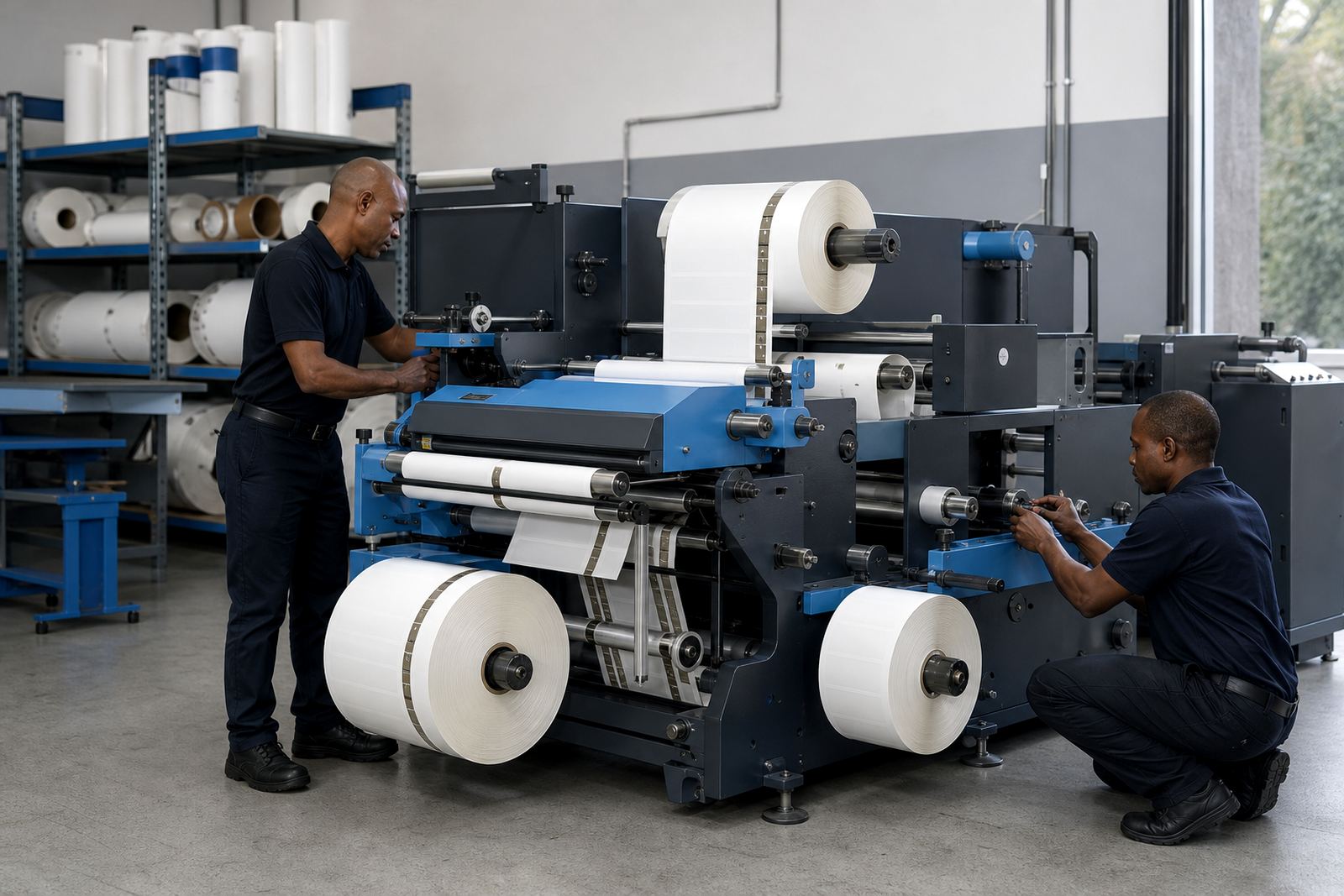
We also check roll sizes going into and out of the machine, because poor roll build can make the next run harder than it should be. When the unwind or rewind is not matched to the stock, the line can pull unevenly, leave rough edges or create telescoping on the finished roll.
- Substrate behaviour on coated and uncoated stocks
- Registration control on short repeat and long repeat work
- Lamination laydown and varnish consistency
- Slit width, edge trim and rewind firmness
Changeover habits that shape output
Many production problems begin at the changeover table, not at the cutting head. A review often finds that operators are doing the same job in different ways, which makes results drift from shift to shift. That is where practical training helps, because the machine can only hold its settings if the setup method stays consistent.
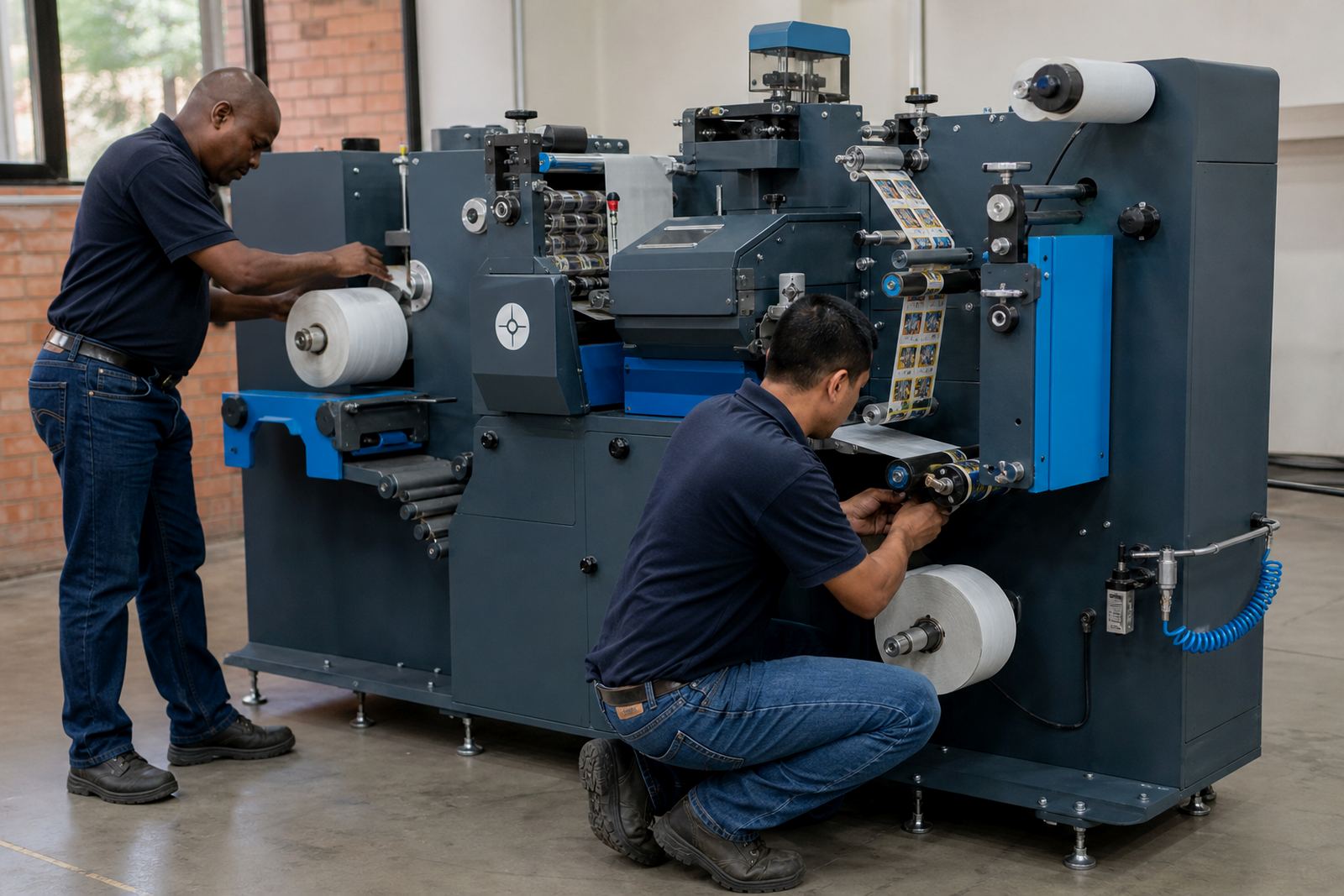
We map the steps used for job loading, web threading, die setup, registration calibration and final roll removal. The idea is to reduce guesswork and keep the line moving with fewer corrections mid-run. In busy plants around Randburg, Midrand and Johannesburg this can matter more than a bigger machine spec.
- Threading sequence and tension start point
- Setting registration to the print marks
- Slitting knife spacing and edge trim control
- Rewind core choice and roll firmness
Waste control that shows up in the scrap bin
Waste control is not only about material cost, it also affects planning and labour. If the matrix is stripping badly, or the first few labels are being rejected on every roll, the scrap pile becomes part of the normal shift. That is usually a sign that the line needs attention on setup, not just more supervision.
During the review we trace where spoilage begins. Sometimes it is a worn part, sometimes a poor setting, and sometimes a mismatch between the printed job and the finishing method. A well set line should release the matrix cleanly, hold registration through the run and deliver a finished roll that feeds the next process without fuss.
Installation records and maintenance notes we use
Where the line has been installed by our team, the production review can build on the original commissioning notes and service records. That helps us compare the current job behaviour with the machine’s earlier setup and spot where wear or drift has changed the result. It also gives the technical team a clearer picture when a part, sensor or drive component needs attention.
Preventive maintenance is often part of the answer when a line is fighting the same faults each week. Clean rollers, sound bearings, correct tension parts and accurate sensors all support the finishing side of the job. Without that, even careful operators end up working around the machine instead of with it.
How the review is turned into action
Once the line has been assessed, the findings are grouped into practical actions. Some are immediate setup changes, others need repair, calibration or a parts order. The point is to leave the production team with a clear working method rather than a vague list of faults.
Depending on what we find, the next step may include remote support, a site visit, operator training or a full service visit. For plants in Cape Town, Durban, Pretoria, Gqeberha and across Gauteng, the same review format can be used on label lines that run plain paper, filmic stocks or more demanding coated materials.
- Update the operator setup sequence
- Reset registration and rewind settings
- Plan repairs or replacement parts
- Agree the next check on the line