Getting the web path right before the run starts
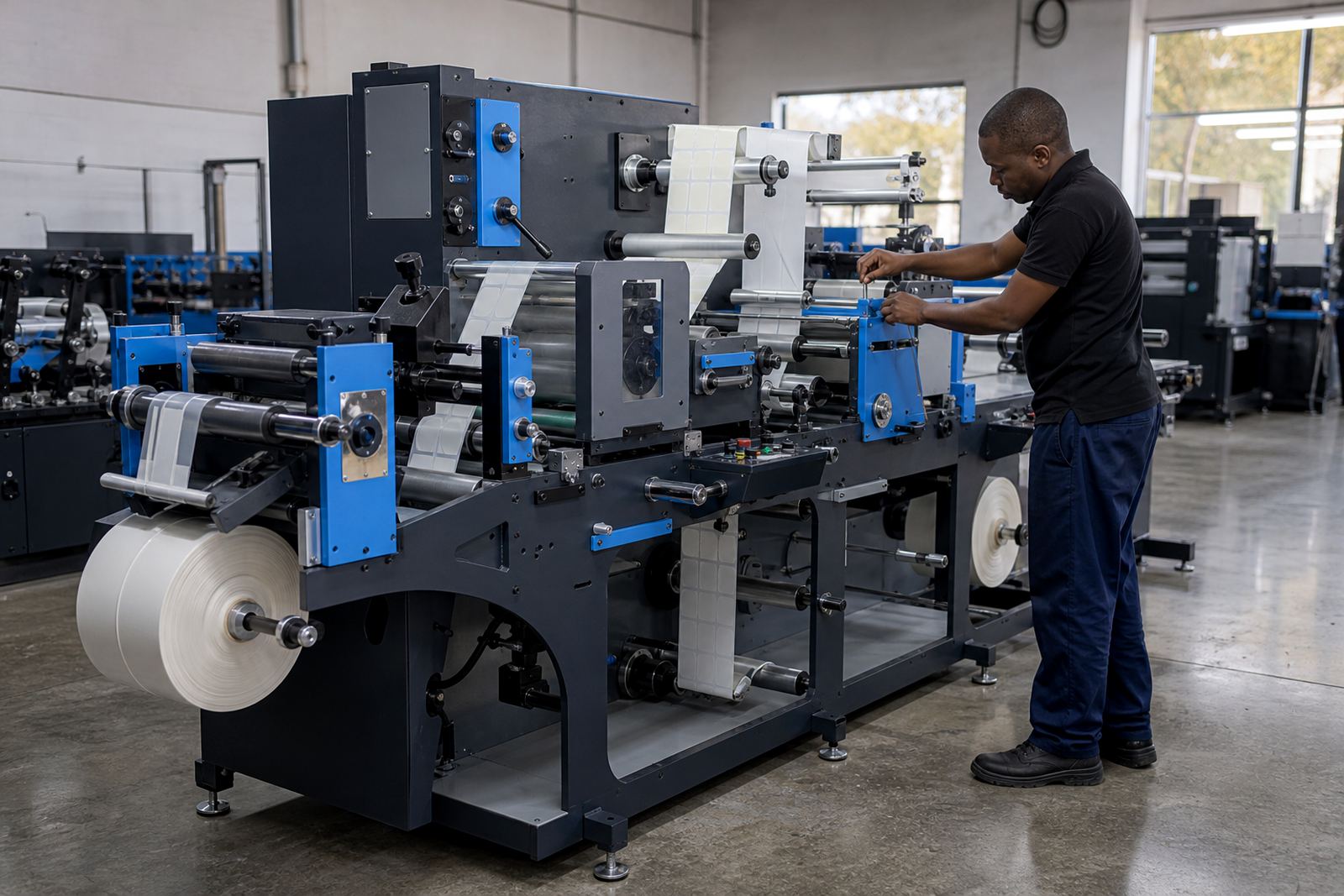
The first check is the web path. A label line that feeds cleanly through unwind, laminate, die-cut, matrix strip and rewind units will behave very differently from one that is slightly off centre or under uneven tension. We look at roll width, core size, edge guiding, spindle alignment and the way the substrate sits under the web. On narrow rolls, a small tracking fault can move the cut line enough to cause waste or ragged edges.
If the roll is curled from storage in coastal humidity or the adhesive is too soft for the room temperature, the same machine can start marking the liner or drifting at the rewind. That is where a measured setup helps. The aim is not to push the line harder, but to keep the web stable through each station.
- Check unwind brake tension and roll centring
- Confirm core size and shaft fit
- Inspect edge guides and sensor position
- Look for curl, blocking or loose splices
Die-cutting with registration marks that stay visible
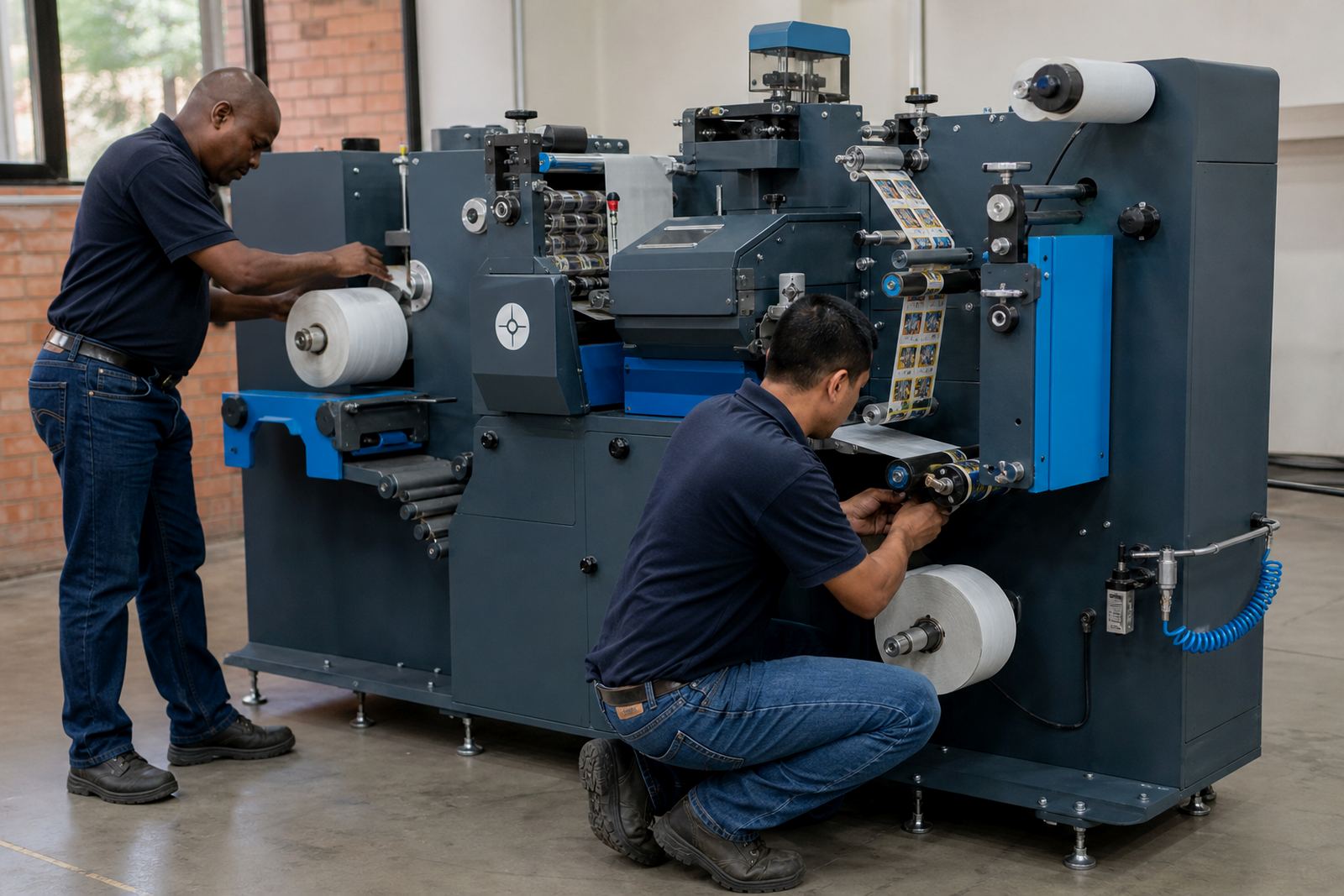
Die-cutting depends on clean registration. Whether the line uses a flexible die, semi-rotary unit or laser cut path, the printed mark must be readable and placed where the sensor can track it without hunting. Matte varnish, heavy ink coverage or a poor contrast mark can confuse the eye mark reader and shift the cut. We help set mark length, gap, sensor height and print repeat so the station follows the print, not the other way round.
When the cut is a fraction out, the fault is often found earlier in the process. A slip in web tension, a loose guide, or print repeat that was never measured properly can show up as a bad die line. On a live line, the correction has to be practical and repeatable for the operator on shift.
- Set mark size for the chosen sensor
- Keep the mark clear of varnish if possible
- Measure print repeat before loading the die
- Confirm cut depth and kiss-cut pressure
Slitting and rewinding without edge damage
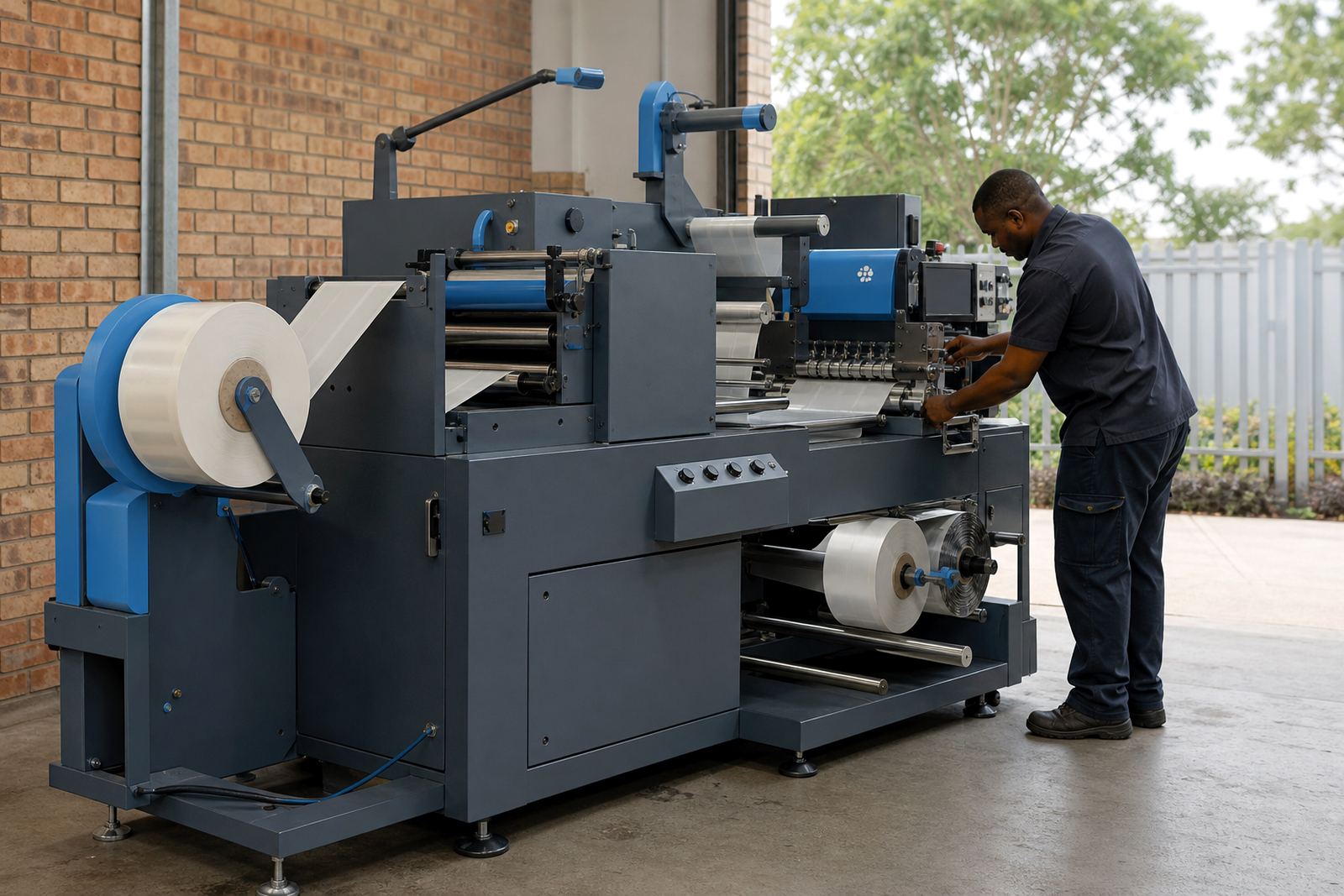
Slitting looks simple until the roll starts telescoping, fraying or building up soft edges. Blade position, blade sharpness and web tension all matter. If the slitter is too close to an adhesive edge, the waste can pull. If the rewind tension is too high, the finished roll may be tight on the core and harder to unwind later. We work on the settings that shape the finished roll, not just the cut itself.
For packaging producers running multiple SKU sizes, good slitting setup saves time later in packing and dispatch. A clean rewind also helps when the rolls are moving through another process, because the operator can see defects earlier and sort them before the next stage.
- Match slit width to the job layout
- Check blade wear and blade spacing
- Balance rewind tension across lanes
- Watch for telescoping and edge curl
Lamination and varnish when the finish must stay flat
Lamination and varnish add strength, gloss or protection, but they also change how the web behaves. A film that is too tight can pull the substrate, and a coating that has not cured properly can mark under pressure rollers. We check nip pressure, surface condition and web tension so the coated roll stays flat and usable through the rest of the line.
In some shops the issue is not the laminate at all, but the way the roll was stored or the way the coating was fed into the machine. Technical help here is about spotting the link between surface finish and mechanical behaviour. That is often where waste drops, because the operator stops chasing the wrong fault.
- Set nip pressure for the film thickness
- Watch cure or drying condition before winding
- Keep the web clean before the coat station
- Check for wrinkles at the edges
Matrix stripping and waste control on busy lines
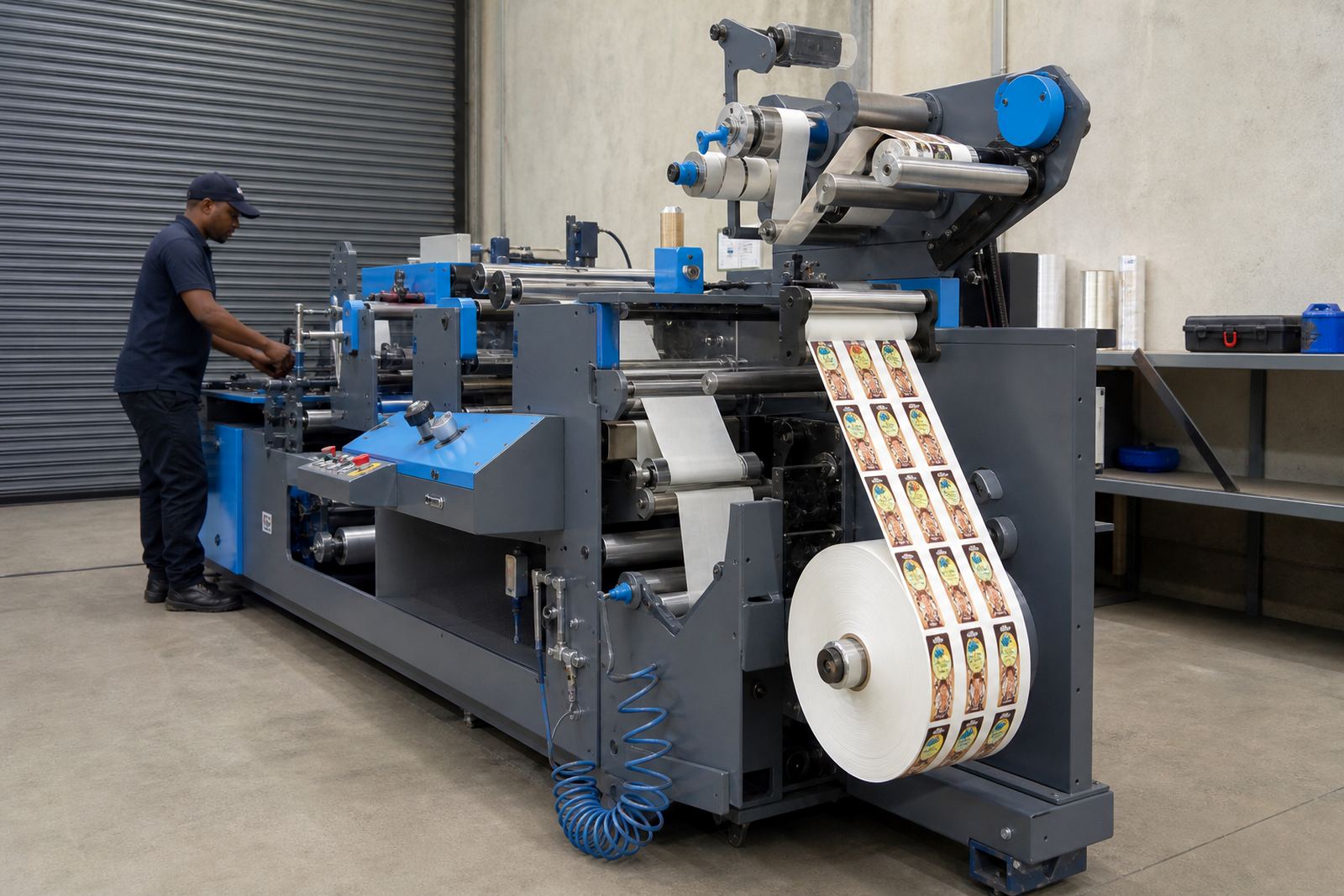
Matrix stripping can turn messy fast if the waste path is not set correctly. The stripped liner must move away cleanly, without tearing or dragging back across the label face. We check matrix angle, peel point, waste take-up and the placement of any bars or guides that support the strip. Small faults here create big cleaning jobs later, especially on shorter runs with frequent changeovers.
When a machine begins to leave fibres, adhesive dust or torn waste, it is usually worth slowing down and looking at the strip geometry. A clean waste path protects the print and keeps the labels ready for packing or further finishing.
The same area often needs attention after a format change. New label widths, different adhesive stock or a narrower matrix can all alter the strip behaviour, so a quick re-set is part of good production practice.
Service visits, parts supply and practical machine care
Support is not only about fault-finding on the day. It also includes preventive maintenance, spare parts supply, line commissioning and operator training so the machine stays useful through normal production pressure. Our technical team works with label printers and packaging producers in Randburg, Johannesburg, Pretoria, Durban, Cape Town, Gqeberha and surrounding areas such as Midrand and Kempton Park.
When a line needs attention, it helps to have the machine details, the substrate type and a clear note on the fault before work starts. That makes it easier to trace whether the issue sits in the web path, the cut station, the rewind or the registration setup. The best fix is usually the one that leaves the operator with a repeatable setting, not a guess.
- Preventive maintenance for cutting and rewind sections
- Breakdown repairs and remote support for line faults
- Die setup help and registration calibration
- Operator training on setup, changeover and daily checks